


The Panama-registered cargo ship Morning Sun was grounded 300m off the Taipei County coastline late on Monday evening, releasing more than 100 tonnes of heavy fuel oil into the sea.
The Environmental Protection Administration (EPA) said at a press conference yesterday that as there were no ecologically sensitive areas in the vicinity and that the situation was under control, adding that an emergency response unit had been formed and that most of the leak would be cleaned up within two weeks.
“The accident occurred at 10:20pm on Monday. Due to technical negligence, the bottom of the Morning Sun scraped the rocky seafloor and the ship was left stranded 300m off Taipei’s Shihmen Township (石門),” the administration’s marine pollution section chief Hsu Jen-tse (許仁澤) said.
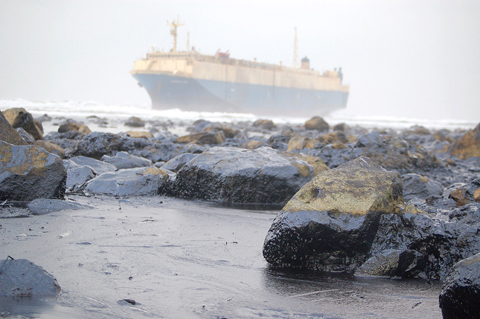
PHOTO: CHEN CHING-MIN, TAIPEI TIMES
As the oil tank was close to the bottom of the ship, heavy fuel oil was released into the sea, Hsu said, adding that as of 4pm yesterday, about 100 tonnes of the 493 tonnes of heavy oil held in the Morning Sun had leaked out, polluting an area 3km long by 300m wide.
“The leak poses a threat, as it is close to the First Nuclear Power Plant, whose staff has been ordered to activate preventive safety measures,” Hsu said.
Heavy oil is a type of fuel oil made with the remains of crude oil after gasoline and distillate fuel oils are extracted. The viscous and dense liquid fuel is inexpensive, but contains relatively high amounts of pollutants, particularly sulfur, which forms sulfur dioxide upon combustion.
“Fortunately, because of the direction of the northeast seasonal winds, the waves have brought most of the leakage ashore. Otherwise, the heavy oil could have coagulated on the seafloor and it would have been difficult to clean up,” Hsu said.
The incident happened when the 14,000-tonne ship, which was northbound from Singapore to Busan Port in South Korea, pulled close to the Taiwanese coast to shield itself from winds on Monday night. As it was not carrying any load, the poor weather conditions caused it to wobble violently, Hsu said.
Although the Coast Guard Administration received an emergency call, it was unable to land a rescue helicopter on the vessel to rescue crew members until the winds subsided in the morning, Hsu said.
“As of now, 18 of the 21 crew members have been rescued, while the remaining three, who are familiar with the pipelines on the ship, will stay on board to help with the cleanup,” he said.
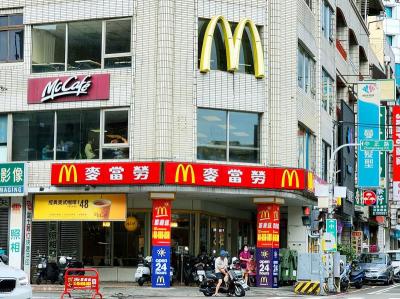
Fast food chain McDonald's is to raise prices by up to NT$5 on some products at its restaurants across Taiwan, starting on Wednesday next week, the company announced today. The prices of all extra value meals and sharing boxes are to increase by NT$5, while breakfast combos and creamy corn soup would go up by NT$3, the company said in a statement. The price of the main items of those meals, if ordered individually, would remain the same. Meanwhile, the price of a medium-sized lemon iced tea and hot cappuccino would rise by NT$3, extra dipping sauces for chicken nuggets would go up
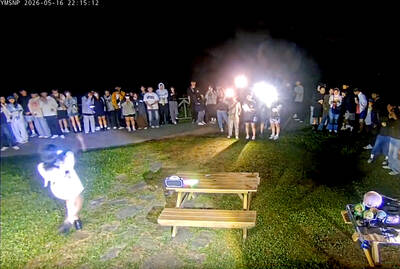
Yangmingshan National Park’s Qingtiangang (擎天崗) nature area has gone viral after a park livestream camera observed a couple in the throes of intimate congress, which was broadcast live on YouTube, drawing large late-night crowds and sparking a backlash over noise, bright lights and disruption to wildlife habitat. The area’s livestream footage appeared to show a couple engaging in sexual activity on a picnic table in the park on Friday last week, with the uncensored footage streamed publicly online. The footage quickly spread across social media, prompting a tide of visitors to travel to the site to “check in” and recreate the

Minister of Digital Affairs Lin Yi-ching (林宜敬) yesterday cited regulatory issues and national security concerns as an expert said that Taiwan is among the few Asian regions without Starlink. Lin made the remarks on Facebook after funP Innovation Group chief executive officer Nathan Chiu (邱繼弘) on Friday said Taiwan and four other countries in Asia — China, North Korea, Afghanistan and Syria — have no access to Starlink. Starlink has become available in 166 countries worldwide, including Ukraine, Malaysia, the Philippines and Vietnam, in the six years since it became commercial, he said. While China and North Korea block Starlink, Syria is not
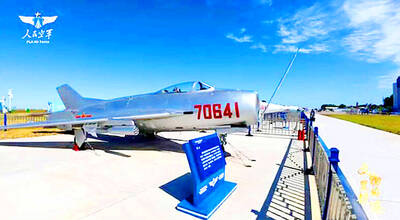
GROUNDED: A KMT lawmaker proposed eliminating drone development programs and freezing funding for counterdrone systems, despite China’s adoption of the technology China has deployed attack drones at air bases near the Taiwan Strait in a strategy aimed at overwhelming Taiwan’s air defense systems through saturation attacks, the Mainland Affairs Council (MAC) said. The council’s latest quarterly report on China said that satellite imagery and open-source intelligence indicate that the Chinese People’s Liberation Army (PLA) had converted retired J-6 fighter jets into J-6W drones, which the PLA has stationed at six air bases near Taiwan, five in China’s Fujian Province and one in Guangdong Province. The report cited J. Michael Dahm, a senior fellow at the US-based Mitchell Institute, as saying that China has


 RSS
RSS