


A number of pro-localization academics on Saturday expressed opposition to China’s proposal to sign a cross-strait Closer Economic Partnership Agreement (CEPA), claiming that it could jeopardize Taiwan’s sovereignty and interests.
The academics made the comments at a forum held by the Northern Taiwan Society to discuss issues related to a proposal raised earlier in the month by a Chinese economic official. The proposal said Taiwan and China should sign a pact similar to the CEPAs between China and Hong Kong and between China and Macau, so as to accelerate bilateral economic exchanges.
They also criticized Chiang Pin-kung (江丙坤), chairman of the Straits Exchange Foundation for his remarks that as long as Taiwan and China can reach reciprocal economic cooperation on an equal footing, the name of any such future economic agreement is relatively unimportant.
Tsai Ting-kuei (蔡丁貴), chairman of the Taiwan Association of University Professors, argued that should Taiwan sign a CEPA with China, it would be equivalent to acknowledging that Taiwan is part of China and could lead to “a sellout of Taiwan’s sovereignty,” because under the CEPA framework, Hong Kong and Macau are defined as “separate customs territories” of China.
Tsai said that pro-independence groups from around the nation should form a joint front and meet regularly in an effort to safeguard Taiwan’s sovereignty “before it is too late.”
Meanwhile, at a separate forum yesterday, Wang To-far (王塗發), a professor of economics at the National Taipei University, warned that President Ma Ying-jeou’s (馬英九) China-leaning policies may lead to future disasters for Taiwan.
Wang criticized Ma’s policy to develop closer economic ties with China as “economic suicide.”
“Since May 20 [when Ma was inaugurated as president], he has allowed companies to set up plants in China to manufacture 12-inch wafers, lifted the 40 percent investment cap to China, allowed direct weekend cross-strait charter flights and allowed [Taiwanese] banks to open branches in China,” Wang told the forum.
“All these polices are not only ineffective in boosting Taiwan’s economy, rather, they help to accelerate the flow of cash and investment into China.”
“China is now facing the stiffest decline in its stock market and the Chinese economy is challenged by a post-Olympic crisis,” he said. “Is it really such a good idea to build closer economic ties with China at the moment?”
Claming the government is ineffective at defending Taiwan’s sovereignty, retired history professor from National Taiwan University Cheng Chin-jen (鄭欽仁), urged Taiwanese people to be more active in making their own voices heard.
Yesterday’s forum was organized by Taiwan Hear, an organization founded by former vice president Annette Lu (呂秀蓮). Lu originally planned to make an appearance at the forum, but she canceled citing stomach problems.

Fast food chain McDonald's is to raise prices by up to NT$5 on some products at its restaurants across Taiwan, starting on Wednesday next week, the company announced today. The prices of all extra value meals and sharing boxes are to increase by NT$5, while breakfast combos and creamy corn soup would go up by NT$3, the company said in a statement. The price of the main items of those meals, if ordered individually, would remain the same. Meanwhile, the price of a medium-sized lemon iced tea and hot cappuccino would rise by NT$3, extra dipping sauces for chicken nuggets would go up

Yangmingshan National Park’s Qingtiangang (擎天崗) nature area has gone viral after a park livestream camera observed a couple in the throes of intimate congress, which was broadcast live on YouTube, drawing large late-night crowds and sparking a backlash over noise, bright lights and disruption to wildlife habitat. The area’s livestream footage appeared to show a couple engaging in sexual activity on a picnic table in the park on Friday last week, with the uncensored footage streamed publicly online. The footage quickly spread across social media, prompting a tide of visitors to travel to the site to “check in” and recreate the

Minister of Digital Affairs Lin Yi-ching (林宜敬) yesterday cited regulatory issues and national security concerns as an expert said that Taiwan is among the few Asian regions without Starlink. Lin made the remarks on Facebook after funP Innovation Group chief executive officer Nathan Chiu (邱繼弘) on Friday said Taiwan and four other countries in Asia — China, North Korea, Afghanistan and Syria — have no access to Starlink. Starlink has become available in 166 countries worldwide, including Ukraine, Malaysia, the Philippines and Vietnam, in the six years since it became commercial, he said. While China and North Korea block Starlink, Syria is not
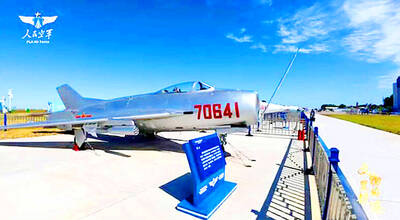
GROUNDED: A KMT lawmaker proposed eliminating drone development programs and freezing funding for counterdrone systems, despite China’s adoption of the technology China has deployed attack drones at air bases near the Taiwan Strait in a strategy aimed at overwhelming Taiwan’s air defense systems through saturation attacks, the Mainland Affairs Council (MAC) said. The council’s latest quarterly report on China said that satellite imagery and open-source intelligence indicate that the Chinese People’s Liberation Army (PLA) had converted retired J-6 fighter jets into J-6W drones, which the PLA has stationed at six air bases near Taiwan, five in China’s Fujian Province and one in Guangdong Province. The report cited J. Michael Dahm, a senior fellow at the US-based Mitchell Institute, as saying that China has


 RSS
RSS