


The Central Weather Bureau (CWB) came under fire yesterday for its lack of accuracy in forecasts about Tropical Storm Kalmaegi, especially regarding the intensity of the rains.
Even President Ma Ying-jeou (馬英九) expressed dissatisfaction with the bureau, asking it yesterday to conduct a review and work to improve its weather reports.
In Taichung City’s Mayuan (麻園), creeks and rivers overflowed, causing many main roads to flood. Taichung Mayor Jason Hu (胡志強) expressed shock over the extent of the flooding in the city.
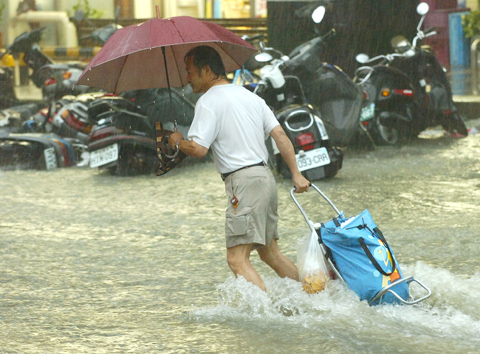
PHOTO: CHAN CHAO-YANG, TAIPEI TIMES
Director of the CWB’s weather forecast center Daniel Wu (吳德榮) said yesterday that the bureau had warned two days prior that there would be heavy rains in central and southern regions.
Air currents to the west and south usually occur after a tropical storm, but in Kalmaegi’s case, the currents occurred almost simultaneously with the tropical storm, he said.
“Therefore, the storm was extremely difficult to forecast,” Wu said.
The CWB said later yesterday that an aircraft carrying weather reconnaissance equipment had been dispatched to collect information on the outer structure of the storm as it approached.
However, it still could not obtain detailed information on the intensity and changes in the typhoon’s center, the bureau said.
The National Science Council has been supporting a project called the “Dropwindsonde Observation for Typhoon Surveillance near the Taiwan Region” (DOTSTAR), in which aircraft are sent close to the center of approaching typhoons to collect data on rain and wind conditions.
However, this was not enough, a bureau official said.
“The weather service in the US is able to dispatch a flight every six hours to continually observe changes in storms’ structures,” Wu said.
“However, DOTSTAR will only [dispatch a flight] once a typhoon comes close,” the CWB director said.
The bureau’s deputy director Shin Tzay-chyn (辛在勤) said the bureau would work with DOTSTAR scientists to expand the scale of the project.
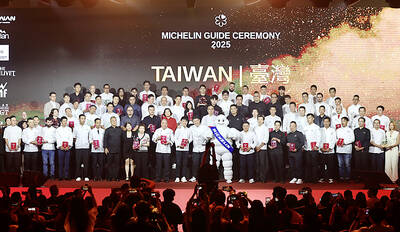
Eight restaurants in Taiwan yesterday secured a one-star rating from the Michelin Guide Taiwan for the first time, while three one-star restaurants from last year’s edition were promoted to two stars. Forty-three restaurants were awarded one star this year, including 34 in Taipei, five in Taichung and four in Kaohsiung. Hosu (好嶼), Chuan Ya (川雅), Sushi Kajin (鮨嘉仁), aMaze (心宴), La Vie by Thomas Buhner, Yuan Yi (元一) and Frassi in Taipei and Front House (方蒔) in Kaohsiung received a one-star rating for the first time. Hosu is known for innovative Taiwanese dishes, while Chuan Ya serves Sichuan cuisine and aMaze specializes

Taitung County is to launch charter flights to Malaysia at the end of this year, after setting up flights to Vietnam and Thailand, the Taitung County Government said yesterday. The new charter flight services, provided by low-cost carrier Batik Air Malaysia, would be part of five-day tour packages for visits to Taitung County or Malaysia. The Batik Air charter flight, with about 200 seats, would take Malaysian tourists to Taitung on Dec. 30 and then at 12:35pm return to Kuala Lumpur with Taiwanese tourists. Another charter flight would bring the Taiwanese home on Jan. 3 next year, arriving at 5:30pm, before taking the

Taiwan High Speed Rail Corp. (THSRC) plans to ease strained capacity during peak hours by introducing new fare rules restricting passengers traveling without reserved seats in 2026, company Chairman Shih Che (史哲) said Wednesday. THSRC needs to tackle its capacity issue because there have been several occasions where passengers holding tickets with reserved seats did not make it onto their train in stations packed with individuals traveling without a reserved seat, Shih told reporters in a joint interview in Taipei. Non-reserved seats allow travelers maximum flexibility, but it has led to issues relating to quality of service and safety concerns, especially during
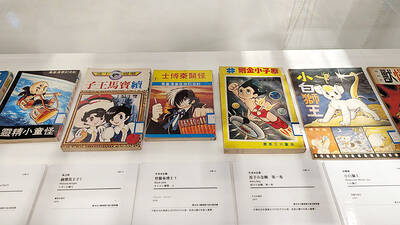
An exhibition celebrating Taiwan and Japan’s comic culture opened on Saturday in Taichung, featuring a section that explores Taiwanese reproductions of Japanese comics from when martial law limited Japanese representation. “A Century of Manga Culture: An Encounter of Taiwan and Japan’s Youth” held its Taiwan opening ceremony at Taichung’s National Taiwan Museum of Comics after an initial one-month run in Japan’s Kyoto International Manga Museum between May 24 and June 24. Much like the Kyoto exhibition, the show mainly celebrates the comic connection between Taiwan and Japan through late Taiwanese comic book


 RSS
RSS