


The modernization of China’s air force is largely focused on overwhelming Taiwan’s air power, an article in the latest edition of Defense News said.
The article highlights four types of air campaign that it says make up the training of the People’s Liberation Army’s air force — air offense, air defense, air blockade and airborne operations — all of which are in preparation for a future conflict with Taiwan that may or may not involve the US.
The strategy for dealing with US forces, the weekly says, largely focuses on “access denial,” that is preventing US aircraft carriers from entering waters near Taiwan.
This coincides with a report in last Thursday’s Washington Times that said the US was closely watching the anticipated test-firing of China’s new conventionally armed strategic missile, which is said to be capable of hitting US aircraft carriers and other warships at sea.
The Defense News report quoted an unnamed former US defense official as saying: “If there were a conflict with Taiwan, [China] would clearly begin by using its aircraft in an offensive campaign.”
But he added that the Chinese air force would quickly have to shift to a defensive campaign if the US began attacking Chinese military targets along its coasts, possibly affecting its sortie capability as it moved its aircraft inland.
The former official also raised questions about the Chinese air force’s training regime, saying it was unclear what the goals of the training were.
Asked by the weekly about China’s ongoing moves to purchase mid-air refueling aircraft and whether this was part of Chinese plans to project power beyond Taiwan, to Guam or Hawaii for example, the former official dismissed the rumors as “fluff.”
He said it was difficult to name a target or circumstance for which China would need that kind of capability.

UNREASONABLE SURVEILLANCE: A camera targeted on an road by a neighbor captured a man’s habitual unsignaled turn into home, netting him dozens of tickets The Taichung High Administrative Court has canceled all 45 tickets given to a man for failing to use a turn signal while driving, as it considered long-term surveillance of his privacy more problematic than the traffic violations. The man, surnamed Tseng (曾), lives in Changhua County and was reported 45 times within a month for failing to signal while driving when he turned into the alley where his residence is. The reports were filed by his neighbor, who set up security cameras that constantly monitored not only the alley but also the door and yard of Tseng’s house. The surveillance occurred from July

A Japan Self-Defense Forces vessel entered the Taiwan Strait yesterday, Japanese media reported. After passing through the Taiwan Strait, the Ikazuchi was to proceed to the South China Sea to take part in a joint military exercise with the US and the Philippines, the reports said. Japan Self-Defense Force vessels were first reported to have passed through the strait in September, 2024, with two further transits taking place in February and June last year, the Asahi Shimbun reported. Yesterday’s transit also marked the first time since Japanese Prime Minister Sanae Takaichi took office that a Japanese warship has been sent through the Taiwan

‘SAME OLD TRICK’: Even if Beijing resumes individual travel to Taiwan, it would only benefit Chinese tourism companies, the Economic Democracy Union convener said China’s 10 new “incentives” are “sugar-coated poison,” an official said yesterday, adding that Taiwanese businesses see them clearly for what they are, but that Beijing would inevitably find some local collaborators to try to drums up support. The official, speaking on condition of anonymity, made the remark ahead of a news conference the General Chamber of Commerce is to hold today. The event, titled “Industry Perspectives on China’s Recent Pro-Taiwan Policies,” is expected to include representatives from industry associations — such as those in travel, hotels, food and agriculture — to request the government cooperate with China’s new measures, people familiar with
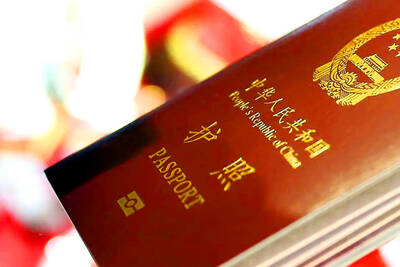
ANOTHER OPTION: The 13-year-old, whose residency status was revoked for holding a Chinese passport, could still apply for residency on humanitarian grounds, the government said The Executive Yuan has rejected an appeal from a 13-year-old Chinese student surnamed Lu (陸), whose permanent residency was revoked after immigration officers discovered he held a Chinese passport. Lu in December 2023 applied to settle in Taiwan to be with his mother, surnamed Lin (林), who is a Taiwan resident, an appeal decision released this month by the Executive Yuan showed. Lin settled in Taiwan after marrying a Taiwanese man in 2003, but the two divorced in 2011, and after marrying a Chinese man, she had Lu, the Executive Yuan’s appeals committee said. Lu’s application was approved in December 2024, and in


 RSS
RSS