


Since the implementation of the plastic bag reduction program in 2006, 1.44 billion plastic bags have been recycled annually, and the usage of plastic bags nationwide has been reduced by 2 billion per year, the Environmental Protection Administration (EPA) said yesterday.
“Taiwan is the first country in the world that is implementing plastic recycling as a nation-wide program,” said Ho Soong-chin (何舜琴), director-general of the EPA’s department of Solid Waste Control.
Prior to the program, the number of plastic bags used annually was 20 billion, Ho said, which meant that each Taiwanese on average used 2.5 plastic bags a day.
Since the imple儉mentation of the program — which banned free plastic bags at government agencies, department stores, malls, supermarkets and convenience stores — the number of bags used in those sectors decreased from 3.43 billion to 1.4 billion, she said.
In response to a reporter noting that, even with 1.44 billion bags collected annually, the recycling rate for plastic bags was still a low 7 percent, Ho said the seemingly low figure was steadily increasing.
“It is also indisputable that since the implementation of the reduction and recycling program the number of plastic bags used has decreased significantly [in the sectors regulated],” she said.
Two methods were employed for the processing of bags, Ho said.
“With the dry method, relatively clean plastic bags are first melted, then made into plastic pebbles, which are the raw materials for recycled plastic products,” she said.
The wet method uses an additional breaking and cleaning process before melting the bags, making it capable of processing bags that contain grease or dirt, she said.
Though over 80 percent of cities and counties now practice plastic bag recycling, not all areas have the wet recycling technology, Ho said.
“If you live in a city or county that can only deal with dry bags, all dirty bags must go into the regular trash and get incinerated,” she said.
Another problem is that not all plastic bags are recyclable, Ho said.
“Bags that include aluminum or other materials, such as keep-fresh packaging commonly seen in potato chip products, tea leaves, coffee beans or frozen foods, are not recyclable,” she said.
Calling on the public to distinguish unrecyclable materials from recyclable polyethylene bags, Ho said that correct sorting would help decrease the work time of garbage collectors and alleviate them from additional burdens.
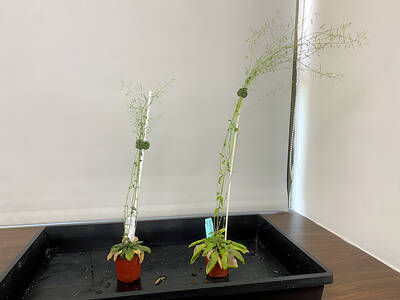
Taiwanese scientists have engineered plants that can capture about 50 percent more carbon dioxide and produce more than twice as many seeds as unmodified plants, a breakthrough they hope could one day help mitigate global warming and grow more food staples such as rice. If applied to major food crops, the new system could cut carbon emissions and raise yields “without additional equipment or labor costs,” Academia Sinica researcher and lead author the study Lu Kuan-jen (呂冠箴) said. Academia Sinica president James Liao (廖俊智) said that as humans emit 9.6 billion tonnes of carbon dioxide compared with the 220 billion tonnes absorbed
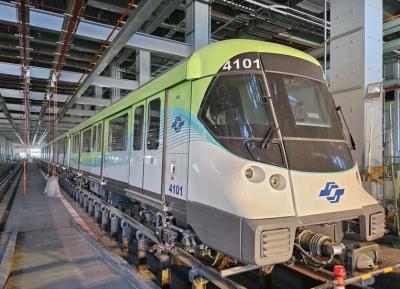
The Taipei Mass Rapid Transit (MRT) Wanda-Zhonghe Line is 81.7 percent complete, with public opening targeted for the end of 2027, New Taipei City Mayor Hou You-yi (侯友宜) said today. Surrounding roads are to be open to the public by the end of next year, Hou said during an inspection of construction progress. The 9.5km line, featuring nine underground stations and one depot, is expected to connect Chiang Kai-shek Memorial Hall Station to Chukuang Station in New Taipei City’s Jhonghe District (中和). All 18 tunnels for the line are complete, while the main structures of the stations and depot are mostly finished, he
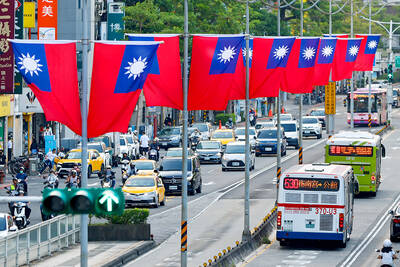
Taipei is to implement widespread road closures around Taipei 101 on Friday to make way for large crowds during the Double Ten National Day celebration, the Taipei Department of Transportation said. A four-minute fireworks display is to be launched from the skyscraper, along with a performance by 500 drones flying in formation above the nearby Nanshan A21 site, starting at 10pm. Vehicle restrictions would occur in phases, they said. From 5pm to 9pm, inner lanes of Songshou Road between Taipei City Hall and Taipei 101 are to be closed, with only the outer lanes remaining open. Between 9pm and 9:40pm, the section is
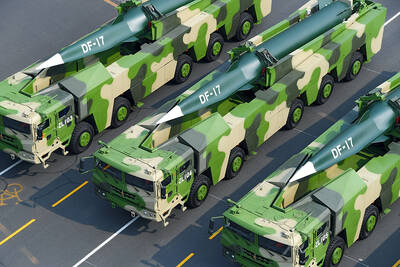
China’s plan to deploy a new hypersonic ballistic missile at a Chinese People’s Liberation Army Rocket Force (PLARF) base near Taiwan likely targets US airbases and ships in the western Pacific, but it would also present new threats to Taiwan, defense experts said. The New York Times — citing a US Department of Defense report from last year on China’s military power — on Monday reported in an article titled “The missiles threatening Taiwan” that China has stockpiled 3,500 missiles, 1.5 times more than four years earlier. Although it is unclear how many of those missiles were targeting Taiwan, the newspaper reported


 RSS
RSS