


The former director of the Democratic Progressive Party's (DPP) Sijhih City (汐止) chapter, Tsai Mao-hsiung (蔡茂雄), was yesterday sentenced to 14 years and two months in prison by the Taiwan High Court after being found guilty of sexually abusing three junior-high-school boys.
The court ordered that Tsai, 53, receive three years of behavioral therapy before beginning his jail sentence.
In making its ruling, the court said Tsai had caused his victims serious mental and physical distress. Another aggravating factor was that Tsai had not admitted his crimes, the court said.
Tsai is allowed to appeal his case to the Supreme Court.
The court said that Tsai, a married man, met "Boy A" at a convenience store in Sijhih shortly after the boy had graduated from elementary school in June 2004. Tsai invited the boy home with him and had sex with him later that day.
Tsai had since met the boy every two or three days for sex, the court said. Tsai was said to have paid the boy between NT$300 and NT$500 for each sexual encounter.
The court said that in September 2004, Boy A had introduced Tsai to "Boy B." Tsai took Boy B to his office, offered him alcohol and drugs and then abused him, the court said. Later that month, Boy A introduced Tsai to "Boy C," who was also abused.
In March 2005, Boy A's parents became suspicious about their son's disposable income and confronted him. He admitted what had happened and his parents went to the police.
Tsai was arrested in July 2005 during a raid on his residence and office in Sijhih. At the same time, police found naked photographs of Boy A and Boy B, which revealed minor wounds on the boys' bodies, together with drugs and sex toys.
The court said Tsai had threatened to hurt Boy A's family when he learned that they had filed charges against him. He also tried to bribe the family to withdraw their accusations, the court said.
Tsai was expelled from the DPP after his arrest in July 2005.
In a statement issued at the time, the party said it would prevent "serious" criminals from becoming elected DPP officials.
"A person with a serious criminal record will be prohibited from becoming a DPP official," said Lee Yi-yang (李逸洋), then DPP secretary-general.
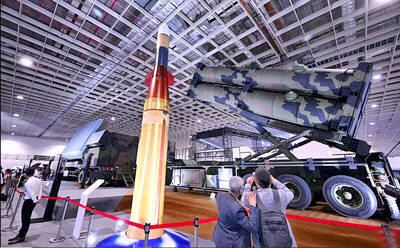
Taiwan is to commence mass production of the Tien Kung (天弓, “Sky Bow”) III, IV and V missiles by the second quarter of this year if the legislature approves the government’s NT$1.25 trillion (US$39.78 billion) special defense budget, an official said yesterday. Commenting on condition of anonymity, a defense official with knowledge of the matter said that the advanced systems are expected to provide crucial capabilities against ballistic and cruise missiles for the proposed “T-Dome,” an advanced, multi-layered air defense network. The Tien Kung III is an air defense missile with a maximum interception altitude of 35km. The Tien Kung IV and V
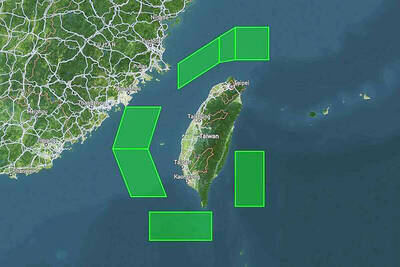
The disruption of 941 flights in and out of Taiwan due to China’s large-scale military exercises was no accident, but rather the result of a “quasi-blockade” used to simulate creating the air and sea routes needed for an amphibious landing, a military expert said. The disruptions occurred on Tuesday and lasted about 10 hours as China conducted live-fire drills in the Taiwan Strait. The Civil Aviation Administration (CAA) said the exercises affected 857 international flights and 84 domestic flights, affecting more than 100,000 travelers. Su Tzu-yun (蘇紫雲), a research fellow at the government-sponsored Institute for National Defense and Security Research, said the air
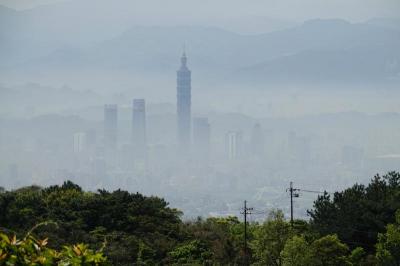
A strong continental cold air mass is to bring pollutants to Taiwan from tomorrow, the Ministry of Environment said today, as it issued an “orange” air quality alert for most of the country. All of Taiwan except for Hualien and Taitung counties is to be under an “orange” air quality alert tomorrow, indicating air quality that is unhealthy for sensitive groups. In China, areas from Shandong to Shanghai have been enveloped in haze since Saturday, the ministry said in a news release. Yesterday, hourly concentrations of PM2.5 in these areas ranged from 65 to 160 micrograms per cubic meter (mg/m³), and pollutants were
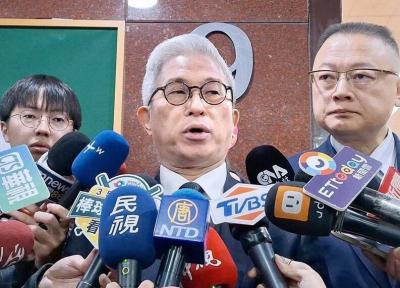
Taiwan’s armed forces have established response protocols for a wide range of sudden contingencies, including the “Wan Chun Plan” to protect the head of state, the Ministry of Defense (MND) said today. After US President Donald Trump on Saturday launched a series of airstrikes in Venezuela and kidnapped Venezuelan President Nicolas Maduro, concerns have been raised as to whether China would launch a similar “decapitation strike” on Taiwan. The armed forces regularly coordinate with relevant agencies and practice drills to ensure preparedness for a wide range of scenarios, Vice Minister of National Defense Hsu Szu-chien (徐斯儉) told reporters before a


 RSS
RSS