


Academics studying the 228 Incident yesterday suggested the government bring in foreign perspectives to establish the facts of the tragedy.
Many believe that the full history of the incident has not been revealed and that the incident is the source of "ethnic discord" in the country, the academics said.
The panelists made the comments at a two-day symposium hosted by The Memorial Foundation of the 228 Incident in Taipei yesterday. The symposium was held to commemorate the 61st anniversary of the 228 Incident, which started on Feb. 27, 1947, when the Chinese Nationalist Party (KMT) regime suppressed an uprising, leaving tens of thousands dead, missing or imprisoned.
"Many important issues of the incident have been overlooked until now and we were unable to examine [discrepancies in] official statements on the event without the viewpoints of foreigners," Su Chung-yao (蘇崇瑤), an associate professor at Providence University, told the audience.
Su published a paper that compared accounts of the incident from three perspectives: the official A Research Report on the 228 Incident published by the Executive Yuan in 1992, research conducted by George Kerr, who worked at the US Consulate in Taipei at the time of the massacre and coverage of the event by foreign media outlets.
The official report concluded that the suppression occurred because the uprising had spun out of control. Foreign coverage found that the uprising was purposely created by the executive administrator of Taiwan, Chen Yi (陳儀), with the intention of using the revolt as an excuse to request that China dispatch reinforcements to Taiwan, Su said.
James Wang (王景弘), a senior reporter, shared with the symposium a paper on analyses of the New York Times' reports on the 228 incident.
"The New York Times' coverage served as important historical records of the brutality of the KMT regime and the demand of the people of Taiwan at that time that they would rather be governed by the UN or the US than by the Chinese," he said.
A number of foreign guests were also invited to express their views on the tragedy.
Joung Hwa Kim, a professor at South Korea's Chungbuk National University, said that one of the major findings of the many studies on the incident was that dictator Chiang Kai-shek (蔣介石) was the main party behind the incident that eventually led many Taiwanese people to develop Taiwan-centered consciousness.
"The spirit, however, does not seem enough for Taiwan to obtain independence easily," Kim said. "Taiwan needs international support for its independence line. Aside from this, the biggest obstacle is its close connection with China. Taiwan is getting both threats and conciliation from China."
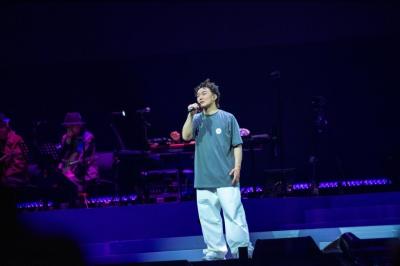
Hong Kong singer Eason Chan’s (陳奕迅) concerts in Kaohsiung this weekend have been postponed after he was diagnosed with Covid-19 this morning, the organizer said today. Chan’s “FEAR and DREAMS” concert which was scheduled to be held in the coming three days at the Kaohsiung Arena would be rescheduled to May 29, 30 and 31, while the three shows scheduled over the next weekend, from May 23 to 25, would be held as usual, Universal Music said in a statement. Ticket holders can apply for a full refund or attend the postponed concerts with the same seating, the organizer said. Refund arrangements would
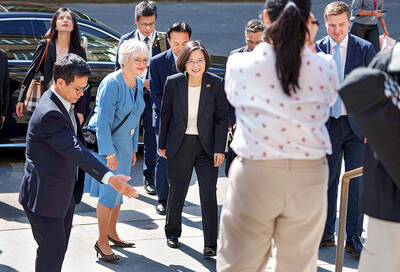
Former president Tsai Ing-wen (蔡英文) on Monday called for greater cooperation between Taiwan, Lithuania and the EU to counter threats to information security, including attacks on undersea cables and other critical infrastructure. In a speech at Vilnius University in the Lithuanian capital, Tsai highlighted recent incidents in which vital undersea cables — essential for cross-border data transmission — were severed in the Taiwan Strait and the Baltic Sea over the past year. Taiwanese authorities suspect Chinese sabotage in the incidents near Taiwan’s waters, while EU leaders have said Russia is the likely culprit behind similar breaches in the Baltic. “Taiwan and our European
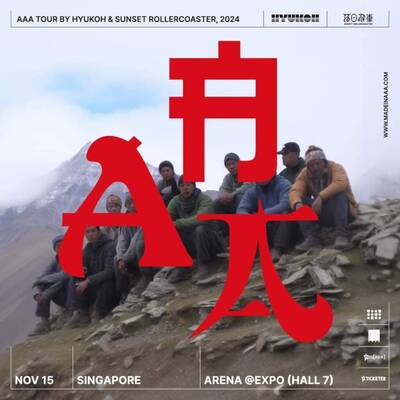
Taiwanese indie band Sunset Rollercoaster and South Korean outfit Hyukoh collectively received the most nominations at this year’s Golden Melody Awards, earning a total of seven nods from the jury on Wednesday. The bands collaborated on their 2024 album AAA, which received nominations for best band, best album producer, best album design and best vocal album recording. “Young Man,” a single from the album, earned nominations for song of the year and best music video, while another track, “Antenna,” also received a best music video nomination. Late Hong Kong-American singer Khalil Fong (方大同) was named the jury award winner for his 2024 album
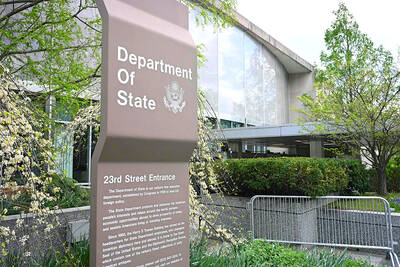
The US Department of State on Monday reaffirmed that US policy on Taiwan remains unchanged, following US President Donald Trump’s use of the term “unification” while commenting on recent trade talks with China. Speaking at a wide-ranging press conference, Trump described what he viewed as progress in trade negotiations with China held in Geneva, Switzerland, over the weekend. “They’ve agreed to open China — fully open China, and I think it’s going to be fantastic for China. I think it’s going to be fantastic for us,” Trump said. “I think it’s going to be great for unification and peace.” Trump’s use of the


 RSS
RSS