


As many as 90 percent of children surveyed by the Formosa Cancer Foundation identified themselves as victims of second-hand tobacco smoke, with the majority exposed to the hazard at home.
The results of the survey were released yesterday to coincide with "World No Tobacco Day," whose theme this year is tobacco-free youth.
The survey showed that while more than 90 percent of respondents wish to live in a smoke-free environment, 70 percent have family members who smoke at home and another 60 percent have been forced to breathe second-hand smoke exhaled by a guest.
Half of respondents did not know how to avoid second-hand smoke, mainly because they feared they could get scolded by their parents or other family members.
The online survey was conducted between Jan. 15 and Jan. 28 with 1,825 children.
To help children reduce their exposure to second-hand smoke, the foundation has designed a set of "no smoking" stickers to be placed in living rooms, cars, schools and bathrooms.
In related news, the John Tung Foundation, the nation's biggest anti-smoking non-profit organization, has called upon bureaus of health nationwide to fine convenience stores for not excluding cigarettes from giveaway promotions.
After collecting a certain number of purchase coupons at convenience stores -- including cigarettes -- customers can redeem them for collectible giveaway figurines. The foundation argues that such giveaways could encourage smoking, especially among younger people, who are most likely to be attracted to the figurines.
"Although the Tobacco Hazards Prevention Act [菸害防制法] bans promotions and giveaways involving tobacco products, there is a clause that exempts promotional items valued at below a quarter of the price of the tobacco product," Bureau of Health Promotion deputy director-general Chao Kun-yu (趙坤郁) said.
However, the legislature has removed the clause in the revised version of the Tobacco Hazards Prevention Act, which will come into force on Jan. 11 next year.
"Until then, we can only appeal to the morality of businesses to exclude cigarettes from their promotional campaigns," Chao said.
ADDITIONAL REPORTING BY ANGELICA OUNG
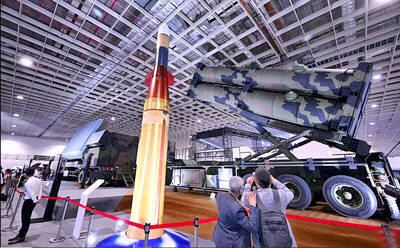
Taiwan is to commence mass production of the Tien Kung (天弓, “Sky Bow”) III, IV and V missiles by the second quarter of this year if the legislature approves the government’s NT$1.25 trillion (US$39.78 billion) special defense budget, an official said yesterday. Commenting on condition of anonymity, a defense official with knowledge of the matter said that the advanced systems are expected to provide crucial capabilities against ballistic and cruise missiles for the proposed “T-Dome,” an advanced, multi-layered air defense network. The Tien Kung III is an air defense missile with a maximum interception altitude of 35km. The Tien Kung IV and V
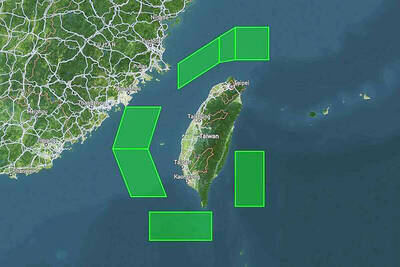
The disruption of 941 flights in and out of Taiwan due to China’s large-scale military exercises was no accident, but rather the result of a “quasi-blockade” used to simulate creating the air and sea routes needed for an amphibious landing, a military expert said. The disruptions occurred on Tuesday and lasted about 10 hours as China conducted live-fire drills in the Taiwan Strait. The Civil Aviation Administration (CAA) said the exercises affected 857 international flights and 84 domestic flights, affecting more than 100,000 travelers. Su Tzu-yun (蘇紫雲), a research fellow at the government-sponsored Institute for National Defense and Security Research, said the air
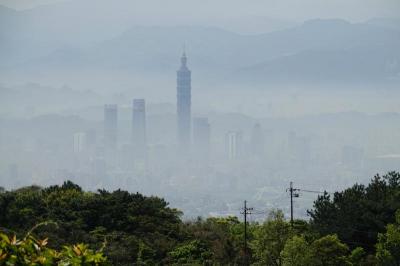
A strong continental cold air mass is to bring pollutants to Taiwan from tomorrow, the Ministry of Environment said today, as it issued an “orange” air quality alert for most of the country. All of Taiwan except for Hualien and Taitung counties is to be under an “orange” air quality alert tomorrow, indicating air quality that is unhealthy for sensitive groups. In China, areas from Shandong to Shanghai have been enveloped in haze since Saturday, the ministry said in a news release. Yesterday, hourly concentrations of PM2.5 in these areas ranged from 65 to 160 micrograms per cubic meter (mg/m³), and pollutants were
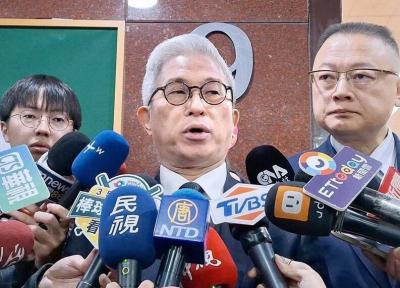
Taiwan’s armed forces have established response protocols for a wide range of sudden contingencies, including the “Wan Chun Plan” to protect the head of state, the Ministry of Defense (MND) said today. After US President Donald Trump on Saturday launched a series of airstrikes in Venezuela and kidnapped Venezuelan President Nicolas Maduro, concerns have been raised as to whether China would launch a similar “decapitation strike” on Taiwan. The armed forces regularly coordinate with relevant agencies and practice drills to ensure preparedness for a wide range of scenarios, Vice Minister of National Defense Hsu Szu-chien (徐斯儉) told reporters before a


 RSS
RSS