


The Ministry of Justice said yesterday that it would take stock of undercover investigation systems used in other countries to create a similar system in Taiwan.
Chiang Huei-ming (
Chiang made the remarks after the Chinese-language Liberty Times (the Taipei Times' sister paper) reported that Premier Chang Chun-hsiung (張俊雄) had instructed the ministry as well as the NPA to push for an "undercover investigation law."
A draft law proposed by the ministry stipulates that undercover agents could conduct major crime investigations under approved aliases or identities within a certain period of time.
The crimes involved cover illegal immigration, drugs or arms trafficking and other crimes that pose a threat to law and order and national security, the Liberty Times reported.
Chiang said the NPA was in favor of a law allowing undercover work, as it would help crime investigations.
The ministry also supports the law, but said that technical details, such as protection of the identities of undercover personnel and their safety, still needed to be addressed.
Chiang said that a US police officer serving undercover in one state could be transferred to another state after completing his or her mission, and given a change of identity to ensure the officer's safety. By comparison, Taiwan is tiny and its personnel system follows a set procedure concerning identity registration.
"In Taiwan, the protection of the personal data of undercover officers will have to be carefully thought out," he said.
In the absence of an undercover investigation law, Chiang said, it is very difficult for the NPA to send police officers on undercover assignments without violating the law.
He said that whether undercover officers could be pardoned if they committed a crime to gain criminals' trust was also a matter that needed to be studied when drafting the law.
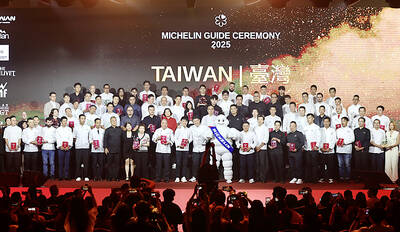
Eight restaurants in Taiwan yesterday secured a one-star rating from the Michelin Guide Taiwan for the first time, while three one-star restaurants from last year’s edition were promoted to two stars. Forty-three restaurants were awarded one star this year, including 34 in Taipei, five in Taichung and four in Kaohsiung. Hosu (好嶼), Chuan Ya (川雅), Sushi Kajin (鮨嘉仁), aMaze (心宴), La Vie by Thomas Buhner, Yuan Yi (元一) and Frassi in Taipei and Front House (方蒔) in Kaohsiung received a one-star rating for the first time. Hosu is known for innovative Taiwanese dishes, while Chuan Ya serves Sichuan cuisine and aMaze specializes

Taitung County is to launch charter flights to Malaysia at the end of this year, after setting up flights to Vietnam and Thailand, the Taitung County Government said yesterday. The new charter flight services, provided by low-cost carrier Batik Air Malaysia, would be part of five-day tour packages for visits to Taitung County or Malaysia. The Batik Air charter flight, with about 200 seats, would take Malaysian tourists to Taitung on Dec. 30 and then at 12:35pm return to Kuala Lumpur with Taiwanese tourists. Another charter flight would bring the Taiwanese home on Jan. 3 next year, arriving at 5:30pm, before taking the

Taiwan High Speed Rail Corp. (THSRC) plans to ease strained capacity during peak hours by introducing new fare rules restricting passengers traveling without reserved seats in 2026, company Chairman Shih Che (史哲) said Wednesday. THSRC needs to tackle its capacity issue because there have been several occasions where passengers holding tickets with reserved seats did not make it onto their train in stations packed with individuals traveling without a reserved seat, Shih told reporters in a joint interview in Taipei. Non-reserved seats allow travelers maximum flexibility, but it has led to issues relating to quality of service and safety concerns, especially during
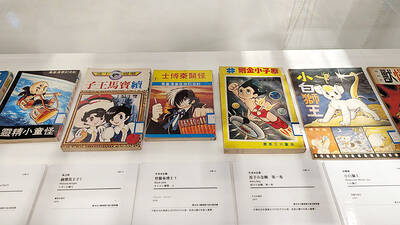
An exhibition celebrating Taiwan and Japan’s comic culture opened on Saturday in Taichung, featuring a section that explores Taiwanese reproductions of Japanese comics from when martial law limited Japanese representation. “A Century of Manga Culture: An Encounter of Taiwan and Japan’s Youth” held its Taiwan opening ceremony at Taichung’s National Taiwan Museum of Comics after an initial one-month run in Japan’s Kyoto International Manga Museum between May 24 and June 24. Much like the Kyoto exhibition, the show mainly celebrates the comic connection between Taiwan and Japan through late Taiwanese comic book


 RSS
RSS