


Five batches of frozen shrimp from China tested positive for the banned antibiotic nitrofuran, Department of Health (DOH) officials said yesterday.
"Further importation of shrimp from China will be suspended until we are convinced that the situation has been remedied," Bureau of Food Sanitation director Cheng Huei-wen (
Nitrofuran is sometimes added to aquaculture ponds to protect fish from harmful microorganisms. However, the use of nitrofuran in food production is banned in this country as well as many others such as the US and in the EU because of possible links with cancer and congenital birth defects.
Cheng said the DOH decided to up its inspections of Chinese seafood from 5 percent to 50 percent of all shipments in early July after quality control issues with Chinese seafood came to light in the US.
Since then, five lots of Chinese shrimp has tested positive for nitrofuran. Inspection was also stepped up for other Chinese aquaculture products but has not yet turned up incidents of products tainted with banned substances thus far.
In the five batches of shrimp that tested positive for nitrofuran, residues ranged from 1.1ppb to 39.2ppb in concentration of nitrofuran metabolites. The total amount of tainted shrimp adds up to 46,000kg.
"We will not allow Chinese shrimp to be imported until we receive a good explanation of how they will prevent nitrofuran from tainting the shrimp again," Cheng said.
Last October, the public was shocked when hairy crabs imported from China, long considered a delicacy, tested positive for nitrofuran. However, unlike last year, when tainted crabs were already sold and eaten by the time test results became public, none of the five shipments of tainted shrimp have made it to the stores.
Yang Chen-chang (
"Of course, since nitrofuran is a banned additive, it should not be there in our food," said Yang.
"However, the concentration of nitrofuran present in recent cases, in the parts per billion range, is not really high enough for people to get worried about."
It is still legal to use nitrofuran to treat problems such as urinary tract infections, although it is rarely prescribed nowadays, Yang said.
An effective treatment dose is much higher than an average person could reasonably consume from tainted shrimp, he said.
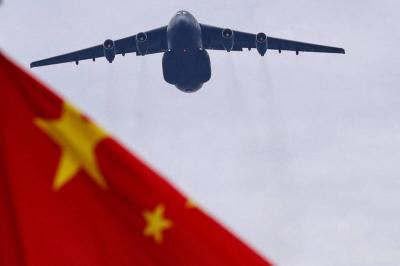
Beijing could eventually see a full amphibious invasion of Taiwan as the only "prudent" way to bring about unification, the US Department of Defense said in a newly released annual report to Congress. The Pentagon's "Annual Report to Congress: Military and Security Developments Involving the People's Republic of China 2025," was in many ways similar to last year’s report but reorganized the analysis of the options China has to take over Taiwan. Generally, according to the report, Chinese leaders view the People's Liberation Army's (PLA) capabilities for a Taiwan campaign as improving, but they remain uncertain about its readiness to successfully seize

Taiwan is getting a day off on Christmas for the first time in 25 years. The change comes after opposition parties passed a law earlier this year to add or restore five public holidays, including Constitution Day, which falls on today, Dec. 25. The day marks the 1947 adoption of the constitution of the Republic of China, as the government in Taipei is formally known. Back then the Chinese Nationalist Party (KMT) governed China from Nanjing. When the KMT, now an opposition party in Taiwan, passed the legislation on holidays, it said that they would help “commemorate the history of national development.” That

Trips for more than 100,000 international and domestic air travelers could be disrupted as China launches a military exercise around Taiwan today, Taiwan’s Civil Aviation Administration (CAA) said yesterday. The exercise could affect nearly 900 flights scheduled to enter the Taipei Flight Information Region (FIR) during the exercise window, it added. A notice issued by the Chinese Civil Aviation Administration showed there would be seven temporary zones around the Taiwan Strait which would be used for live-fire exercises, lasting from 8am to 6pm today. All aircraft are prohibited from entering during exercise, it says. Taipei FIR has 14 international air routes and
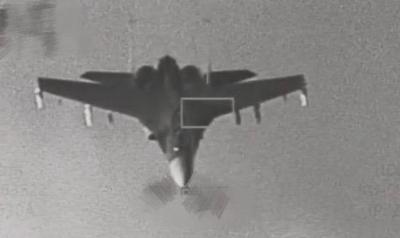
The Ministry of National Defense (MND) today released images of the military tracking China’s People's Liberation Army (PLA) movements during the latest round of Chinese drills around Taiwan. The PLA began "Justice Mission 2025" drills today, carrying out live-fire drills, simulated strikes on land and maritime targets, and exercises to blockade the nation's main ports. The exercises are to continue tomorrow, with the PLA announcing sea and air space restrictions for five zones around Taiwan for 10 hours starting from 8:30am. The ministry today released images showing a Chinese J-16 fighter jet tracked by a F-16V Block 20 jet and the


 RSS
RSS