


Room 201 of Yonghe's discreet and romantic Imore Motel might seem like an unlikely site for a news conference, but on Saturday the room was crammed with reporters and cameramen eager to learn more about the controversial two-day-and-one-night sex therapy workshop held at the love motel.
Although the course generated enormous media attention and participating couples said they had gained from it, health specialists criticized the event as overly commercialized and sensationalistic.
The workshop was co-sponsored by the drug company Eli Lilly. A stack of Eli Lilly's erectile dysfunction drug Cialis appeared amid a display of items such as scented candles and dildos.

PHOTO: LI YING, TAIPEI TIMES
The participating couples and participants at the press conference all wore polo shirts emblazoned with the Cialis logo.
"After the kids came along, our sex life completely stalled," said a 39-year-old participant who wished only to be identified as Mrs Lee (
"It doesn't help that I work until 2am or 3am most days," the 34-year-old Mr Lee said.
Their children, aged three and five, still sleep in the marital bed, the couple told the Taipei Times, making romance difficult.
"We are down to making love only once every two or three months," Mr Lee said. "When we do have time away from the kids, we're too tired or busy with other things to think about sex."
Despite the fact that the couple named lack of time and privacy as the major factors behind their flagging sex life, staffers at the press conference told Mr Lee and another participant, Mr He, to take a Cialis pill in front of the cameras.
"The fact that the Cialis logo is clearly visible in news photos and TV footage is blatant product placement," said Lyu Shu-yu (
The workshop was covered by many local newspapers.
The Chinese-language China Times devoted its entire third page to stories and photos about the event.
Calling for more restraint from pharmaceutical companies and the media, Lyu described the workshop as "performance" rather than medical education.
"The media plays an important role conveying unfamiliar medical vocabulary and concepts," she said. "However, a lot of medical news coverage is overly sensational, misleading, shallow and commercialized."
The common practice of pharmaceutical companies or clinics holding sensational or lavish press conferences to showcase their products is worrying, she said.
"I remember a news conference held by a drug company that I attended as a guest. It was held at the Formosa Regent. The buffet alone probably cost more than NT$1,000 a head," Lyu said. "And all the reporters received a goodie bag."
"It's hard to quantify the effect these favors have on people," she said. "But a lot of newspapers wrote about the drug the following day."
In addition to the treats, news conferences sponsored by interested parties also provide reporters with accessible sources such as doctors, patients and photo opportunities.
"The danger is that reporters rely too much on the sources provided by pharmaceutical companies and don't independently confirm what is being said," Lyu said. "This is especially true if the source is a doctor at a famous hospital."
Lyu urged the media to work toward finding a better balance.
"Unlike ads, people assume that news reports are neutral and authoritative, making media coverage enormously influential," Lyu said. "This is why it is very important that the media not be used by interested parties such as clinics and drug companies."
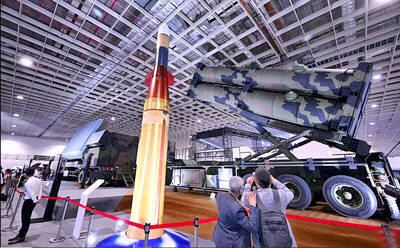
Taiwan is to commence mass production of the Tien Kung (天弓, “Sky Bow”) III, IV and V missiles by the second quarter of this year if the legislature approves the government’s NT$1.25 trillion (US$39.78 billion) special defense budget, an official said yesterday. Commenting on condition of anonymity, a defense official with knowledge of the matter said that the advanced systems are expected to provide crucial capabilities against ballistic and cruise missiles for the proposed “T-Dome,” an advanced, multi-layered air defense network. The Tien Kung III is an air defense missile with a maximum interception altitude of 35km. The Tien Kung IV and V
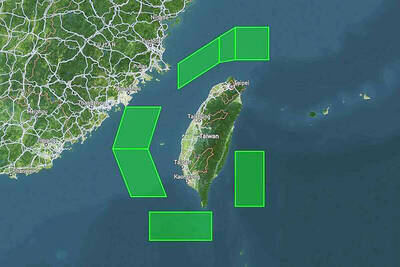
The disruption of 941 flights in and out of Taiwan due to China’s large-scale military exercises was no accident, but rather the result of a “quasi-blockade” used to simulate creating the air and sea routes needed for an amphibious landing, a military expert said. The disruptions occurred on Tuesday and lasted about 10 hours as China conducted live-fire drills in the Taiwan Strait. The Civil Aviation Administration (CAA) said the exercises affected 857 international flights and 84 domestic flights, affecting more than 100,000 travelers. Su Tzu-yun (蘇紫雲), a research fellow at the government-sponsored Institute for National Defense and Security Research, said the air
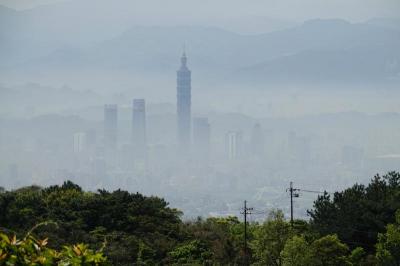
A strong continental cold air mass is to bring pollutants to Taiwan from tomorrow, the Ministry of Environment said today, as it issued an “orange” air quality alert for most of the country. All of Taiwan except for Hualien and Taitung counties is to be under an “orange” air quality alert tomorrow, indicating air quality that is unhealthy for sensitive groups. In China, areas from Shandong to Shanghai have been enveloped in haze since Saturday, the ministry said in a news release. Yesterday, hourly concentrations of PM2.5 in these areas ranged from 65 to 160 micrograms per cubic meter (mg/m³), and pollutants were
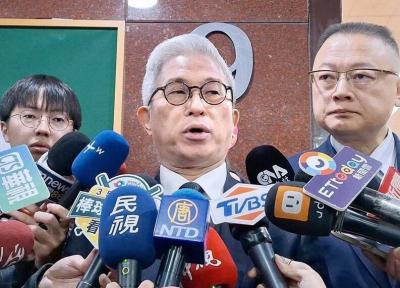
Taiwan’s armed forces have established response protocols for a wide range of sudden contingencies, including the “Wan Chun Plan” to protect the head of state, the Ministry of Defense (MND) said today. After US President Donald Trump on Saturday launched a series of airstrikes in Venezuela and kidnapped Venezuelan President Nicolas Maduro, concerns have been raised as to whether China would launch a similar “decapitation strike” on Taiwan. The armed forces regularly coordinate with relevant agencies and practice drills to ensure preparedness for a wide range of scenarios, Vice Minister of National Defense Hsu Szu-chien (徐斯儉) told reporters before a


 RSS
RSS