

A Taiwanese man, who two years ago was recognized as a living, reincarnated Buddha and given the holy title of The Third Tulku Palme Khyentse, is expected to receive the nation's first doctorate in Buddhism next month.
Huang Ying-chieh (
If Huang passes the oral test by a panel of seven academics, Huang will be awarded the first Buddhism doctorate from a Taiwanese institute, five years after the Ministry of Education permitted local colleges to open departments of religion.
Huang, 40, holds a bachelor's degree in sociology from Fujen University. He has spent most of his time during the past 10 years studying Tibetan Buddhism, shuttling between Huafan University's Graduate Institute of Asian Studies and the International Buddhism Institute in Nepal.
In 1997, H.H. Sakya Trizin, head of the Sakya Monastery in Qinghai, met Huang during his first-ever visit to Taiwan. The leader of the Sakya school of Tibetan Buddhism thought that Huang could be a reincarnated living Buddha, but did not say so at the time.
During Huang's visits to Nepal, India and Singapore over the ensuing years, Sakya Trizin met him "accidentally," and was further impressed with Huang.
Sakya Trizin submitted a proposal to H.H. Drikung Chetsang Rinpoche, head of the Drikung school of Tibetan Buddhism, in 2004, saying Huang was likely to be the third reincarnation of Palme Khyentse, the leader of the Palme school.
It took a year for Drikung Chetsang to recognize Huang. The verification process included dreams, special feelings and written records handed down from the Second Chetsang Drikung, saying that the Third Tulku Palme Khyentse might be a "Han Chinese."
H.H. Drikung Chetsang Rinpoche traveled to Taiwan in person in 2005 to ratify Huang as the Third Tulku Palme Khyentse. The Tibetan word tulku means "reincarnated one."
Huang said he didn't know why he was chosen. All he knew is that he has found Buddhism to be as important as his life since he was first exposed to it.
Huang's grandfather was a renowned calligrapher who worked for most of the major Buddhist temples and monasteries in Taiwan.
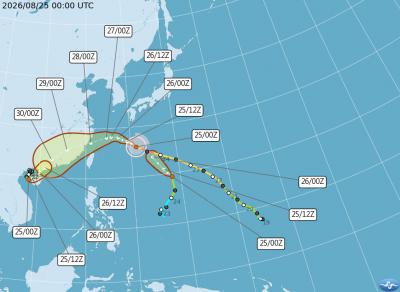
Typhoon Saudel has shown signs of weakening but is still expected to affect Taiwan when it comes closest to the nation on Friday, the Central Weather Administration (CWA) said today. The radius of Saudel shrank to about 220km as of 8am today from 250km a day earlier, and its maximum sustained winds were down to 155kph from 184kph previously, the weather agency said. As of 8am, Typhoon Saudel was 980km east of Taipei, moving west-northwest at 18kph, it said. Under the influence of a Pacific high pressure system, the storm is moving northward, meaning it is less likely to make landfall in Taiwan,

Minister of Sports Lee Yang (李洋) today said the Chinese Taipei Basketball Association (CTBA) has been urged not to undermine Taiwan’s credibility in international competitions, after a Taiwanese team advanced to the semi-finals of the 45th William Jones Cup over the Philippines last week due to a controversial new rule guaranteeing a semi-final place to the host team. The Republic of China Blue team advanced to the semi-finals after winning just one game in the group round due to a “host guarantee” spot, overtaking the Philippines, who held a 5-1 record ahead of the semi-finals. The Blue team finished the tournament
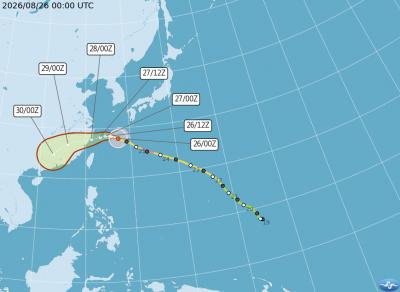
A sea warning for Typhoon Saudel, which has shifted to a more northerly track as it nears Taiwan, is expected early tomorrow, the Central Weather Administration (CWA) said today. As of this morning, Saudel was about 650km east-northeast of Taipei, moving west-northwest at 12kph with maximum sustained winds of 162kph, CWA data showed. Although Saudel remains a moderate typhoon, it has weakened and is expected to weaken further as it nears Taiwan due to unfavorable atmospheric and ocean conditions, CWA forecaster Lin Po-tung (林伯東) said. The storm is forecast to make its closest approach to Taiwan tomorrow and on Friday, Lin added. According to
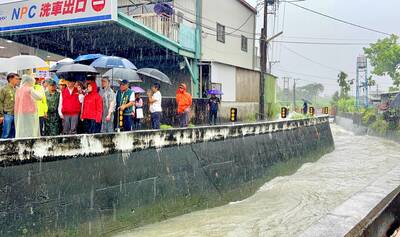
SEA WARNING EXPECTED: As atmospheric conditions are unfavorable for its development, the storm’s intensity is continuing to weaken, a CWA official said Typhoon Saudel is continuing to weaken and shift its path northward, with a sea warning expected to be issued this evening, the Central Weather Administration (CWA) said yesterday. The agency did not rule out issuing a land warning for outlying Lienchiang County (Matsu) tomorrow morning, although all storm warnings could be lifted by Friday night. Saudel is expected to be closest to Taiwan from tomorrow night to Friday, bringing localized heavy rain to northern and southern Taiwan, as well as central mountainous areas, the agency said. As of 2pm yesterday, the center of moderate Typhoon Saudel was about 890km east-northeast


 RSS
RSS