


President Chen Shui-bian (
Speaking in an interview with CNN last week, which aired yesterday noon in Taiwan on the station's Talk Asia program, Chen said that he and his running mate, Vice President Annette Lu (
"If it were not for that incident, we would have garnered more support in the rally organized on the eve of the election," Chen said.
assassination
The president was referring to the attempted assassination on March 19, 2004, in which bullets grazed Chen's stomach and hit Lu's knee while the pair was campaigning in Tainan.
Chen defeated the joint ticket of then Chinese Nationalist Party (KMT) chairman Lien Chan (
Chen said in the interview that he was very upset upon learning that the rest of the campaign rallies would be canceled because of the incident.
"I honestly did not know I was hit by a bullet and needed medical care. I thought it was firecrackers," he said.
While some have argued that the assassination attempt was staged, Chen said he and Lu did not need to put their lives in danger, as they were sure they would win.
"I believe such an assumption was cooked up by those who refuse to accept defeat," he said.
Chen said that while Taiwan's transition from authoritarianism to a democracy has been bumpy and shaky, Taiwanese are willing to face the challenges and make sacrifices if necessary.
a normal country
As the national leader, Chen vowed to turn Taiwan into a normal country, adding that Taiwan has yet to achieve normalization because the Constitution did not obtain the approval of the people.
"The 23 million people of Taiwan need a new constitution that is timely, relevant and viable," he said.
Chen said he was pleased to see that more than 60 percent of the public now identify themselves as Taiwanese, compared with 36 percent when he was first elected as president in 2000. He added that he would like to see the figure rise to 70 percent or 75 percent before he leaves office next year.
Describing the "state affairs fund" case as a political issue, Chen said Taiwan was experiencing the growing pains of an evolving democracy but he believed the judicial system would eventually prove his innocence.
When asked whether he would be willing to testify and defend himself in court after leaving office, Chen said "absolutely," because everybody must respect and follow the law.

Actor Darren Wang (王大陸) was sentenced to six months in prison, commutable to a fine, by the New Taipei District Court today for contravening the Personal Data Protection Act (個人資料保護法) in a case linked to an alleged draft-dodging scheme. Wang allegedly paid NT$3.6 million (US$114,380) to an illegal group to help him evade mandatory military service through falsified medical documents, prosecutors said. He transferred the funds to Chen Chih-ming (陳志明), the alleged mastermind of a draft-evasion ring, although he lost contact with him as he was already in detention on fraud charges, they said. Chen is accused of helping a

SECURITY: Starlink owner Elon Musk has taken pro-Beijing positions, and allowing pro-China companies to control Taiwan’s critical infrastructure is risky, a legislator said Starlink was reluctant to offer services in Taiwan because of the nation’s extremely high penetration rates in 4G and 5G services, the Ministry of Digital Affairs said yesterday. The ministry made the comments at a meeting of the legislature’s Transportation Committee, which reviewed amendments to Article 36 of the Telecommunications Management Act (電信管理法). Article 36 bans foreigners from holding more than 49 percent of shares in public telecommunications networks, while shares foreigners directly and indirectly hold are also capped at 60 percent of the total, unless specified otherwise by law. The amendments, sponsored by Chinese Nationalist Party (KMT) Legislator Ko
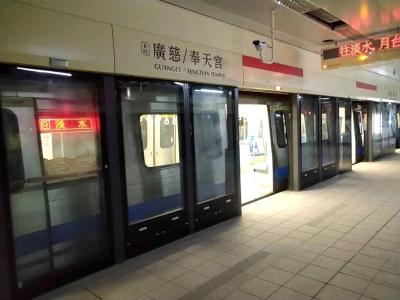
The eastern extension of the Taipei MRT Red Line could begin operations as early as late June, the Taipei Department of Rapid Transit Systems said yesterday. Taipei Rapid Transit Corp said it is considering offering one month of free rides on the new section to mark its opening. Construction progress on the 1.4km extension, which is to run from the current terminal Xiangshan Station to a new eastern terminal, Guangci/Fengtian Temple Station, was 90.6 percent complete by the end of last month, the department said in a report to the Taipei City Council's Transportation Committee. While construction began in October 2016 with an
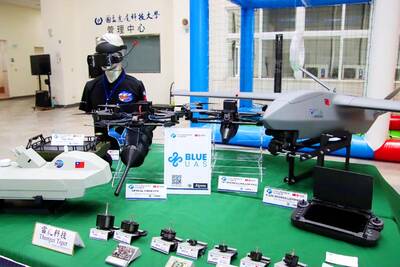
NON-RED SUPPLY: Boosting the nation’s drone industry is becoming increasingly urgent as China’s UAV dominance could become an issue in a crisis, an analyst said Taiwan’s drone exports to Europe grew 41.7-fold from 2024 to last year, with demand from Ukraine’s fight against Russian aggression the most likely driver of growth, a study showed. The Institute for Democracy, Society and Emerging Technology (DSET) in a statement on Wednesday said it found that many of Taiwan’s uncrewed aerial vehicle (UAV) sales were from Poland and the Czech Republic. These countries likely transferred the drones to Ukraine to aid it in its fight against the Russian invasion that started in 2022, it said. Despite the gains, Taiwan is not the dominant drone exporter to these markets, ranking second and fourth


 RSS
RSS