


The government will not accept the pandas that China reportedly is planning to give Taiwan if Beijing attempts to downgrade Taiwan's status to become part of China through the gift, Mainland Affairs Council (MAC) Chairman Joseph Wu (吳釗燮) said yesterday.
Wu made the remarks during a meeting of the Legislative Yuan's Home and Nations Committee in response to reports that the municipal government of Shanghai might offer to present two pandas to Taipei City in the name of city exchanges before a delegation led by Chinese Nationalist Party (KMT) Chairman Lien Chan (
Wu pointed out that the issue of pandas coming to Taiwan has been discussed between the two sides of the Taiwan Strait on 10 occasions since 1992, including one instance when Beijing proposed sending the animals to Taiwan for exhibition.
None of those plans were realized mainly because of an assessment by the Council of Agriculture indicating that Taiwan lacks the ability to raise pandas, which are an endangered species, Wu said.
In Shanghai, KMT Secretary-General Lin Fong-cheng (林豐正) confirmed that Chinese President Hu Jintao (胡錦濤) discussed the panda issue with Lien during their meeting last Friday and that Beijing authorities also mentioned the possibility of granting tariff-free treatment to some Taiwanese agricultural products while receiving the KMT delegation.
Lin said he believes Beijing will make an announcement of its decisions soon.
Also yesterday, the Hong Kong-based Wen Wei Po daily cited Xu Bodong (徐博東), a professor of Taiwan studies at Beijing Union University, as saying that it is "political obstacles," rather than technical problems, that is preventing Taiwan from accepting the pandas.
Xu said Shanghai is more suitable than Beijing to make the offer to Taiwan because the pandas are a gift for the people of Taiwan and a token of friendship between the cities of Shanghai and Taipei.
The gift can also promote exchanges between the Shanghai Zoo and Taipei Zoo, Xu said.
Xu claimed that judging from the climate, environment, food and technology in Taiwan, it is not inferior to any Chinese city in terms of ability to raise pandas.
Meanwhile, Pei Enle, deputy head of the Shanghai Zoo, told the paper that there is only one panda left in the zoo after the other one was loaned to the Memphis Zoo in the US.
Pei said it is quite unlikely that the zoo will give its only remaining panda to Lien and that the zoo has not received any notification concerning the matter.

Yangmingshan National Park authorities yesterday urged visitors to respect public spaces and obey the law after a couple was caught on a camera livestream having sex at the park’s Qingtiangang (擎天崗) earlier in the day. The Shilin Police Precinct in Taipei said it has identified a suspect and his vehicle registration number, and would summon him for questioning. The case would be handled in accordance with public indecency charges, it added. The couple entered the park at about 11pm on Thursday and began fooling around by 1am yesterday, the police said, adding that the two were unaware of the park’s all-day live
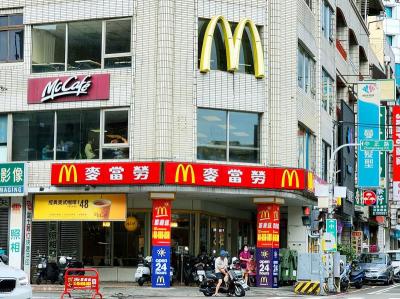
Fast food chain McDonald's is to raise prices by up to NT$5 on some products at its restaurants across Taiwan, starting on Wednesday next week, the company announced today. The prices of all extra value meals and sharing boxes are to increase by NT$5, while breakfast combos and creamy corn soup would go up by NT$3, the company said in a statement. The price of the main items of those meals, if ordered individually, would remain the same. Meanwhile, the price of a medium-sized lemon iced tea and hot cappuccino would rise by NT$3, extra dipping sauces for chicken nuggets would go up

Yangmingshan National Park’s Qingtiangang (擎天崗) nature area has gone viral after a park livestream camera observed a couple in the throes of intimate congress, which was broadcast live on YouTube, drawing large late-night crowds and sparking a backlash over noise, bright lights and disruption to wildlife habitat. The area’s livestream footage appeared to show a couple engaging in sexual activity on a picnic table in the park on Friday last week, with the uncensored footage streamed publicly online. The footage quickly spread across social media, prompting a tide of visitors to travel to the site to “check in” and recreate the

Minister of Digital Affairs Lin Yi-ching (林宜敬) yesterday cited regulatory issues and national security concerns as an expert said that Taiwan is among the few Asian regions without Starlink. Lin made the remarks on Facebook after funP Innovation Group chief executive officer Nathan Chiu (邱繼弘) on Friday said Taiwan and four other countries in Asia — China, North Korea, Afghanistan and Syria — have no access to Starlink. Starlink has become available in 166 countries worldwide, including Ukraine, Malaysia, the Philippines and Vietnam, in the six years since it became commercial, he said. While China and North Korea block Starlink, Syria is not


 RSS
RSS