


It seems perfectly justified and reasonable for a head of state to pay tribute in person to the leader of its allies. But when it comes to Taiwan, it is more than just a matter of booking a hotel room and then hopping on a plane.
The problem is China.
"The usual obstruction from Beijing is most likely to be expected," said Thomas Hung (
The Holy See is Taiwan's only diplomatic ally in Europe. When President Chen Shui-bian (陳水扁) paid a visit to the Apostolic Nunciature (the Embassy of the Holy See) on Monday afternoon to offer condolences for the passing of Pope John Paul II, an invitation was extended to Chen by the charge d'affaires of the embassy, Monsignor Ambrose Madtha, to attend the papal funeral in person on behalf of Taiwan.
Should Chen really make a trip to the Vatican, it would be an unprecedented scene for him to rub shoulders with other world leaders, such as US President George W. Bush, British Prime Minister Tony Blair, French President Jacques Chirac, UN Secretary-General Kofi Annan and dozens of other world leaders who are expected to attend the papal funeral on Friday.
But to get to the Vatican, Chen would need to travel through Italy, which has diplomatic ties with China, not Taiwan.
"It should be a matter of course for President Chen to attend the funeral of a leader of one of Taiwan's allies," Hung said.
"Aside from diplomatic courtesy for the Vatican's continual supporte for Taiwan during the past decades under the leadership of the Pope, Chen by all reasons and sentiments should attend the pontiff's funeral in person out of respect for the Pope and his longtime effort in trumpeting the message of peace," Hung added.
China's incessant efforts to obstruct the president's visibility on the world stage is nothing new.
In 2001, Liberal International -- a London-based association of major liberal parties from more than 60 countries -- announced Chen would be the recipient of its "2001 Freedom Award" for his contributions to Taiwan's democratization and his "solid record as a human rights activist."
The organization originally planned to present the award to Chen in Copenhagen, but Denmark declined to issue Chen a visa under pressure from Beijing. The group then decided to change the venue to Strasbourg, but French authorities also refused to grant Chen a visa to enter the country.
It was only after first lady Wu Shu-jen (吳淑珍) flew to France to receive the award on behalf of her husband that the award could be delivered to Chen.
"This may be part of what former president Lee Teng-hui (
When Wu traveled to the Vatican in July 2003 to congratulate the Pope on the 25th anniversary of his inauguration, she had passed through Italy at which time the Italian government had given her good treatment, including granting her permission to land her charter plane at the military airport in Rome and to fly the ROC flag at the airport.
Some political analysis noted that Wu was not a government official.
"Italy should not block the entry of a guest invited by the Vatican," said Chin, adding that members of the international community should voice disapproval of China's effort to hamper Chen from paying a personal tribute to the late Pope.
Aside from the realities of international politics, other technical issues might prevent Chen from attending the funeral.
The funeral is expected to draw up to 2 million people to Rome. Demand for hotel rooms is expected to be so high that special camps have already been set up in some locations on the outskirts of the city to accommodate visitors who can't find rooms.
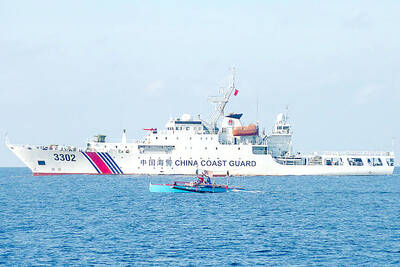
EXPANSIONIST: China deploys an average of 40 to 50 warships and coast guard vessels daily in the South China Sea, despite pledges not to militarize the region, an official said China is attempting to expand its influence across the First Island Chain and increase pressure on Japan by sending coast guard vessels into waters off of Taiwan under the pretext of maritime negotiations with Japan and the Philippines, a national security official said yesterday. China’s recent actions in the waters east of Taiwan and Japan and the Philippines’ exclusive economic zones (EEZ) are attempts to establish dominance in First Island Chain waters, said the official who declined to be named, adding that this is “expansion disguised as law enforcement.” Framing China’s actions solely as a cross-strait issue is a serious misjudgment that
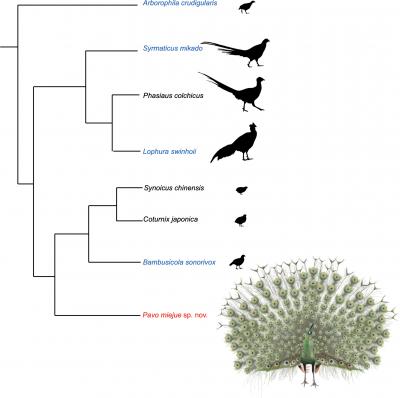
Through analyzing fossil evidence, a research team at National Taiwan University (NTU) discovered the largest endemic bird to have lived in Taiwan, naming it Pavo miejue, or extinct peafowl (滅絕孔雀). The Mikado pheasant, which is printed on the back of the NT$1,000 bank note, was previously believed to be the biggest endemic bird to Taiwan. The research team’s findings suggest that Pavo miejue lived during the Pleistocene epoch tens of thousands of years ago. It is the first endemic extinct bird species discovered and formally named in Taiwan. The study was coauthored by NTU Institute of Ecology and Evolutionary Biology professor Tsai Cheng-hsiu (蔡政修),
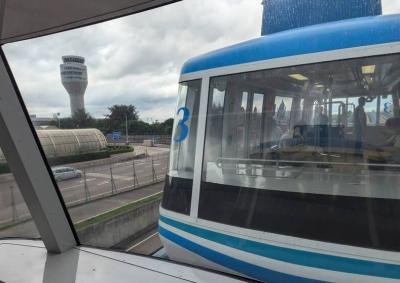
Taiwan Taoyuan International Airport is to suspend its automated Skytrain service connecting Terminal 1 and Terminal 2 starting on July 1 to facilitate connection works for the upcoming Terminal 3, the airport operator said today. Passengers and staff who need to travel between the two terminals after the suspension can instead use the Taoyuan MRT or the airport's 24-hour shuttle bus service, Taoyuan International Airport Corp said. The Taoyuan MRT Airport Line directly links the two terminals, while the shuttle buses are to operate around the clock, the company added. The Skytrain provides free transportation between the airport’s two terminals for travelers and
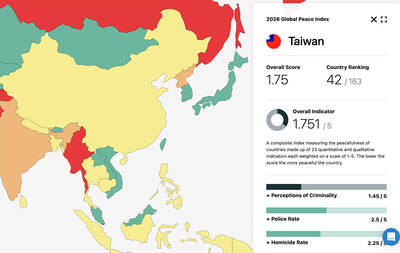
Taiwan ranked 42nd in terms of peacefulness among 163 countries, down five places from last year, according to this year’s Global Peace Index. With an overall score of 1.751, Taiwan dropped from 37th last year, the report published by the global Institute for Economics and Peace showed. The overall score measures a country’s level of peacefulness using 23 quantitative and qualitative indicators across three domains — ongoing domestic and international conflict, societal safety and security, and militarization. While Taiwan ranked 42nd worldwide, it was listed in ninth place among the 19 Asian-Pacific countries in the report, after New Zealand, Singapore, Japan, Malaysia,


 RSS
RSS