


On a frigid afternoon last week, an AIDS-ravaged Thai woman named A-chian (
"Gotta go to work and make as much money as you can," she said in surprisingly fluent Taiwanese. Soon her lanky figure dissolved down the street in Gongguan, Taipei City.
A-chian's words are timely, given that she doesn't know how long she will keep her modest job before the disease catches up with her, or her employers find out she is HIV-positive and fire her.
"I know no one likes me, no matter how long I live here," she said. For her, the lack of acceptance is not so much because of her nationality as because of her HIV status.
A-chian's life in Taiwan is a sad footnote to a common immigrant story. As one of the estimated 300,000 foreign brides who have married Taiwanese husbands in search of a better life on foreign soil, A-chian flew from Bangkok 19 years ago to marry a man she had never met.
A few years later, she returned to Thailand to seek shelter after she gave birth to two children and ran away from her alcoholic husband. During that homecoming, she contracted HIV from her boyfriend. After his death, she came back to Taiwan and worked to raise her 3-year-old daughter in Thailand.
Rejected by her family and bereft of support, A-chian finally took refuge in a halfway home for people living with AIDS.
A-chian's case is not uncommon.
"A-chian is not the only foreign female patient we have taken in," said Nicole Yang (
Currently, Taiwan's Center for Disease Control registered 492 HIV-infected foreigners living in Taiwan. 66 of them are foreign brides. 66 of them were deported back to their mother countries, and 66 families were thus shattered.
Helping immigrants like A-chian is a challenge facing Ivory Lin (
"The biggest problem is that while our country enshrines the value of human rights, we are actually deporting HIV positive immigrants once they are identified," Lin said.
Although health officials proposed to revise the Acquired Immune Deficiency Syndrome Control Act (
Compared to HIV-positive foreigners who have been deported, A-chian is lucky. Her 19-year-marriage has granted her Taiwan citizenship, which entitles her to cocktail drug therapy that is fully covered by national health insurance. A-chian only has to take her health insurance card with her to the hospital's pharmacist and she gets a free drug bag every month.
"There are few counties like Taiwan who spend NT$1 billion to offer free drugs to people with HIV," said Shih Wen-yi (
But foreign spouses still have to cope with other formidable problems facing every HIV patient in Taiwan. The most pressing problem is the denial of their right to work.
Because the AIDS Control Act does not ensure the right to work and doesn't stipulate any penalty for those who refuse to hire HIV-positive people, work discrimination has become a common practice here. Some state-run enterprises and government agencies require mandatory HIV blood tests which they justify as "precautionary measures."
Ivory Lin cited as examples of discrimination a Taipei police officer discharged in 2001, a health worker laid off in 2002, and an MRT driver who gave up his job under pressure.
Cases such as those highlight the need for government action to help protect the rights of those infected with AIDS, experts said.
"The government can redress the stigma that comes with AIDS," said Arthur Chen (陳宜民), the director of AIDS prevention and research center at the National Yang Ming University. "The government could introduce an anti-discrimination law."
A-chian's modest hope is to earn enough money to support herself. She waits on customers who come to enjoy a bowl of beef noodles, helps weaker patients in the halfway home, and sometimes allows herself the luxury of buying earrings in Gongguan night market. She lives quietly in Taipei City, quietly among us.
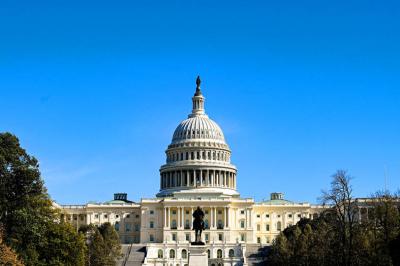
The US House of Representatives yesterday passed the PROTECT Taiwan Act, which stipulates that Washington would exclude China from participating in major global financial organizations if its actions directly threaten Taiwan’s security. The bill, proposed by Republican US Representative Frank Lucas, passed with 395 votes in favor and two against. It stipulates that if China’s actions pose any threat to Taiwan’s security, economic or social systems, the US would, “to the maximum extent practicable,” exclude China from international financial institutions, including the G20, the Bank for International Settlements and the Financial Stability Board. The bill makes it clear that China
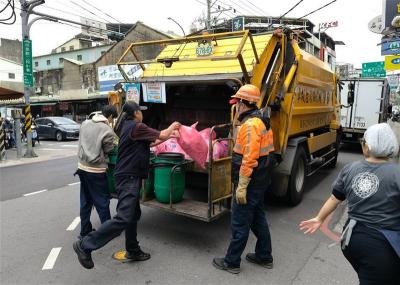
Garbage and recycling schedules are to vary from Saturday through Sunday next week over the Lunar New Year holiday period. The following collection information is from the governments of the six special municipalities. Taipei Regular service: Sunday to Monday next week. No service: Tuesday to Thursday next week. Extra service: Friday next week. Regular service resumes: Saturday next week. New Taipei City Extra service: Sunday. Adjusted collection time: Monday next week — garbage collection is to begin in the morning and end at 6pm. No service: Tuesday to Thursday next week. Regular service resumes: Friday next week. Note: Garbage can be dropped off at 70

A KFC branch in Kaohsiung may be fined between NT$60,000 and NT$200 million (US$1,907 and US$6.37 million), after a customer yesterday found an entire AAA battery inside an egg tart, the Kaohsiung Department of Health said today. The customer was about to microwave a box of egg tarts they had bought at the fast-food restaurant’s Nanzih (楠梓) branch when they checked the bottom and saw a dark shadow inside one of them, they said in a Threads post. The customer filmed themself taking the egg tart apart to reveal an entire AAA battery inside, which apparently showed signs of damage. Surveillance footage showed
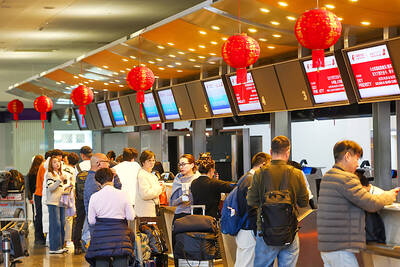
GROUP EFFORT: The number of inbound travelers rose 11 to 12 percent last month, with a significant increase in tourists from Europe and North America, an official said The government aims to attract 9.4 million visitors this year, the Tourism Administration said yesterday, citing last year’s success in diversifying tourist markets. Taiwan last year drew about 8.57 million international arrivals, 72.3 percent of pre-COVID-19 levels. By contrast, the nation had about 18.94 million outbound tourists last year, surpassing the pre-COVID-19 level of 17.1 million. The estimated tourism revenue deficit was about NT$700.9 billion (US$22.22 billion). Taoyuan International Airport Corp expects more than 160,000 passengers to pass through the nation’s largest airport daily during the Lunar New Year holiday, which begins on Saturday. As of Jan. 30, the nation’s average hotel occupancy rate


 RSS
RSS