


The nation's overall human rights record has improved this year, while there is still room for improvement in various areas, according to the government's annual human rights report.
The 90-page report, compiled by the Cabinet's Research, Development and Evaluation Commission, encompasses four areas: basic individual rights; civil and political rights; economic, social and cultural rights; and equal rights for special and minority groups.
There is much room for improvement in basic individual rights because the death penalty is still on the books. Torture of prisoners, however, is no longer a routine practice and political prisoners no longer exist after the authoritarian Chinese Nationalist Party (KMT) lost power in 2000, the report said.
People's freedom to conduct private communications is expected to be on a par with that of highly democratic countries, after the law governing surveillance and tapping is amended to transfer the right to tap to the judge instead of prosecutors, as it is now.
The government should reconsider launching the health insurance IC card and fingerprinting citizens when issuing the identification cards, which the report said would encroach on individual privacy.
As far as civil and political rights are concerned, although the media enjoyed more freedom this year, it also sabotaged the reputation of many regular citizens and public figures with erroneous reports.
Regular people also enjoy freedom to gather in crowds. The government, however, should endeavor to nullify articles specified in the "Gathering and Marching Law," outlawing citizens or civil groups from advocating Communism or ideas encouraging a split from the homeland.
The report also called on the government to allow civil servants and arsenal workers the right to form unions, while teachers were eventually granted the right to do so.
People's right of exercising direct democracy has not yet been realized, although the legislature eventually passed the Referendum Law this year. People's right to know official facts, however, is better safeguarded after the National Archives Law was passed into law.
In terms of economic, social and cultural rights, the government introduced various economy-boosting programs this year to combat the economic downturn and unemployment rate. The elderly also received more monthly pension with the approval of the legislature. Citizens' right of health was safeguarded as more than 96 percent of the population was covered by the national health insurance scheme. The government also paid more attention to the environment as the Environmental Protection Foundation Law took effect this year.
Although women enjoy a better social status, they still fall victim to domestic violence or sexual harassment. Children, who have been traditionally regarded by parents as their possessions, were easily abused. Aborigines enjoyed a better social and economic status but there was still a substantial gap between them and the Han people. The report also urged the government to amend existing laws or enact a new one to legalize same-sex marriages and allow same-sex couples to adopt children.
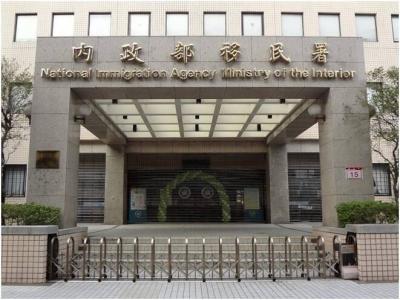
A small number of Taiwanese this year lost their citizenship rights after traveling in China and obtaining a one-time Chinese passport to cross the border into Russia, a source said today. The people signed up through Chinese travel agencies for tours of neighboring Russia with companies claiming they could obtain Russian visas and fast-track border clearance, the source said on condition of anonymity. The travelers were actually issued one-time-use Chinese passports, they said. Taiwanese are prohibited from holding a Chinese passport or household registration. If found to have a Chinese ID, they may lose their resident status under Article 9-1

Taiwanese were praised for their composure after a video filmed by Taiwanese tourists capturing the moment a magnitude 7.5 earthquake struck Japan’s Aomori Prefecture went viral on social media. The video shows a hotel room shaking violently amid Monday’s quake, with objects falling to the ground. Two Taiwanese began filming with their mobile phones, while two others held the sides of a TV to prevent it from falling. When the shaking stopped, the pair calmly took down the TV and laid it flat on a tatami mat, the video shows. The video also captured the group talking about the safety of their companions bathing

PROBLEMATIC APP: Citing more than 1,000 fraud cases, the government is taking the app down for a year, but opposition voices are calling it censorship Chinese Nationalist Party (KMT) Chairwoman Cheng Li-wun (鄭麗文) yesterday decried a government plan to suspend access to Chinese social media platform Xiaohongshu (小紅書) for one year as censorship, while the Presidential Office backed the plan. The Ministry of the Interior on Thursday cited security risks and accusations that the Instagram-like app, known as Rednote in English, had figured in more than 1,700 fraud cases since last year. The company, which has about 3 million users in Taiwan, has not yet responded to requests for comment. “Many people online are already asking ‘How to climb over the firewall to access Xiaohongshu,’” Cheng posted on

A classified Pentagon-produced, multiyear assessment — the Overmatch brief — highlighted unreported Chinese capabilities to destroy US military assets and identified US supply chain choke points, painting a disturbing picture of waning US military might, a New York Times editorial published on Monday said. US Secretary of Defense Pete Hegseth’s comments in November last year that “we lose every time” in Pentagon-conducted war games pitting the US against China further highlighted the uncertainty about the US’ capability to intervene in the event of a Chinese invasion of Taiwan. “It shows the Pentagon’s overreliance on expensive, vulnerable weapons as adversaries field cheap, technologically


 RSS
RSS