

Taiwan's navy quietly held a party at the Tsoying naval base in southern Taiwan last weekend to celebrate the 30th anniversary of the commissioning of the submarine SS-791 -- dubbed the Sea Lion -- into service.
At the age of 60, the US-made sub is not only the Navy's longest-serving submarine but also the world's oldest submarine still in service.
It is one of only two submarines built during World War II that have managed to continue active service in the 21st century. The other -- SS-792, or the Sea Leopard -- also belongs to Taiwan's navy.
Both are Tench-class diesel-powered submarines. They were transferred to the navy in April and October 1973, respectively, after being retired from the US Navy. They have since formed an integral part of Taiwan's submarine fleet, which also includes two Dutch-made, Sword Dragon-class submarines, the Sea Tiger and the Sea Dragon.
More than 500 officers and men aboard the Sea Lion as well as their families and retired service members took part in the April 12 celebration party.
The Sea Lion story has attracted global attention and over the years, many of the navy's foreign guests have asked to visit the submarine during their trips to Taiwan.
"The Sea Lion has almost become the most important 'tourist attraction' at the Tsoying military complex," a naval officer, who preferred anonymity, said jokingly.
The vintage submarine has also drawn the interest of major foreign military museums. In February this year, the San Francisco Submarine Museum commissioned a production crew of the Discovery TV channel to shoot a documentary introducing the Sea Lion's legendary service life.
According to an agreement with the Navy, the documentary cannot be shown until after the Sea Lion has been decommissioned.
After the US agreed to sell Taiwan eight conventional submarines in 2001, naval sources said, the retirement of the Sea Lion and the Sea Leopard is just a "matter of time."
A local military analyst said the two aging subs should not be dismantled after their retirement. "One of them could be turned into a submarine training classroom and the other could be towed to the estuary of the Tamshui River in northern Taiwan to serve as a naval museum," he suggested.
A Washington Times reporter once described the Sea Lion as a "grounded whale" after he toured the ship in 2000.
The journalist even said that if the submarine went on an underwater mission at sea, it might become a "widowmaker."
However, many retired Sea Lion officers and men disagreed with the journalist's observation.
Despite its advanced age, they said, the Sea Lion remains "as vibrant as a live dragon" and still functions well.
A retired Sea Lion officer said the sub can carry out all the duties that the two Sword Dragon-class subs usually perform, ranging from enemy port surveillance, interception of electronic warfare intelligence and transporting special forces to enemy frontiers.
"Until two years ago, it still often navigated underwater for two weeks at a time. And week-long underwater navigation is run-of-the-mill for the Sea Lion," he said, adding that its quietness is another of the Sea Lion's merits.
Of course, he went on, some of the sub's equipment and gear is old and has lost some of its function. For instance, he said, its active and passive sonar systems are aging, thus shortening the range of its monitoring.
Because of its limited space, the cook is the only service member aboard the sub who can take a bath everyday during its underwater cruise missions.

Taiwan’s growing defense preparations might be sending a stronger signal to the US than to Beijing, highlighting the need for Taipei to tailor its deterrence efforts to different audiences, a US security academic said yesterday. Stanford University Freeman Spogli Institute for International Studies fellow Oriana Skylar Mastro made the comment during a Taipei Security Dialogue panel examining lessons Taiwan could draw from the wars in Ukraine and the Middle East. Mastro said she was impressed by Taiwan’s increased defense spending, emphasis on asymmetric capabilities and efforts to prepare society for conflict, but questioned whom those initiatives were influencing. She said when she asked

A total of 400 foreign “high- level” professionals have been naturalized as Republic of China (Taiwan) citizens over the past decade as the government has eased nationality rules to attract talent from a wider range of fields, the Ministry of the Interior said yesterday. The 400th high-level professional, who works in the electronics industry, was approved for ROC citizenship on Aug. 26, the MOI said. The MOI quoted the newly naturalized citizen as saying that Taiwan is a leader in fields such as semiconductors, electronics manufacturing, artificial intelligence development and energy technology. He also said
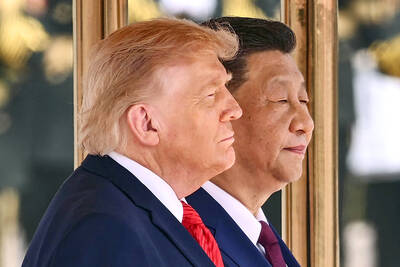
China has warned that it could cancel a planned US-China leaders’ summit if Washington approves new arms sales to Taiwan, a Japanese media outlet quoted sources as saying yesterday. US President Donald Trump, “apparently eager to showcase some diplomatic achievements ahead of November’s midterm congressional elections, places great importance on holding the summit with Chinese President Xi Jinping (習近平),” Japan’s Kyodo News reported. “While preparing for Xi’s upcoming trip, China has restated its position that the Taiwan issue is a ‘red line’ in bilateral relations,” the report said. The report said that when Xi met with Trump in Beijing in May, Xi said
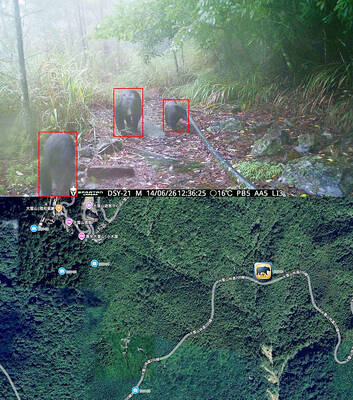
RARE PEEK: The footage released showed one of the bears staying in a cave for as long as 70 days, providing the first record of Formosan black bear’s overwintering The Forestry and Nature Conservation Agency yesterday released tracking records of released Formosan black bears for the first time, showing that they get much closer to human settlements than previously thought. The agency said it had captured two bears, Da Qu-ali (達古阿里) and Aziman (阿里曼), in indigenous villages in Hualien County and began to track them with a camera-mounted satellite collar after releasing them back into the wild. The results confirmed that the bears have moved from deep mountain areas into lowland hills closer to human communities, leading to an increase in human-bear conflicts, it said. The agency has introduced artificial intelligence-assisted early


 RSS
RSS