


The government said for the first time yesterday that it was not "ruling out" the possibility of helping the US shoulder the cost of the war on Iraq.
Vice Minister of Foreign Affairs Tou Chou-seng (
The government would seek the legislature's approval in advance if such a decision was made, he said.
Tou promised that the government would not take the initiative on the issue but was forced to temper his initial announcement when legislators pressed him to specify what Taiwan would do to share the war cost with Washington.
Once the request is presented, "it would be studied, but it does not necessarily mean the government of the Republic of China has to agree to it," he said.
Cabinet Spokesman Lin Chia-lung (林佳龍) said yesterday Taiwan would send aid worth NT$150 million to Iraq in it first humanitarian assistance to the country. He said the humanitarian package was expected to be delivered to Iraq by the end of the month through international relief organizations.
"Premier Yu Shyi-kun has also called for people on the island to support the government relief programs out of humanitarian concerns ... to express our love and sympathy," Lin said.
"We are most willing to fulfill our obligation as a member of the international community and will make our best effort to help," ministry spokesman Richard Shih (
The humanitarian supplies included medical equipment, medicine, sanitary products, rice, canned food, tents and blankets, Shih said, adding that the government was ready to provide further aid if necessary.
Authorities are reportedly recruiting voluntary medical personnel to help along the Iraqi border.
Yu said yesterday that as the US-led war against Iraq wouldn't likely end soon, all government agencies should remain on guard against the war's impact on the country.
Although Taiwan's trade with the Middle East is limited, the premier also asked government agencies to provide domestic manufacturers with assistance if necessary.
He also asked the Fair Trade Commission to keep tabs on market supply and demand to prevent manufacturers from taking advantage of the situation to price gouge or monopolize markets.
In related news, China yesterday dismissed suggestions it could use the war as pretext to attack Taiwan and said Beijing's opposition to the conflict and Taipei's support for it would not damage ties further.
"The main problem affecting cross-strait relations and stability in the strait is that Taiwan authorities do not accept the one-China principle," Taiwan affairs spokesman Zhang Mingqing (
"Different views towards the Iraq war will not have an effect," he said.

Taiwanese can file complaints with the Tourism Administration to report travel agencies if their activities caused termination of a person’s citizenship, Mainland Affairs Council Minister Chiu Chui-cheng (邱垂正) said yesterday, after a podcaster highlighted a case in which a person’s citizenship was canceled for receiving a single-use Chinese passport to enter Russia. The council is aware of incidents in which people who signed up through Chinese travel agencies for tours of Russia were told they could obtain Russian visas and fast-track border clearance, Chiu told reporters on the sidelines of an event in Taipei. However, the travel agencies actually applied
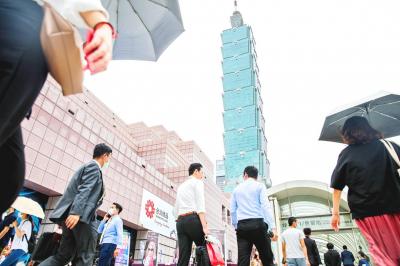
Japanese footwear brand Onitsuka Tiger today issued a public apology and said it has suspended an employee amid allegations that the staff member discriminated against a Vietnamese customer at its Taipei 101 store. Posting on the social media platform Threads yesterday, a user said that an employee at the store said that “those shoes are very expensive” when her friend, who is a migrant worker from Vietnam, asked for assistance. The employee then ignored her until she asked again, to which she replied: "We don't have a size 37." The post had amassed nearly 26,000 likes and 916 comments as of this

New measures aimed at making Taiwan more attractive to foreign professionals came into effect this month, the National Development Council said yesterday. Among the changes, international students at Taiwanese universities would be able to work in Taiwan without a work permit in the two years after they graduate, explainer materials provided by the council said. In addition, foreign nationals who graduated from one of the world’s top 200 universities within the past five years can also apply for a two-year open work permit. Previously, those graduates would have needed to apply for a work permit using point-based criteria or have a Taiwanese company
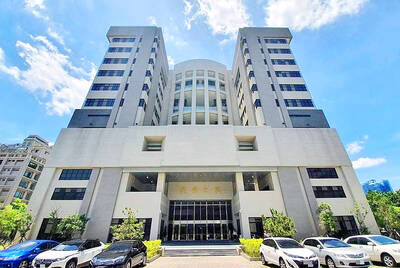
The Shilin District Prosecutors’ Office yesterday indicted two Taiwanese and issued a wanted notice for Pete Liu (劉作虎), founder of Shenzhen-based smartphone manufacturer OnePlus Technology Co (萬普拉斯科技), for allegedly contravening the Act Governing Relations Between the People of the Taiwan Area and the Mainland Area (臺灣地區與大陸地區人民關係條例) by poaching 70 engineers in Taiwan. Liu allegedly traveled to Taiwan at the end of 2014 and met with a Taiwanese man surnamed Lin (林) to discuss establishing a mobile software research and development (R&D) team in Taiwan, prosecutors said. Without approval from the government, Lin, following Liu’s instructions, recruited more than 70 software


 RSS
RSS