


Olympic athletes were yesterday competing for the first medals of the Sochi Winter Games after Russia staged a thrilling opening ceremony that impressed even foreign skeptics.
Russian President Vladimir Putin late on Friday declared the 22nd Winter Olympics open in a ceremony that took 40,000 people packed into the Fisht Stadium and TV viewers around the world on a lightning tour through Russian history.
Thousands of fireworks exploded above the venue on the Black Sea coast during a ceremony that won gushing global praise despite an early glitch when one of the Olympic rings failed to appear.
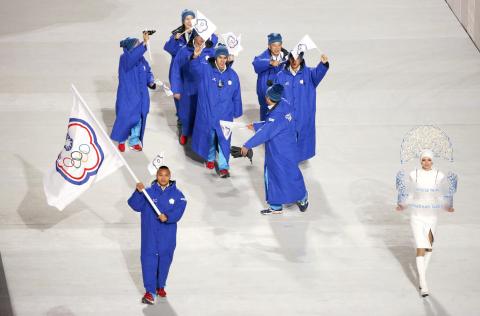
Photo: Reuters
“We missed this for so many years... a pride for our country, a feeling for her power, unity and greatness. Yesterday, we felt it,” the Moskovsky Komsomolets daily said.
After a build-up dogged by controversies on issues ranging from Russia’s gay-rights record to security, the successful ceremony took some pressure off the organizers, who have been under unprecedented scrutiny.
In Games that are among the most politically charged of recent times, the focus moved to the sporting action yesterday at sea-level and in the mountains above Sochi. Five gold medals were up for grabs.
The high-octane ceremony, devised by the powerful boss of Russia’s Channel One television Konstantin Ernst, got off to a rocky start when one of five illuminated artificial snowflakes that were supposed to morph into the Olympic rings failed to open, leaving just four rings.
However, organizers brushed off the mishap, admitting that they covered up the glitch on Russian state TV by quickly inserting footage of the segment they had recorded days earlier.
The unflappable Ernst drew on Buddhist philosophy.
“There is a saying that you have to kick out the uneven part of a perfectly polished ball to understand how perfect it is,” he said.
Thereafter the show charmed and stunned in equal measure, taking viewers on a lightning tour through Russian history and culture, guided by a young girl named Lyubov (Love).
“We want to break stereotypes and show the world the new Russia,” said the head of the Sochi organizing committee, Dmitry Chernyshenko.
The Russian team won huge cheers as they entered to the song Nas ne dogonyat (“Not gonna get us”) by female pop duo Tatu, known for their raunchy lesbian-tinged pop videos.
In a nod towards Russia’s proud sporting past, the Olympic cauldron was lit by two triple-gold-winning Soviet winter sports icons — figure skater Irina Rodnina and ice hockey legend Vladislav Tretyak.
The flame had been brought into the stadium by US-based Russian tennis star Maria Sharapova and the final relay included Olympic rhythmic gymnastics champion Alina Kabayeva, who has been rumored in some quarters to be Putin’s lover.
Even the foreign press, which have been hugely critical of Russia in the days up to the Games, heaped praised on the ceremony.
“For Russia last night it marked its revival as a post-Soviet powerhouse, confident of its seat at the top table after two decades of doubt and despondency,” Britain’s Daily Mail wrote.
Putin, who spearheaded the successful bid in 2007, welcomed more than 40 other heads of state and leaders for the ceremony, including UN Secretary-General Ban Ki-moon, Chinese President Xi Jinping (習近平) and embattled Ukrainian President Viktor Yanukovych.
However, US President Barack Obama as well as the leaders of key EU states Britain, France, and Germany were conspicuous by their absence, a move seen by many as a snub over Russia’s notorious anti-gay law.
However, IOC President Thomas Bach made an impassioned call for politics to stay out of sport, saying “have the courage to address your disagreements in political dialogue and not on the back of your athletes.”
The security concerns that have shadowed these Games were underlined when a Ukrainian man attempted to hijack an airliner en route from Ukraine to Turkey and divert it to Sochi.
Turkish military jets forced the plane to land in Istanbul, where security teams overpowered the man, said to be drunk.
The US has already announced a temporary ban on liquids and gels in hand luggage on Russia-bound flights, following a warning that militants could stuff explosives into toothpaste.
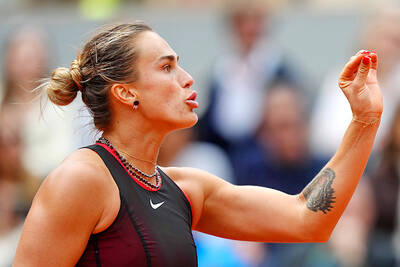
After letting another big lead slip with an error-strewn performance at the French Open on Wednesday, top-ranked Aryna Sabalenka felt like getting as far away from the courts as possible. “Just want to quit tennis right now,” Sabalenka said after wasting a lead of a set and two breaks in a 3-6, 7-5, 6-0 loss to Diana Shnaider in the women’s singles quarter-finals. “We’ll see in few days. Hopefully I’ll get back on track mentally.” Sabalenka’s wait for a first French Open title continues despite the four-time major winner leading 4-1 in the second set and being two points from victory while
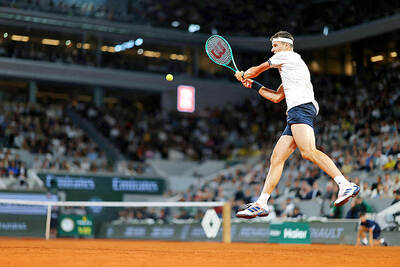
BIG NAMES GONE: Zverev is the clear favorite for a maiden Grand Slam title, reaching semi-finals for the fifth time in six years and finishing second on three occasions Alexander Zverev on Tuesday breezed past Rafael Jodar to stay on course for an elusive Grand Slam title at the French Open, while Jakub Mensik halted Joao Fonseca’s scintillating run in the quarter-finals. Zverev, the highest-ranked player left in the men’s draw, put an end to Spanish teenager Jodar’s impressive Roland Garros debut, easing into the semi-finals with a 7-6, (7/3), 6-1, 6-3 win. The 29-year-old Zverev is the clear favorite for a maiden Grand Slam title. He has finished runner-up on three occasions, including at the 2024 French Open. “I want to win the matches that are ahead of
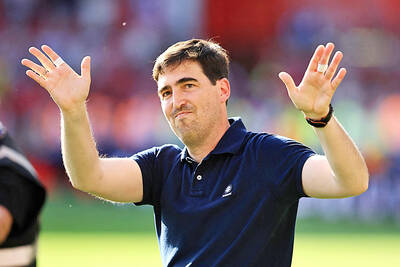
Liverpool are in advanced talks with former AFC Bournemouth manager Andoni Iraola as they seek a replacement for Arne Slot, reports said on Tuesday. Iraola has emerged as Liverpool’s top target to replace Slot, who was sacked on Saturday last week after a turbulent second season in charge. Liverpool have reportedly agreed a deal in principle to bring the Spaniard, who left Bournemouth at the end of this season, to Anfield. Sporting director Richard Hughes was heavily involved in hiring Iraola during his time at Bournemouth and is again spearheading the recruitment of the highly rated coach. The Reds are
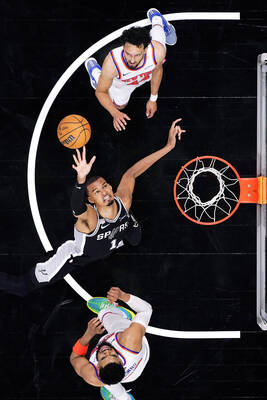
KNICKS TAKE LEAD: San Antonio put on a 9-0 run to be up 95-94 with just over 2 minutes to play, but the rest of the game belonged to the New York Knicks It was past five minutes through the third quarter of Game 1 of the NBA Finals on Wednesday and the New York Knicks’ 11-game winning streak was in major jeopardy. The Knicks missed nine of their first 10 shots in the early part of the period and trailed the San Antonio Spurs by 14 points. They were floundering. Then something crazy happened. The Knicks found new life from an unlikely source: The Spurs. New York rallied to tie the game by the end of the period, gave up the lead briefly late in the fourth quarter, and pulled away late for a 105-95


 RSS
RSS