


President Chen Shui-bian (
The Pratas are Taiwan's second southernmost territory, next to Itu Abu (太平島), otherwise known as Taiping island, in the Spratly Islands (南沙).
Accompanied by CGA director Wang Chun (
It was the first time that Chen had visited the Pratas since taking office. Kaohsiung Mayor Frank Hsieh (
The Pratas used to be guarded by regular troops, but at the end of last year the newly established CGA took over defense of the archipelago.
Chen expressed concern during the half-day trip over matters ranging from the preservation of natural resources in the region to the defense of the small outpost and the would-be full-scale opening of the island for tourism, the CGA said.
Chen said that Taiwan's South China Sea policy is to solve disputes in the region through peaceful means and to share and jointly cultivate natural resources with neighboring countries.
"The replacement of regular troops with the coast guard as the defenders of the island has effectively reduced tensions in the region. It also contributes a lot to the interests of the country," Chen said.
As to the preservation of natural resources in Taiwan's territorial seas off the Pratas, Chen wanted the coast guard stationed on the island to drive away fishing boats from China or boats from other countries that illegally enter Taiwan's territorial waters.
In a briefing to Chen, the local coast guard commander highlighted the frequent illegal entry into waters off the Pratas by Chinese fishing boats as well as the damage Chinese fishermen have done to the natural resources around the island.
According to research published by the Kaohsiung-based National Chungshan University, illegal fishing practices by Chinese fishermen have caused the number of species of coral in the region to drop from 137 to 64 in recent years.
Chen also said that without sufficient preparation by local residents, tourism on the island would not live up to expectations.

National Taiwan University (NTU) yesterday said it disqualified a person from an entrance examination for using AI smart glasses to cheat, along with two others for making untruthful statements in their curriculum vitae. The three applicants were given null scores, Taiwan’s highest-ranked university said, calling on prospective students to be honest in the admissions process. NTU registrar Lee Hung-sen (李宏森) said that the cheating applicant wore a hat and thick-rimmed glasses to the second written exam for medical school, claiming that they felt cold. Suspicions were aroused when the applicant stared oddly at the test for long stretches while steadily bringing the paper
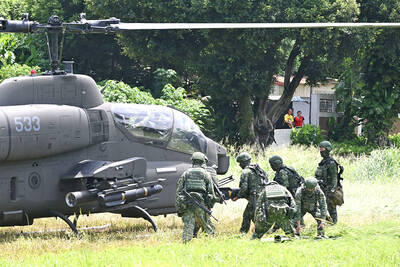
MILITARY ISSUES: A partisan divide between the Cabinet and the legislature ‘raised questions about Taiwan’s ability to adequately fund its defense,’ the report said Taiwan’s defense budget, military personnel numbers and resilience are challenges to its ability to meet national defense goals, the US Naval Institute said in a report published on Tuesday. In response to the perception of a growing military threat posed by China, Taiwan has embarked on an effort to enhance the capabilities needed to deter an attempt by Beijing to annex the nation by force, the institute said in the US Congressional Research Service report, titled Taiwan: Defense and Military Issues, which was filed on Thursday last week. Taiwan’s defense budget increased by about 7.5 percent from 2024 to last year, it
NOT JUST NUMBERS: What matters to intelligence work is crucial, reliable information, so even a few credible leads can be highly valuable to national security, a legislator said The National Security Bureau (NSB) yesterday said it has finished the establishment of an information-reporting channel for Chinese nationals, the aim of which is to broaden intelligence gathering on China’s political, military, economic and social developments. Chinese nationals can submit information on the Web page, https://report.nsb.gov.tw, the NSB said in a statement. The move aims to expand the bureau’s diverse intelligence sources and is pursuant to the National Intelligence Services Act (國家情報工作法), it said, adding that it referenced practices adopted by intelligence agencies in the US, the UK and Israel. An increasing number of people are approaching Taiwanese agencies to provide information, as
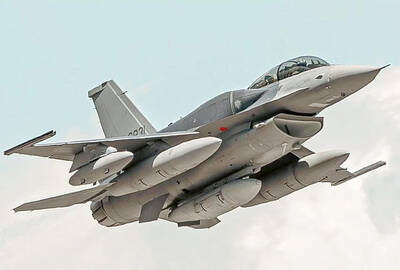
66 FIGHTER JETS: The aircraft is likely undergoing preparations for its transfer to Taiwan — a significant step forward in the nation’s modernization program, a lawmaker said The first of Taiwan’s order of F-16V Block 70 aircraft has been sighted in Texas ahead of delivery, Democratic Progressive Party (DPP) Legislator Wang Ting-yu (王定宇) said. Taiwan’s first F-16V Block 70 two-seat aircraft, tail number 6831, was seen flying from Lockheed Martin’s production facility in Greenville, South Carolina, to Naval Air Station Joint Reserve Base Fort Worth in Texas, Wang wrote on Facebook yesterday. The plane is likely undergoing preparations for its transfer to Taiwan, marking a significant step forward in the Republic of China Air Force’s modernization program, Wang said, citing military analysts. The F-16V Block 70 is a new-build version


 RSS
RSS