


The Reserve Officers' Training Corps (ROTC) program, implemented since 1997, is to see the first batch of eight cadets commissioned on Saturday together with graduates from military academies.
The eight would-be officers will go into service in the army by the end of this month, becoming the first to serve as ROTC officers in Taiwan's military history, the Ministry of National Defense (MND) announced yesterday.
The ROTC is an experimental program based on a US system with the same name.
It is expected to widen the sources of enlistees in the armed forces.
The eight ROTC cadets will be commissioned on Saturday together with hundreds of graduates from different military academies in a joint commissioning and graduation ceremony scheduled to be presided over by President Chen Shui-bian (陳水扁). The ceremony is to take place at the Taipei-based Political Warfare College.
The eight ROTC cadets, from different universities around the island, are now taking political education courses at the Political Warfare College, which is a must for all enlistees. They initially had six other fellow trainees, but these six dropped out of the program within one year of registering. They are to serve for five years in the army, which is the required term of service in exchange for the scholarships and allowances they receive from the military from sophomore to senior years.
They may opt to extend their service term after the five years are up, but they will not be given any guarantee about how many more years they can stay in the service because higher-ranked positions are becoming fewer due to the Ching Shih personnel streamline project, a defense official said.
"Although the ROTC program had only 14 accepted applicants in its first year [1997], it has been attracting more and more college students over the past three years," Colonel Tang Hsiang-yun (
"Accepted applicants in the second year rose slightly higher to 19 in total. The figure jumped to 83 last year. This year sees a further growth to 115 in all. We plan to accept a total of 120 next year," Tang said.
Besides the financial subsidies given to the program participants during their college years, Tang said, they are also granted the flexibility to pursue a higher degree while in service.
"They may apply for graduate schools both at home and abroad. If they are accepted, they may start their post-graduate study after serving one year in the army," Tang said.
"Because of the growing popularity of the ROTC program among college students, the air force and navy are now considering following in the army's footsteps to try and recruit new blood," he said.
In addition, the army also plans to widen operational choices for the ROTC cadets, who are now only offered places in the most physically-demanding branches of the army, such as infantry and artillery.
"This year, we offer an extra operational choice for the ROTC cadets -- communications," Tang said.

PROVOCATIVE: Chinese Deputy Ambassador to the UN Sun Lei accused Japan of sending military vessels to deliberately provoke tensions in the Taiwan Strait China denounced remarks by Japan and the EU about the South China Sea at a UN Security Council meeting on Monday, and accused Tokyo of provocative behavior in the Taiwan Strait and planning military expansion. Ayano Kunimitsu, a Japanese vice foreign minister, told the Council meeting on maritime security that Tokyo was seriously concerned about the situation in the East China and South China seas, and reiterated Japan’s opposition to any attempt to change the “status quo” by force, and obstruction of freedom of navigation and overflight. Stavros Lambrinidis, head of the EU delegation to the UN, also highlighted South China Sea

SILENCING CRITICS: In addition to blocking Taiwan, China aimed to prevent rights activists from speaking out against authoritarian states, a Cabinet department said The Ministry of Foreign Affairs (MOFA) yesterday condemned transnational repression by Beijing after RightsCon, a major digital human rights conference scheduled to be held in Zambia this week, was abruptly canceled due to Chinese pressure over Taiwanese participation. This year’s RightsCon, the world’s largest conference discussing issues “at the intersection of human rights and technology,” was scheduled to take place from tomorrow to Friday in Lusaka, and expected to draw 2,600 in-person attendees from 150 countries, along with 1,100 online participants. However, organizers were forced to cancel the event due to behind-the-scenes pressure from China, the ministry said, expressing its “strongest condemnation”
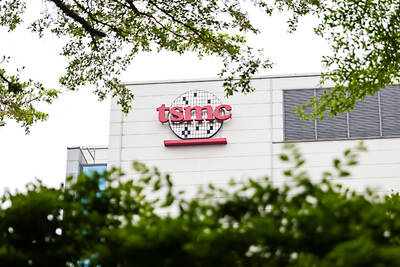
Taiwan Semiconductor Manufacturing Co (TSMC, 台積電), the world’s largest contract chipmaker, said it expects its 2-nanometer (2nm) chip capacity to grow at a compound annual rate of 70 percent from this year to 2028. The projection comes as five fabs begin volume production of 2-nanometer chips this year — two in Hsinchu and three in Kaohsiung — TSMC senior vice president and deputy cochief operating officer Cliff Hou (侯永清) said at the company’s annual technology symposium in Silicon Valley, California, last week. Output in the first year of 2-nanometer production, which began in the fourth quarter of last year, is expected to
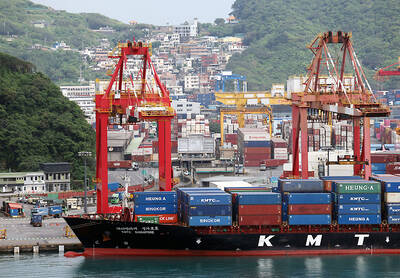
Taiwan’s economy grew far faster than expected in the first quarter, as booming demand for artificial intelligence (AI) applications drove a surge in exports, spilling over into investment and consumption, the Directorate-General of Budget, Accounting and Statistics (DGBAS) said yesterday. GDP growth was 13.69 percent year-on-year during the January-to-March period, beating the DGBAS’ February forecast by 2.23 percentage points and marking the most robust growth in nearly four decades, DGBAS senior official Chiang Hsin-yi (江心怡) told a news conference in Taipei. The result was powered by exports, which remain the backbone of Taiwan’s economy, Chiang said. Outbound shipments jumped 51.12 percent year-on-year to


 RSS
RSS