


With a weaker US dollar already pushing up the price of metals in addition to growing global demand for electric vehicle components — which use nickel as a raw material in their electric batteries — the price of nickel on the London Metal Exchange (LME) has appreciated by 50 percent from its low at the end of 2015. Despite this, nickel’s current value is still a long way off from its historic high of US$30,000 per tonne.
Analysts say nickel is a classic case of a lagging index. With weak demand for nickel over the past few years, mining companies reduced investment in the metal, but an inability to meet a sudden increase in demand has sent the price soaring. However, other analysts believe widespread adoption of electric vehicles is still a long way off and attribute the near-term rise in the value of nickel to market funds driving up the price.
Last Tuesday the price of nickel rose by 1.8 percent on the LME to approach a three-year-high of US$13,500 per tonne, mainly off the back of favorable economic data from China. Meanwhile, demand for steel is high, which pushed up demand for raw nickel, Chinese new home prices rose in January and China’s manufacturing survey revealed an expansion in orders for last month.
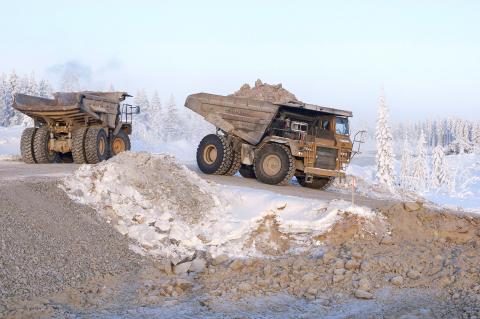
Photo: Reuters
照片:路透
According to global commodities broker Marex Spectron, international nickel prices have been on the rise for the past 12 months and nickel is currently moving toward a bull market scenario. The broker argues that, when analyzing the recent strength of nickel, increased demand for electric vehicle components was simply the cherry on the cake and a fatigued US dollar was the main reason behind the metal’s rise. Additional factors are the global economic recovery and the automation of industry. Furthermore, in January the US dollar index touched the bottom of a price band, falling to 88.43 points, which Marex Spectron says strengthened the price of many commodities.
Additionally, the mining industry has pointed out that from a demand perspective, consumption of nickel has increased over the course of the past year. However, due to an extended period of downturn in the market, investment in nickel extraction by mining companies stagnated. Since it is difficult for mining companies to rapidly ramp-up production over the short-term, supply could not keep up with demand and this drove the upswing in the price of nickel.
(Liberty times, translated by Edward Jones)
美元走弱導致金屬價格揚升,再加上全球電動車題材發酵,電池原料需用鎳;倫敦LME鎳價從二○一五年底的低點,迄今已上漲五成,不過距離歷史高點每噸三萬美元,還有一半的路要走。
專家表示,鎳是典型的落後指標,因過去幾年需求疲軟,礦商降低投資,一下子無法因應需求起飛。但也有一派說法認為,電動車的普及仍然遙遠,近期鎳價走高應屬市場資金哄抬。
倫敦LME鎳價上週二上漲百分之一點八,來到每噸一萬三千五百美元,逼近三年新高,主因中國經濟數據轉佳,用鋼需求熱絡,原料鎳的需求也提高。中國一月份新屋價格上揚,另製造業調查顯示,二月份訂單成長。
全球商品經紀公司Marex Spectron表示,國際鎳價已漲了一年,目前看來還在向牛市前進。分析鎳價強勢的原因,電動車題材只能算是錦上添花,最主要還是美元疲軟;另外全球經濟復甦及工業自動化也是助力。美元指數一月底創下八十八點四三的波段低點,讓許多大宗商品都走強。
業界指出,從需求面來看,鎳過去一年消費量上揚,但供給面因為市況已低迷許久,礦商投資停滯,難以在短期內快速增加產量;在供不應求下,因此帶動價格高漲。
(自由時報記者羅倩宜)
FOLLOW UP
課後練習
What is economic data and
how is it used?
In every major economy, a range
of economic data is released, usually on a monthly basis, which can be used to gauge the overall health of the economy. Central banks use the data to inform decision making around the setting of interest rates and investors use the data to make investment decisions.
Key economic data includes:
Consumer Price Index (CPI)
Gross Domestic Product (GDP)
Retail sales
Employment/unemployment data
Manufacturing surveys
New home price data is used to gauge the overall health of an economy: Higher new build prices are seen as positive for an economy (and the associated currency). A growing economy will increase demand for raw materials including steel and nickel.
Manufacturing surveys of individual private sector companies, which provide information on production levels, new orders and inventories, are usually combined into a Purchasing Managers’ Index (PMI) for an individual country. The PMI is used as a leading indicator of economic health since purchasing managers react quickly to market conditions. A booming manufacturing sector will also increase demand for raw materials, including various types of metals.
(Edward Jones, Taipei Times)
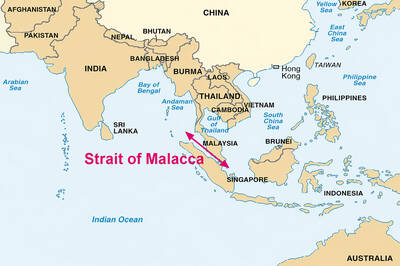
The closure of the Strait of Hormuz has forced policymakers in Asia to face questions over the security of other maritime chokepoints, including the Strait of Malacca, which is the world’s busiest waterway for international trade. WHAT IS THE MALACCA STRAIT? The 900km long Malacca Strait, bounded by Indonesia, Thailand, Malaysia and Singapore, provides the shortest sea route from East Asia to the Middle East and Europe. It carries nearly 22 percent of the world’s maritime trade, according to the Center for Strategic and International Studies (CSIS). This includes oil and gas shipments from the Middle East to the energy-hungry economies of China,

One reason pistachios have taken the food world by storm compared to other nuts is their soft, green color. When ground down into a cream or butter, the green hue __6__ nicely with golden pastries or dark-brown chocolate, making it perfect for Instagram photos and TikTok videos. Their labor-intensive cultivation and __7__ also contribute to their image as a premium ingredient. Thus, buying a pistachio-based product often feels like a __8__ treat. Pistachios also stand out for their distinct flavor and health __9__. They have a subtle, sweet, earthy flavor that goes well with both sweet desserts and

Cameras are everywhere — in our pockets, on our walls and even in space. They capture emotions, preserve history and reflect culture. Through these devices, photography is now essential to modern life, influencing how we perceive ourselves and the world. To understand the root of their power, let’s explore the camera’s remarkable journey. The story begins with the camera obscura, a dark room with a tiny hole. Light passing through the opening projected an inverted image on the opposite wall. Renaissance artists used this principle to paint accurate scenes. However, these images couldn’t be preserved as photographs. That changed

A: This year’s two most anticipated films have finally hit theaters in Taiwan. “Michael” premiered last Wednesday, while “The Devil Wears Prada 2” premiered this Wednesday ahead of its global release. B: Isn’t “Michael” the biopic about the late King of Pop Michael Jackson? A: Yup, it tells the story of Michael’s legendary life, from child star to global icon. And the role is in fact played by his nephew, Jaafar Jackson. B: Michael caused a sensation when touring Taiwan twice in 1993 and 1996. His classic hits, dance moves and music videos reshaped global pop culture at that time. A: I’m gonna


 RSS
RSS