


The Keelung City Government is seeking funding from the Sports Administration to connect into the Taiwan circular coastal bicycle path network, and hopes that this year it can connect up all sections of the bike routes, linking it to the greater Taipei bicycle network. Within the route are two 100-year-old abandoned rail tunnels that are full of historical culture. Jhuzih tunnel and Wudu tunnel, will be made into part of the bicycle network.
The two abandoned rail tunnels were both constructed during the Japanese colonial era and assume an important position in the history of Taiwan’s railway network. By building bicycle lanes, the long-neglected tunnels will regain their former luster.
The old Wudu tunnel, already over 100 years old, features a brick arched tunnel full of old world charm; its original appearance will be preserved. The only additions will be new lighting and a bicycle lane surface. It is believed that this newly renovated nostalgic trail will be able to attract many visitors. The Sports Administration is currently reviewing the budget and expects to break ground on the project this year. Cidu District’s Dunan borough warden, Yu Pei-ju, said that the project has been highly anticipated for quite a while.
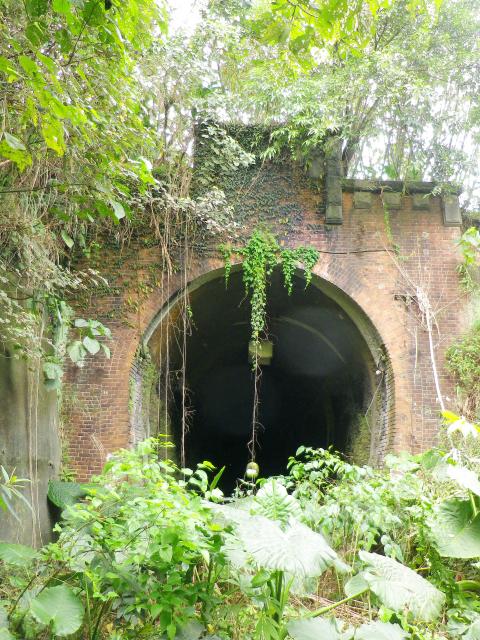
Photo: Lu Heien-hsiu, Taipei Times
照片:自由時報記者盧賢秀
The Jhuzih tunnel passes through Shihciou ridge and connects the city with the Keelung river. Running close to the mountainside, the old tunnel, which was built in 1923, has been closed for many years. Nuannuan Township’s Basi borough warden Su Chin-jung said, it is a real shame that a century-old tunnel has been closed like this, and he hopes that the city government will classify it as a historical structure or have it preserved as a monument.(Liberty times, translated by Zane Kheir)
基隆市政府向體育署爭取補助串聯濱海環台自行車路網,希望今年可以接續自行車斷點,與大台北自行車路網接軌,其中兩座百年、極具歷史文化的廢棄舊鐵道隧道─竹仔嶺隧道和舊五堵隧道將建置自行車道。
兩座廢棄台鐵舊隧道,都是日治時代的建築,在台灣鐵路交通史有相當重要的地位,將藉由建置自行車道,讓荒廢多年的古樸隧道再現風華。
舊五堵隧道已百多年歷史,磚造圓拱形隧道,古色古香,將保留它的原貌,只增設照明和地面自行車道,相信這座懷古步道會很吸引人。體育署正在審查相關經費,今年可望動工,七堵區堵南里長余佩儒說,地方期待已久。
另一座竹仔嶺隧道,穿越獅球嶺連接市區與基隆河,目前靠山側一九二三年興建的舊隧道,已封閉多年,暖暖八西里長蘇欽榮說,一百多年歷史的隧道,這樣封閉著十分可惜,希望市府列為歷史建築或古蹟保存。
(自由時報記者盧賢秀)

Taiwan Travelogue, the novel by Taiwanese author Yang Shuang-zi and translated into English by Lin King, won the prestigious International Booker Prize in London on May 19. It marks the first time a Taiwanese literary work has received the International Booker Prize, setting a historic milestone both for Taiwanese literature and for the award itself. Prior to this achievement, Taiwan had only once appeared on the Booker radar, when Taiwanese author Wu Ming-yi was longlisted for the Booker Prize in 2018 with The Stolen Bicycle. The International Booker Prize honors works of fiction translated into English and published in the UK or Ireland.
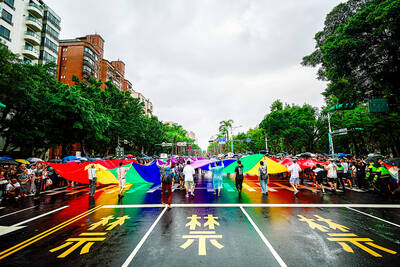
A: While Taiwan is celebrating the 7th anniversary of legalizing same-sex marriage, a poll shows that the support rate for same-sex marriage rose sharply from 37.4 percent seven years ago to 69.9 percent last year. B: Actually, I’m a bit curious about the size of Taiwan’s LGBT population. A: I’m not sure. But if we take a Gallup poll in the US as an example, 9.3 percent of American adults identified as LGBT in 2024. B: Wow, is it because the Americans are relatively open? In many other countries, the figures hover around 5 percent. A: Based on this,
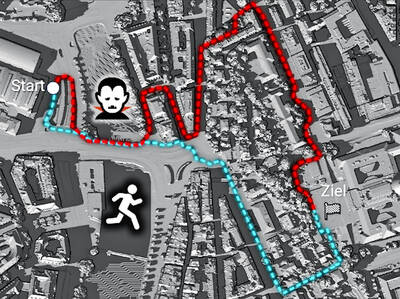
As climate change and urbanization push city temperatures higher, walking outdoors is becoming increasingly uncomfortable in many parts of the world, especially when prolonged time spent in sunlight is involved. As a result, outdoor lovers are now seeking cooler, shaded walking routes. However, most mainstream map apps still do not __1__ shaded footpaths. Enter routing.osm.ch — a Swiss web-based route planner that introduces a novel solution to this problem. Its “Vampire mode,” named after the legendary creatures’ fear of being __2__ natural light, was developed by a Swiss research team led by Professor Stefan Keller. The platform combines open data from

Cities around the world are testing “robotaxis,” hoping that autonomous vehicles will ease traffic and reduce emissions. However, recent analyses suggest these expectations may be overly optimistic. According to consulting firm Kearney, robotaxis could actually make congestion worse rather than better. Because self-driving rides are expected to be cheaper and more convenient than traditional taxis, more people may choose them over walking, biking, or using public transportation. This shift would put more cars on already crowded roads. Another concern is “deadheading,” which refers to robotaxis traveling without passengers between rides. Since autonomous fleets need to reposition themselves throughout the day, these


 RSS
RSS