


Lai He was born in Changhua on May 28, 1894 and died in 1943. He was arrested in 1923 for participating in a political protest, and was a leading figure in Taiwan’s literary circles during the 1930s. While he was editor for the literary arts section at Taiwan Minpao, he published numerous articles, such as “The awful state of Taiwan’s literary circles,” attacking conventional literature and promoting a new nativist literary movement in Taiwan. He was the first writer in Taiwan to write poetry and novels in Hoklo, also known as Taiwanese, and is often praised as being the father of Taiwan’s nativist literary movement.
After Lai graduated from the Taipei School of Medicine, a predecessor to National Taiwan University’s College of Medicine, he opened his own clinic in Changhua and always reduced or waived payment from the poor. People in Changhua respectfully call him “the Changhua Matsu,” in reference to the goddess of the sea. The Lai He Memorial Hall and the Lai He Culture and Education Foundation are currently located at Lai He’s former residence in Changhua, and the city celebrates “Lai He Day” on May 28 every year.
(LIBERTY TIMES, TRANSLATED BY KYLE JEFFCOAT)
賴和於一八九四年五月二十八日出生於彰化,歿於一九四三年,曾於一九二三年「治警事件」被捕入獄,是台灣三○年代文壇領袖,曾經主編過「台灣民報」的文藝欄,發表「糟糕的台灣文學界」等多篇文章,抨擊舊文學,掀起台灣新文學運動風潮,他的詩作及小說,首創以台灣話創作,後世尊稱其為「台灣新文學之父」。
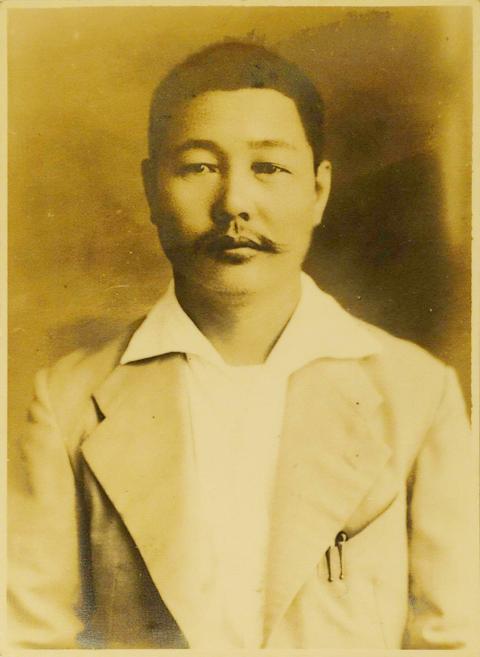
Photo courtesy of Lai He’s family
照片由賴和家屬提供
賴和畢業於台灣大學醫學院的前身台北醫學校,曾在彰化市開設「賴和醫院」懸壺濟世,對貧困的人總是減免費用,彰化人稱他為「彰化媽祖」,目前在賴和彰化市故居設有賴和紀念館及文教基金會,彰化市並定每年的五月二十八日為「賴和日」。
(自由時報記者張協昇整理)
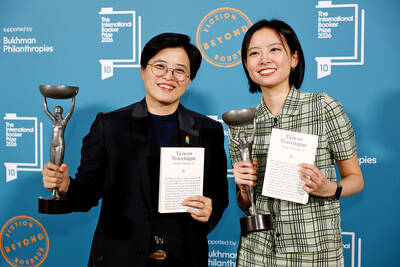
Taiwan Travelogue, the novel by Taiwanese author Yang Shuang-zi and translated into English by Lin King, won the prestigious International Booker Prize in London on May 19. It marks the first time a Taiwanese literary work has received the International Booker Prize, setting a historic milestone both for Taiwanese literature and for the award itself. Prior to this achievement, Taiwan had only once appeared on the Booker radar, when Taiwanese author Wu Ming-yi was longlisted for the Booker Prize in 2018 with The Stolen Bicycle. The International Booker Prize honors works of fiction translated into English and published in the UK or Ireland.
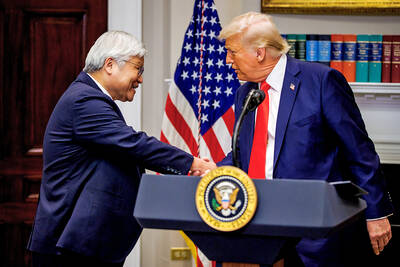
A: Time magazine recently released its list of “The 100 Most Influential People of 2026.” It’s categorized into six groups: Artists, Pioneers, Titans, Icons, Leaders and Innovators. B: TSMC chairman C.C. Wei made the list this year. Which category is he in? A: Wei is actually among the Pioneers, with figures including Disney CEO Josh D’Amaro and MrBeast — the first YouTuber ever to surpass 400 million subscribers. B: Led by Wei, Taiwan’s “silicon shield” TSMC is the sixth-largest company in the world. A: As Nvidia founder Jensen Huang wrote in his introduction, “C.C. Wei is truly one of the
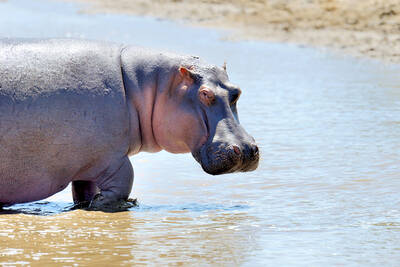
The animal kingdom is full of surprises that challenge our understanding of biology. From remarkable feeding mechanisms to extreme defense strategies, some creatures possess traits so unusual that they seem like pure fiction. Here are four fascinating examples that show nature’s endless creativity. The humble snail may appear simple, but its mouth tells a different story. Snails possess a ribbon-like tongue called a radula, densely covered with anywhere from 1,000 to 12,000 tiny teeth. This structure works like a cheese grater, allowing them to scrape and grind food with surprising efficiency. Far from being passive creatures, snails are actually

A: In the 2026 Time 100 list, besides TSMC chairman C.C. Wei in the Pioneers category, Blackpink’s Jennie also stands out in the Artists group. B: What about the Titans and Icons? A: The Titans include legendary fashion designer Ralph Lauren, Google CEO Sundar Pichai, and Intel CEO Tan Lip-bu. The Icons include actor Wagner Moura, Olympic gold figure skater Alysa Liu and singer Victoria Beckham. B: What about the Leaders and Innovators? I bet US President Donald Trump and Chinese President Xi Jinping are on the list. A: You got it. Other Leaders include Japanese PM Sanae


 RSS
RSS