


The 2011 Fulong International Sand Sculpture Art Festival kicks off on May 1. The opening ceremony was held last Saturday at Fulong Beach. A sand artist from Tokyo, Japan, created a piece with features representing Taiwan and Japan. On the sculpture, he carved the cha-racters “thank you Taiwan” to express his gratitude toward the Taiwanese people’s generous donations to Japan in the wake of the disasters that followed on the strong March 11 earthquake.
Taking advantage of the good weather, sand-sculp-ting teams from all over the world rushed to complete their work before May 1. Visitors to Fulong Beach said they were very lucky to see the process that goes into the creation of a sand sculpture, and they were amazed at how skillful the sculptors are.
Toshihiko Hosaka, a sculptor from Tokyo, Japan, said the situation is very serious following the disastrous earthquake, and that the people of Japan were deeply touched by, and deeply grateful for, Taiwan’s unselfish donations and enthusiasm.
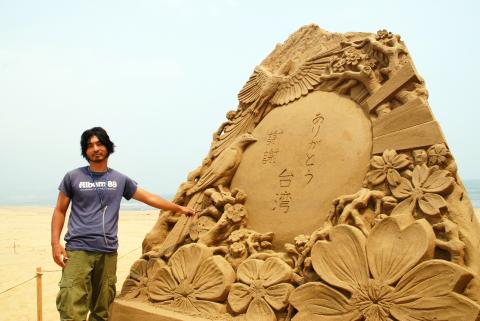
Photo: Wu Liang-yi, Liberty Times
照片:自由時報記者吳亮儀
Following the disaster, Taiwanese donations have outperformed all other countries, topping the list of donators. However, Japanese Prime Minister Naoto Kan failed to express gratitude through the Taiwanese media. Instead, Hosaka used features symbolic of the two countries, such as cherry blossoms, plum blossoms, Jade Mountain, a Taiwan blue pheasant, and a big sun in the middle symbolizing the sun on both the Japanese and Taiwanese flags.
On the back of the sculpture, Hosaka also dedicated his work to the Taiwanese people for their concern toward Japan.
The sand sculpture festival organizers has invited artists from eight countries, including the US, Japan, Germany, and Russia. The artists and their sculptures can be seen everywhere at Fulong Beach. The works will not only be protected with sheds, but also sprayed with an environmental-friendly varnish that hardens them so they won’t be destroyed by the wind and the rain, and so as not to damage the beach environment.
(LIBERTY TIMES, TRANSLATED BY TAIJING WU)
「二○一一福隆國際沙雕藝術季」即將在五月一日
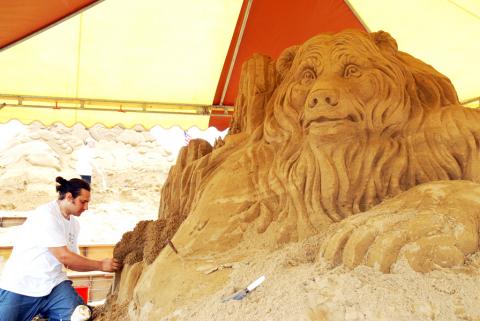
Photo: Wu Liang-yi, Liberty Times
照片:自由時報記者吳亮儀
登場,上星期六在福隆海水浴場舉辦開幕典禮,從日本東京來的沙雕家更製作一座融合台灣和日本各項代表物的大沙雕,上面刻著「謝謝台灣」字樣,感恩台灣人民對日本三一一震災的慷慨捐獻。
趁著天氣晴朗,從各國前來的沙雕製作團隊加緊趕工,要在五月一日前完成作品。福隆海水浴場的遊客直呼很幸運,看到沙雕製作過程,也驚嘆沙雕師的巧手工藝。
來自日本東京的沙雕家Toshihiko Hosaka說,日本震災很嚴重,台灣慷慨捐獻,讓日本人非常感動,也非常感謝台灣人民的熱心。
三一一震災後,台灣對日本的捐款總數排名世界第一,但日本首相菅直人並沒有在台灣媒體上表達謝意。倒是Toshihiko Hosaka用象徵兩國意象的東西如櫻花、梅花、玉山、藍腹鷴等物來裝飾,並在中間畫了大大的太陽,表示日本和台灣國旗上的太陽徽。
Toshihiko Hosaka還在作品背後刻上「謹以此作品由衷感謝台灣給與日本之關懷」字樣。
今年沙雕季邀請美國、日本、德國和俄羅斯等共八國沙雕團隊參與,現在來到福隆海水浴場,都可以見到沙雕師的身影和作品。作品除了用棚子遮蓋,還會噴上具凝固作用的環保漆,讓成品不怕風吹雨打,也不會破壞沙灘環境。
(自由時報記者吳亮儀)
Many consumers are guilty of filling drawers or closets with old laptops, cellphones, fitness trackers and other electronic devices once they are no longer needed. It’s hard to know where to recycle such items, or it seems costly and inconvenient to do so. The world generates millions of tons of electronic waste — also called e-waste — each year. According to the UN’s most recent estimate, people worldwide produced 62 million metric tons of e-waste in 2022, and only about 22 percent of it was properly recycled. The US’ Environmental Protection Agency estimates that less than a quarter of e-waste is

You’re sitting in class when a classmate asks to borrow a pencil. It seems like a small favor, so you agree without hesitation. The following week, the same classmate asks to share your notes. Later, they request help with a group project. You agree each time — after all, you helped out the first time — but before you know it, it has become automatic. This scenario demonstrates the “foot-in-the-door technique,” a psychological concept that shows how agreeing to small, acceptable demands makes it easier to accept larger ones later on. The name for this strategy comes from door-to-door

A: The four-day Tomb Sweeping Day long weekend begins Friday and will run until Monday. Are you going to sweep your ancestors’ tombs? B: I did in advance last weekend, so I can go to Kaohsiung to see the musical “The Phantom of the Opera.” A: Wow, is “Phantom” touring Taiwan again? It debuted in 1986, so this year marks the 40th anniversary of the show. B: And it’s not just touring Kaohsiung starting March 31, but also Taipei starting April 21 and Taichung starting May 26. A: “Phantom” is one of the world’s Four Major Musicals. I’ve seen all of them, except “Les

Continued from yesterday(延續自昨日) https://www.taipeitimes.com/News/lang Gig Tripping “Gig tripping” combines concerts with travel. People fly to see their favorite artists perform — usually abroad—and spend a few days sightseeing before or after the show. While die-hard fans have done this since the 1960s, the post-pandemic travel boom changed the game. Even people who aren’t superfans are now booking international concert trips because they want to make the most of travel opportunities. This trend exploded in the US, as the math makes sense. Domestic concert tickets are so costly that flying abroad for the show plus tourism expenses often matches or even beats the price


 RSS
RSS