


The latest creation by Japanese fashion designer Tae Ashida is truly out of this world — a blue cardigan and short pants outfit she made for her country’s astronaut Naoko Yamazaki.
The US space shuttle Discovery blasted off with Yamazaki and two other female crew on board, bound for the International Space Station (ISS) on a historic mission that put more women in orbit than ever before.
Ahead of her departure, Yamazaki, 39, asked Ashida, daughter of Japanese fashion guru Jun Ashida, to design her work clothes for the 13-day space mission and she came up with a slim knit cardigan in light blue with navy blue shorts.
“As a female designer, I chose a design and color with a sense of grace ... so that she can feel at ease as she carries out a tough mission in a male-dominated, bleak atmosphere,” Ashida said.
“It’s like a dream come true to see my clothes worn in space,” said Ashida. “I’m looking forward to seeing her wear my design.”
Yamazaki also brought a miniature version of the traditional Japanese harp, known as a koto, to the station to play an ensemble with her countryman Soichi Noguchi, who has carried his Japanese flute to the station.
Yamazaki asked a Japanese musical instrument factory to make a miniature version of the koto, which usually measures about 1.8m, to meet the size limit for her space shuttle cabin luggage.
“The sound is quite different from that of an authentic one, but I’m very much looking forward to seeing her play the koto in space,” said instrument maker Kenzo Ogawa, who produced the mini harp.(AFP)
日本時裝設計師蘆田多惠的作品,果真只應天上有─她為自己的同胞,女太空人山崎直子,設計藍色羊毛衫加短褲的太空工作服。
美國發現號太空梭這次升空,是搭載山崎直子和另兩名女性太空人上國際太空站,成為史上將最多女性送上外太空的任務。
升空之前,三十九歲的山崎便商請服裝設計大師蘆田淳的女兒蘆田多惠,幫她設計這十三天太空任務要穿的工作服,於是蘆田多惠便想出這一套淡藍色針織羊毛衫與海軍藍短褲。
蘆田多惠說:「身為女性設計師,我選擇優雅的設計和顏色…讓她在以男性為主又陰暗的工作環境中,能感到舒適自在。」
蘆田多惠表示:「看到有人在外太空穿我設計的衣服,就像美夢成真似的。我期待看她穿我設計的衣服。」
山崎直子也帶了小型的日本傳統十三弦古箏上太空,準備與另一位帶著日本笛上太空的同胞野口聰一來一段合奏。
山崎直子特別商請樂器工廠替她打造這小型古箏,以便帶進太空梭。正常的十三弦古箏長度大約有一.八公尺。
製造這個迷你古箏的樂器師傅大川健三說:「這把古箏的聲音與正常古箏的聲音很不一樣,但我非常期待看到她在外太空彈奏這琴。」(法新社╱翻譯:吳岱璟)
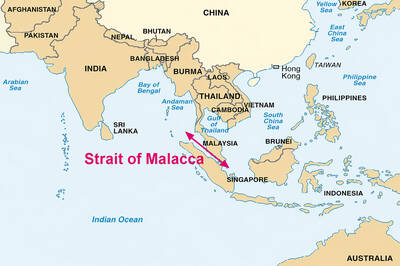
The closure of the Strait of Hormuz has forced policymakers in Asia to face questions over the security of other maritime chokepoints, including the Strait of Malacca, which is the world’s busiest waterway for international trade. WHAT IS THE MALACCA STRAIT? The 900km long Malacca Strait, bounded by Indonesia, Thailand, Malaysia and Singapore, provides the shortest sea route from East Asia to the Middle East and Europe. It carries nearly 22 percent of the world’s maritime trade, according to the Center for Strategic and International Studies (CSIS). This includes oil and gas shipments from the Middle East to the energy-hungry economies of China,
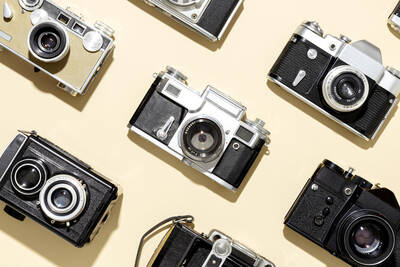
Cameras are everywhere — in our pockets, on our walls and even in space. They capture emotions, preserve history and reflect culture. Through these devices, photography is now essential to modern life, influencing how we perceive ourselves and the world. To understand the root of their power, let’s explore the camera’s remarkable journey. The story begins with the camera obscura, a dark room with a tiny hole. Light passing through the opening projected an inverted image on the opposite wall. Renaissance artists used this principle to paint accurate scenes. However, these images couldn’t be preserved as photographs. That changed

A: This year’s two most anticipated films have finally hit theaters in Taiwan. “Michael” premiered last Wednesday, while “The Devil Wears Prada 2” premiered this Wednesday ahead of its global release. B: Isn’t “Michael” the biopic about the late King of Pop Michael Jackson? A: Yup, it tells the story of Michael’s legendary life, from child star to global icon. And the role is in fact played by his nephew, Jaafar Jackson. B: Michael caused a sensation when touring Taiwan twice in 1993 and 1996. His classic hits, dance moves and music videos reshaped global pop culture at that time. A: I’m gonna
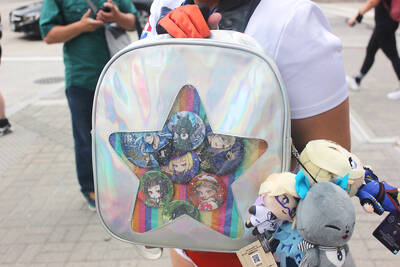
對話 Dialogue 華華:欸,你最近有沒有發現,路上很多人背的包包上還有一個透明的小包包? Huáhua: Èi, nǐ zuìjìn yǒu méiyǒu fāxiàn, lùshàng hěn duō rén bēi de bāobāo shàng hái yǒu yí ge tòumíng de xiǎo bāobāo? 清清:我上次去逛街,也注意到了。我看到好多人把吊飾、照片或娃娃什麼的放進小包裡,掛在包包上。那叫什麼啊? Qīngqīng: Wǒ shàngcì qù guàngjiē, yě zhùyì dào le. Wǒ kàndào hǎo duō rén bǎ diàoshì, zhàopiàn huò wáwa shénme de fàng jìn xiǎo bāo lǐ, guà zài bāobāo shàng. Nà jiào shénme a? 華華:聽說有兩種,一種叫「痛包」,一種叫「娃包」或「曬娃包」。 Huáhua: Tīngshuō yǒu liǎng zhǒng, yì zhǒng jiào “tòngbāo”, yì zhǒng jiào “wábāo” huò “shàiwábāo”. 清清:「痛包」這個說法我聽過,就是在包包上大量展示自己喜歡的東西。但「曬娃包」還是第一次聽到。為什麼叫「曬娃包」? Qīngqīng: “Tòngbāo” zhège shuōfǎ wǒ tīng guò, jiù shì zài bāobāo shàng dàliàng zhǎnshì zìjǐ xǐhuān de dōngxi. Dàn “shàiwábāo” háishì dì yí cì tīng dào. Wèishéme jiào “shàiwábāo”? 華華:因為很多人會把自己喜歡的娃娃放進透明包裡,帶出去拍照,曬給大家看。 Huáhua: Yīnwèi hěn


 RSS
RSS