


Today we’re going to build a model to show how the lungs inhale and exhale.
What you will need:
A plastic bottle
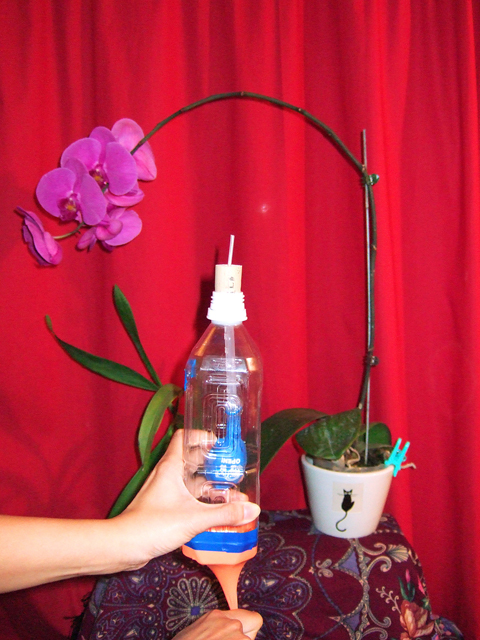
PHOTO: MICHAEL KEARNEY, TAIPEI TIMES
A plastic pipette or a long, thin tube
Balloons
Tape
A cork or something else to plug up the top of the bottle
Scissors
A screwdriver or something else you can use to poke a hole through the cork
► Cut the pipette so that both ends are open (now you have a tube).
► Make sure the cork fits snugly in the top of the bottle and then poke a hole through it. You’ll need to squeeze the tube through the hole. Air should only be able to get through the tube, so you might need to use tape to plug up any cracks.
► Put a balloon on one end of the tube. Wrap tape around it to make sure it’s attached tightly.
► Cut a hole in the bottom of the plastic bottle.
► Cut off the end of a balloon then wrap the balloon around the bottom of the bottle. Use tape to help hold the balloon in place. Be careful not to tear the balloon.
► Suck hard on the tube so that the balloon attached to it has very little air in it. Keep sucking as you put the cork into the top of the bottle.
► Pull on the balloon wrapped around the bottom of the bottle. The balloon inside the bottle should fill up with air, just like your lungs fill up with air when you inhale. Stop pulling, and the air should leave the balloon inside the bottle, just like when you exhale.
(MICHAEL KEARNEY, STAFF WRITER)
今天我們要來製作一個可以示範肺是怎麼吸氣和呼氣的模型。
所需材料︰
一個塑膠瓶
一個塑膠滴管,或是一根細長的管子
一些氣球
膠帶
一個軟木塞,或是其他可以用來封住瓶口的東西
剪刀
一把螺絲起子,或是其他可以用來在軟木塞上穿洞之物
►把滴管的一端剪開,讓滴管兩端都是開口(變成一個塑膠管子)。
►確認軟木塞可以剛好封住瓶口,然後在軟木塞上鑽一個洞。把管子塞進軟木塞的洞中,讓空氣只能透過這根管子進入瓶中,所以你可能需要用膠帶來補滿縫隙。
►把氣球裝在管子的一端,用膠帶黏住四周,確定它被黏牢在管子上。
►在塑膠瓶底部戳一個洞。
►把一個氣球的吹氣口剪掉,然後把這個氣球套綁在瓶子底部,並利用膠帶固定氣球,小心不要把氣球弄破了。
►對著管子用力吸氣讓另一端的氣球裡面幾乎沒有空氣;把軟木塞塞進瓶口時繼續用力吸氣。
►拉扯一下套綁在瓶底的氣球,這時瓶裡的氣球應該會被空氣填滿,就像你吸氣時肺會充滿空氣一樣。當你放開瓶底的氣球,瓶中氣球內的空氣就會逸出,就像你呼氣時一樣。
(翻譯︰袁星塵)
SCIENCE JOURNAL
The lungs help us to take in oxygen and get rid of carbon dioxide. Why do people need oxygen? Where does the carbon dioxide come from? What else do the lungs do? Try doing some research at the library or on the Internet.
肺的功用是幫助身體吸入氧氣及排出二氧化碳。人類為什麼需要氧氣?二氧化碳又是從哪來的呢?肺還有什麼其他功能呢?試著到圖書館或上網找資料研究一下。
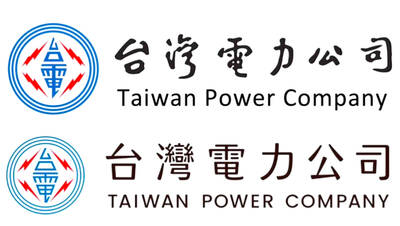
The debate surrounding Taipower’s recent corporate identity reboot has gone well beyond the design community. The controversy began after Taipower replaced the familiar “Taiwan Power Company” wording — widely regarded as the calligraphy of Yu You-ren (1879-1964), former Control Yuan president and master calligrapher — with a modern logotype by designer Aaron Nieh’s team, Aaron Nieh Workshop. Taipower said the change was not a wholesale replacement of old signage, but an “optimization of its identity system,” aimed at meeting the needs of digital media, electronic bills, apps, social media graphics and various small-format applications. Existing physical markings, such as building
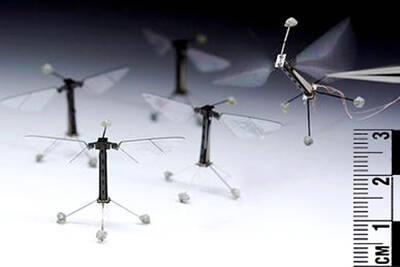
As bee populations around the world continue to decline at an alarming rate, scientists are developing an innovative solution: robotic bees. Recent advances at research institutions like Massachusetts Institute of Technology (MIT) in the US have produced tiny flying robots capable of performing pollination tasks similar to those of real bees. These tiny machines represent an impressive technological achievement. MIT’s latest models can hover in the air for over 1,000 seconds and perform complex movements, demonstrating the agility needed for successful pollination. The robots are designed to mimic the flight patterns of natural bees, offering potential support to agriculture

Continued from yesterday(延續自昨日) https://www.taipeitimes.com/News/lang For the most part, the idea of “Blue Monday” has been rejected as a myth. Some mental health experts also say there is a danger in labeling a certain day as the most depressing time of the entire year. Some argue that if people expect to feel sadder on the third Monday in January, this belief alone may increase their anxiety. One group that is worried about the negative effect of believing in Blue Monday is Samaritans. A mental health charity based in the UK, Samaritans is working to turn Blue Monday into “Brew Monday.” In this

A: Taiwan legalized same-sex marriage on May 24, 2019, so this week marks the seventh anniversary of that milestone. By the end of 2024, a total of 32,126 LGBT couples had tied the knot. B: How many of them got married to foreign partners? A: In 2024, there were 504 cross-border same-sex marriages. By the end of that year, there were 130 cross-strait same-sex marriages between Taiwanese and Chinese — accounting for only about 0.4 percent of the total. B: I’ve heard that a seven-year marriage brings the “seven-year itch.” I bet some couples regret their decisions now. A:


 RSS
RSS