


Many substances have a pH value. Even your blood has a pH value. It's between 7.3 and 7.5. If the pH of your blood falls below 7 or rises above 7.8 you will die. So it can be very important to know pH values. Today we're going to use a humble red cabbage to make a pH indicator.
What you will need:
Half a head of red cabbage
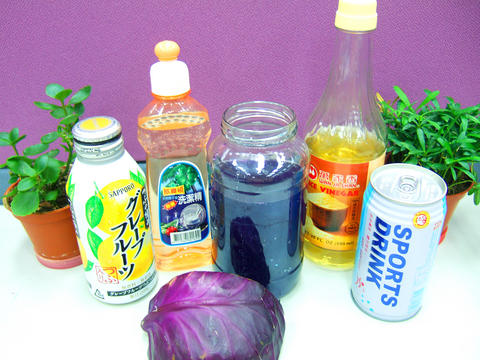
PHOTO: CATHERINE THOMAS, TAIPEI TIMES
A pot
A large jug or bottle
A sieve or a colander
Several glasses (smaller ones are best)
Colored pencils
Vineger
Water
Bicarbonate of soda
Salt
Various substances for testing (such as lemonade, lemon juice, milk, dish detergent, sports drink, orange juice, washing powder, or fabric softener)
A spoon
A cup of rainwater
+ Ask a grown up to help you chop up half of a red cabbage.
+ Put the cabbage in a cooking pot, cover it with water, bring to a boil and allow the cabbage to boil for about 20 minutes, or until most of the color has steeped out of the cabbage.
+ Leave the mixture to cool to room temperature.
+ Using a sieve or a colander, pour the mixture into a large jug. The cabbage will be caught in the colander (it is perfectly safe to eat). The liquid in the jug is cabbage water indicator. It's color will depend on the water used, but generally it will be a purple color.
+ Set up a row of glasses. This is where you will do your testing. Place about 15 teaspoons of cabbage water indicator into each glass. These are your samples. You should keep one sample as a control so that you can compare your results. When you are testing a solid, add an extra 10 teaspoons of cabbage water to the sample.
+ Add a teaspoon of vinegar to a sample. Stir and wash the spoon. Using your colored pencils, carefully copy the color and label it "vinegar."
+ The next test is a solid, so first add an extra 10 teaspoons of indicator water. Add a teaspoon of salt to the sample. Stir and wash the spoon. Copy the color and label.
+ Continue to test various household liquids and solids. Always ask permission before handling a substance. NEVER mix household cleaners together.
Remember to be careful when pouring the solutions away, and make sure that you wash the glasses thoroughly after you finish.(catherine Thomas, staff writer)
很多物質都有pH值(即酸鹼值),甚至連血液也有pH值,它介於七點三和七點五之間。如果你血液的pH值小於七或是高於七點八,你就會死亡。因此,知道pH值的大小很重要。今天,我們就要用一般的紫色包心菜來製作pH值指示劑。
所需材料︰
半顆紫色包心菜
一個鍋子
一個大水罐或瓶子
一個篩網或濾器
數個玻璃杯(小玻璃杯最適合)
彩色鉛筆
醋
清水
小蘇打
食用鹽
各式測試物質(如檸檬水、檸檬原汁、牛奶、洗碗精、運動飲料、柳橙原汁、洗衣粉或衣物柔軟精)
一支湯匙
一杯雨水
+ 請大人幫你切下半顆的紫色包心菜。
+ 將切好的包心菜放進鍋子裡,加入水,水面的高度要蓋過包心菜,然後把它煮沸,讓包心菜滾煮約二十分鐘或直到它大部分的顏色都退掉為止。
+ 將鍋中混合物冷卻至常溫。
+ 使用篩網或濾器,將混合物過濾倒至大水罐裡,包心菜會留在濾器上(可安全食用)。水罐裡的液體就是包心菜水指示劑。它的顏色會依據你所使用的水而有所差異,不過通常是呈紫色的。
+ 將玻璃杯排成一排,這將是你進行測試之處。在每個玻璃杯內倒入十五茶匙的包心菜水指示劑,作為你的樣本。其中一個樣本必須當作對照組,這樣你才可以比較實驗的結果。如果你要測試固態物質,請多加十茶匙的包心菜水到樣本中。
+ 加一茶匙的醋到樣本裡,攪拌一下,然後把湯匙洗乾淨。用彩色鉛筆仔細地將顏色記錄下來,然後標示上「醋」。
+ 接下來要測試的是固態物質,所以先多加入十茶匙的指示劑水。加一茶匙的鹽到樣本裡,攪拌一下,然後把湯匙洗乾淨。將顏色記錄下來並標示好。
+ 繼續測試各式家用液體和固態物質。請先獲得大人許可再使用這些東西。千萬不要將家用清潔劑混合在一起。
在倒掉溶液時,記得要小心,使用完畢後,務必將玻璃杯徹底清洗乾淨。(翻譯:楊鴻泰)
What's
the science 科學原理
The pH scale refers to the concentration of hydrogen ions (H). The more hydrogen ions a substance has, the more acidic it is. Acids range from a pH0 (strong) to a pH6 (weakest). Neutral (neither acidic nor alkaline) is pH7. Alkalines or bases have a pH from 8 - 14 (8 is the weakest). The red cabbage contains a natural dye called anthocyanin. When you boil the cabbage, the dye is released into the water. Anthocyanin turns red when it meets acid and green-blue when it meets alkalines.
pH值代表氫離子的濃度(H)。當某種物質氫離子含量越高時,它的酸性就越強。酸性的pH值介於0(最強)至6(最弱)之間。中性(非酸性也非鹼性)的pH值為7。鹼性的pH值介於8(最弱)至14之間。紫色包心菜含有一種 稱為花青素的天然染色劑,當包心菜煮沸時,花青素會被釋放到水裡,它一遇到酸就會變成紅色,遇到鹼則會變成藍綠色。
Science Journal 科學日誌
What do you know about pH values? Acids? Alkalines (or bases)? Is vinegar an acid or an alkaline? What about dish detergent? Do you think that rainwater will be acidic or alkaline? You might want to cut out the pH scale and stick it in your Science Journal.
你對pH值了解多少?還有酸跟鹼(鹽基)呢?醋是酸性還是鹼性的?洗碗精呢?
你覺得雨水是酸性還是鹼性的?
你可以將pH值量表剪下,
貼到你的科學日誌裡喔!
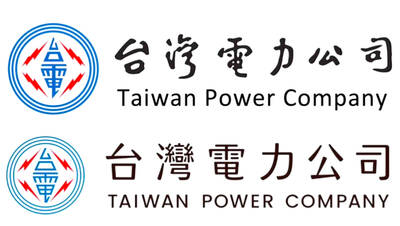
The debate surrounding Taipower’s recent corporate identity reboot has gone well beyond the design community. The controversy began after Taipower replaced the familiar “Taiwan Power Company” wording — widely regarded as the calligraphy of Yu You-ren (1879-1964), former Control Yuan president and master calligrapher — with a modern logotype by designer Aaron Nieh’s team, Aaron Nieh Workshop. Taipower said the change was not a wholesale replacement of old signage, but an “optimization of its identity system,” aimed at meeting the needs of digital media, electronic bills, apps, social media graphics and various small-format applications. Existing physical markings, such as building
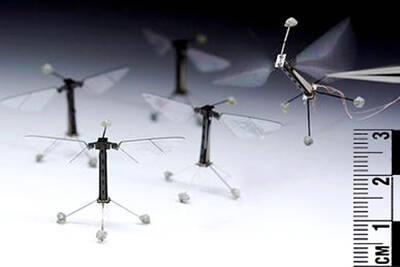
As bee populations around the world continue to decline at an alarming rate, scientists are developing an innovative solution: robotic bees. Recent advances at research institutions like Massachusetts Institute of Technology (MIT) in the US have produced tiny flying robots capable of performing pollination tasks similar to those of real bees. These tiny machines represent an impressive technological achievement. MIT’s latest models can hover in the air for over 1,000 seconds and perform complex movements, demonstrating the agility needed for successful pollination. The robots are designed to mimic the flight patterns of natural bees, offering potential support to agriculture

Continued from yesterday(延續自昨日) https://www.taipeitimes.com/News/lang For the most part, the idea of “Blue Monday” has been rejected as a myth. Some mental health experts also say there is a danger in labeling a certain day as the most depressing time of the entire year. Some argue that if people expect to feel sadder on the third Monday in January, this belief alone may increase their anxiety. One group that is worried about the negative effect of believing in Blue Monday is Samaritans. A mental health charity based in the UK, Samaritans is working to turn Blue Monday into “Brew Monday.” In this

A: Taiwan legalized same-sex marriage on May 24, 2019, so this week marks the seventh anniversary of that milestone. By the end of 2024, a total of 32,126 LGBT couples had tied the knot. B: How many of them got married to foreign partners? A: In 2024, there were 504 cross-border same-sex marriages. By the end of that year, there were 130 cross-strait same-sex marriages between Taiwanese and Chinese — accounting for only about 0.4 percent of the total. B: I’ve heard that a seven-year marriage brings the “seven-year itch.” I bet some couples regret their decisions now. A:


 RSS
RSS