


Today, most people have at least one couch in their house. They like to sit on their couch and watch TV. But it might surprise you to find out that throughout history, couches have been used for many different purposes.
For example, a long time ago, only rich people had couches. In the Middle East, kings used couches as their thrones. In Italy, people didn't sit in chairs while they ate. Instead, they put couches around their table and ate while lying down. Regular people have been able to afford couches only for a few hundred years.
Today, people like to sit on couches to relax. If someone likes to spend too much time relaxing on the couch and not working, you can call him or her a "couch potato." (Marc Langer, Staff Writer)

PHOTO : AP
今天,多數人家裡至少都有一張沙發。人們喜歡坐在沙發上看電視。不過,了解到歷史上沙發的用途五花八門,可能會讓你大吃一驚。
例如,在很久以前,有錢人才有沙發。中東的國王將沙發做為王位。義大利人吃東西時不坐在椅子上,而是在餐桌四周擺上沙發,躺下來吃東西。一般人買得起沙發,也不過才幾百年的歷史。
今日,人們喜歡坐在沙發上休息。假如某個人喜歡終日窩在沙發上無所事事,你就可以稱那個人為「couch potato」(沙發馬鈴薯)。
(翻譯:賴美君)

Huge stretches of coral reef around the world are turning a ghostly white this year amid record warm ocean temperatures. On April 15, the US National Oceanic and Atmospheric Administration confirmed the world’s fourth mass global bleaching event is underway — with serious consequences for marine life and for the people and economies that rely on reefs. WHAT ARE CORALS? Corals are invertebrates that live in colonies. Their calcium carbonate secretions form hard and protective scaffolding that serves as a home to many colorful species of single-celled algae. The two organisms have evolved over millennia to work together, with corals providing shelter to algae,
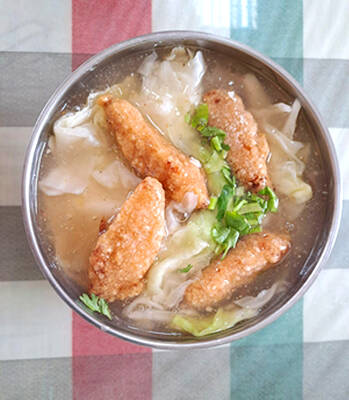
Taiwanese cuisine boasts a rich culture of thick soups, with various options available at street vendors or high-end restaurants. In English, this style of dish is typically called “thick soup.” Western cuisine typically uses flour, cream, or mashed vegetables to create a creamy consistency, while in Taiwan, thick soups are made by simply incorporating food starch into the soup and creating a smooth and silky texture. Tutuo fish in thick soup is such a soup with fried tutuo fish chunks, shiitake mushrooms, bamboo shoots, and wood ears. 台灣羹品飲食文化豐富,無論是巷口小店或是高檔餐廳,都有提供羹料理。羹在英文稱作「濃湯」,西式濃湯是以麵粉、鮮奶油、蔬菜泥等達到濃稠的口感,台灣的羹湯用太白粉即能做出濃稠絲滑的湯頭。土魠魚羹就是在勾芡的羹湯中加入炸土魠魚塊、香菇、竹筍、木耳等食材的料理。 boast (v.) 擁有(令人驕傲的事物) consistency (n.) 濃稠度 chunk (n.) 厚塊,大塊 wood ear (n. ph.) 木耳 The star of this

In Taiwan, a quick stop at a local convenience store allows you to grab a hot dog whenever you want. But have you ever wondered how this popular snack got its unique name and became a leading light of American cuisine? First, the name “hot dog” is actually a combination of different ideas. Vendors called the sausages “red hot” to get customers to buy one fresh off their grills. As for the “dog” part, it’s a playful joke to compare the meat of the sausage to that of a dog—specifically , a dachshund. This small, long dog breed was

A: Entertainer Mickey Huang’s #MeToo scandal has kept snowballing. B: Didn’t Huang just escape prosecution on several sexual misconduct charges due to a lack of evidence? A: He has now been accused of raping a woman identified as "Miss K." B: It’s like one trouble follows another! A: His decent “persona” in the showbiz has totally collapsed. A: 藝人黃子佼的#MeToo事件真是沒完沒了。 B: 他的性騷擾案不是因為證據不足獲得不起訴? A: 但他又被某位「K小姐」指控性侵。 B: 天啊,真是一波未平,一波又起! A: 他在娛樂圈的優質「人設」都崩壞啦。 (By Eddy Chang, Taipei Times/台北時報張聖恩)


 RSS
RSS