


Five new COVID-19 cases were confirmed yesterday, including four linked to the 34th case who are believed to have been infected in a hospital, bringing Taiwan’s total number of confirmed cases to 39, the Central Epidemic Command Center (CECC) said.
Cases 35 through 38 are a janitor and three nurses working at the hospital where the 34th case was hospitalized.
The 34th case is a woman living in northern Taiwan who had not traveled overseas in the 14 days prior to being confirmed as having COVID-19, the center said.
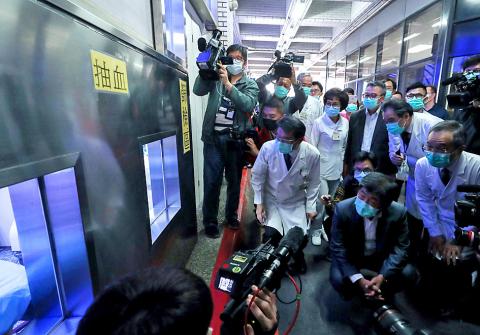
Photo: CNA
The CECC believes the woman transmitted the virus to the janitor, who was stationed at the emergency room, before spreading it to the three nurses working in the ward where she was later placed, Minister of Health and Welfare Chen Shih-chung (陳時中), who heads the center, told a news conference in Taipei.
However, the CECC was still trying to ascertain whether it was the woman who transmitted the virus to the janitor or vice versa, Chen said when responding to media queries over the possibility.
The woman was hospitalized on Feb. 14, and from Feb. 16 to Wednesday last week came into contact with the nurses, one of whom started displaying pneumonia-like symptoms on Feb. 16, CECC advisory specialist panel convener Chang Shan-chwen (張上淳) said.
However, the janitor started exhibiting pneumonia-like symptoms as early as Wednesday last week, while the woman did not start showing symptoms until Friday last week, he said.
The CECC immediately took samples at more than 90 spots in the emergency room, which all tested negative for the coronavirus, but it ordered that the emergency room be disinfected in sections to completely eliminate the risk of contagion, Chen said.
Meanwhile, all the patients who had been in the same ward as the 34th case have been transferred to individual wards, Chen said, adding that they had tested negative for the virus as of yesterday.
All paramedics who had come into contact with the three nurses, as well as their family members, would be screened for the disease, he added.
Asked whether the hospital where the infections broke out would be locked down like the Taipei Municipal Hoping Hospital was locked down during the SARS outbreak, Chen said that there is “absolutely no need” for such a move judging by the current situation.
Case 39 is a woman in her 60s who traveled to Egypt and Dubai from Jan. 29 to Friday last week with family and friends, Chen said.
The woman sought medical help on Friday after she on Wednesday started vomiting and later developed a sore throat, aggravated coughing, stomachache and chest tightness, he said.
The CECC would track down all medical personnel who came into contact with the woman and all the people who traveled with her, he said.
Asked whether the existence of case 34 confirms that the virus was spreading in the community, as she had not traveled abroad in the two weeks prior to being confirmed with the disease, Chen said that it was too early to reach that conclusion, adding that a determination of the domestic epidemic situation requires a more comprehensive evaluation.
Asked whether the CECC would raise its travel advisory for Egypt and Dubai, Chen said it has considered the idea, but cannot rule out that case 39 might have contracted the virus during the long flight.
“Long-distance flights involve being in a confined space over a prolonged period and are therefore risky. We have repeatedly warned the public that they should avoid taking long flights unless necessary,” he said.
The CECC would closely monitor the situation abroad with regard to adjustments to its travel advisories, he said.

PROVOCATIVE: Chinese Deputy Ambassador to the UN Sun Lei accused Japan of sending military vessels to deliberately provoke tensions in the Taiwan Strait China denounced remarks by Japan and the EU about the South China Sea at a UN Security Council meeting on Monday, and accused Tokyo of provocative behavior in the Taiwan Strait and planning military expansion. Ayano Kunimitsu, a Japanese vice foreign minister, told the Council meeting on maritime security that Tokyo was seriously concerned about the situation in the East China and South China seas, and reiterated Japan’s opposition to any attempt to change the “status quo” by force, and obstruction of freedom of navigation and overflight. Stavros Lambrinidis, head of the EU delegation to the UN, also highlighted South China Sea

SILENCING CRITICS: In addition to blocking Taiwan, China aimed to prevent rights activists from speaking out against authoritarian states, a Cabinet department said The Ministry of Foreign Affairs (MOFA) yesterday condemned transnational repression by Beijing after RightsCon, a major digital human rights conference scheduled to be held in Zambia this week, was abruptly canceled due to Chinese pressure over Taiwanese participation. This year’s RightsCon, the world’s largest conference discussing issues “at the intersection of human rights and technology,” was scheduled to take place from tomorrow to Friday in Lusaka, and expected to draw 2,600 in-person attendees from 150 countries, along with 1,100 online participants. However, organizers were forced to cancel the event due to behind-the-scenes pressure from China, the ministry said, expressing its “strongest condemnation”
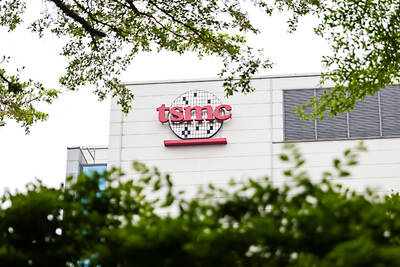
Taiwan Semiconductor Manufacturing Co (TSMC, 台積電), the world’s largest contract chipmaker, said it expects its 2-nanometer (2nm) chip capacity to grow at a compound annual rate of 70 percent from this year to 2028. The projection comes as five fabs begin volume production of 2-nanometer chips this year — two in Hsinchu and three in Kaohsiung — TSMC senior vice president and deputy cochief operating officer Cliff Hou (侯永清) said at the company’s annual technology symposium in Silicon Valley, California, last week. Output in the first year of 2-nanometer production, which began in the fourth quarter of last year, is expected to
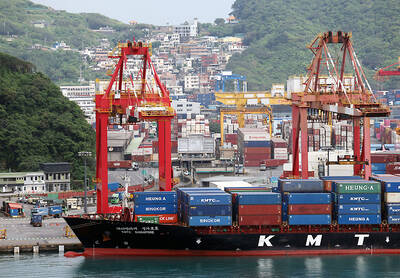
Taiwan’s economy grew far faster than expected in the first quarter, as booming demand for artificial intelligence (AI) applications drove a surge in exports, spilling over into investment and consumption, the Directorate-General of Budget, Accounting and Statistics (DGBAS) said yesterday. GDP growth was 13.69 percent year-on-year during the January-to-March period, beating the DGBAS’ February forecast by 2.23 percentage points and marking the most robust growth in nearly four decades, DGBAS senior official Chiang Hsin-yi (江心怡) told a news conference in Taipei. The result was powered by exports, which remain the backbone of Taiwan’s economy, Chiang said. Outbound shipments jumped 51.12 percent year-on-year to


 RSS
RSS