


The US is moving toward a “more normal foreign military sales relationship” with Taiwan, US Assistant Secretary of Defense for Asian and Pacific Security Affairs Randall Schriver said on Thursday.
Schriver, who was asked by reporters on the sidelines of the 8th Annual Jamestown China Defense and Security Conference in Washington whether the US would change its arms sales policy on Taiwan from the current “bundling” approach, said the administration of US President Donald Trump views arms sales to Taiwan as foreign military sales and would push for more normal arms sales.
The conference was organized by the Jamestown Foundation and the Global Taiwan Institute.

Photo: CNA
Last month, the US Defense Security Cooperation Agency (DSCA) announced an arms sales proposal that covers standard spare parts, and the repair and replacement of spare parts in support of Taiwan’s F-16s, C-130s, F-5s, Indigenous Defense Fighters and other aircraft systems.
The sale would be the second US weapons agreement with Taiwan since Trump took office, after a US$1.4 billion deal in June last year.
The US$300 million proposal was described by the US-Taiwan Business Council as a move by the US away from the previous “bundling” approach to arms sales.
The council also urged that new arms sales requests by Taiwan be given an inter-agency assessment that does not consider China’s potential reaction to the sale as a part of the equation.
American Institute in Taiwan Chairman James Moriarty on Wednesday said that he was sure it would use a “case-by-case” approach, but was not aware of any new US arms deals with Taiwan that would soon be approved.
In response, Ministry of National Defense spokesman Major General Chen Chung-chi (陳中吉) said in Taipei that a normal arms sales approach is expected to help the nation upgrade its military capability.
The latest US$330 million arms sales proposal shows that Taiwan and the US have good communications and cooperation, Chen said.
At the conference, former US National Security Council official Mike Green said there is no doubt that Beijing is ramping up pressure on Taiwan in all arenas — diplomatic, economic, information and especially military.
“In my view, we should be pushing back in every domain so the military move is appropriate,” Green said.
He said it is concerning that officials in the administration do not know the importance of Taiwan or understand related security issues, referring to US Secretary of the Treasury Steven Mnuchin, who has suggested that once Washington stops arms sales to Taiwan, the US and China would be able to reach an agreement on trade.
Former US deputy assistant secretary of defense for East Asia Abraham Denmark said the pragmatism from the administration in terms of Taiwan policy has been fairly consistent with past administrations.
The only big change, Denmark said, was that the US purposely made it public that US warships sailed through the Taiwan Strait a few months ago, but he preferred to see the move as symbolic.
The US should think about what it can do to help Taiwan and cross-strait stability, he said.
“I am thinking about substantive impact,” which will be more important than a symbolic gesture, Denmark said.
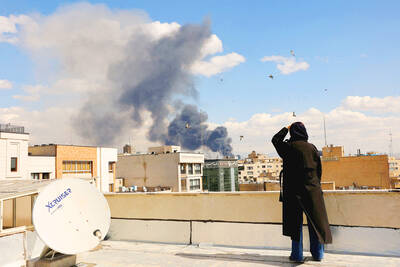
CHAOS: Iranians took to the streets playing celebratory music after reports of Khamenei’s death on Saturday, while mourners also gathered in Tehran yesterday Iranian Supreme Leader Ayatollah Ali Khamenei was killed in a major attack on Iran launched by Israel and the US, throwing the future of the Islamic republic into doubt and raising the risk of regional instability. Iranian state television and the state-run IRNA news agency announced the 86-year-old’s death early yesterday. US President Donald Trump said it gave Iranians their “greatest chance” to “take back” their country. The announcements came after a joint US and Israeli aerial bombardment that targeted Iranian military and governmental sites. Trump said the “heavy and pinpoint bombing” would continue through the week or as long

An Emirates flight from Dubai arrived at Taiwan Taoyuan International Airport yesterday afternoon, the first service of the airline since the US and Israel launched strikes against Iran on Saturday. Flight EK366 took off from the United Arab Emirates (UAE) at 3:51am yesterday and landed at 4:02pm before taxiing to the airport’s D6 gate at Terminal 2 at 4:08pm, data from the airport and FlightAware, a global flight tracking site, showed. Of the 501 passengers on the flight, 275 were Taiwanese, including 96 group tour travelers, the data showed. Tourism Administration Deputy Director-General Huang He-ting (黃荷婷) greeted Taiwanese passengers at the airport and
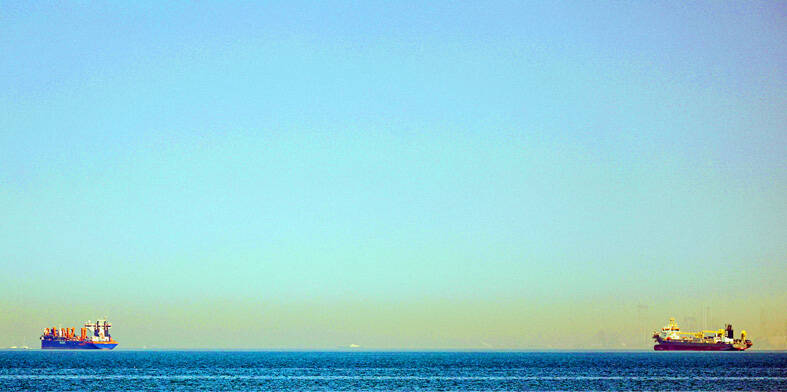
State-run CPC Corp, Taiwan (CPC, 台灣中油) yesterday said that it had confirmed on Saturday night with its liquefied natural gas (LNG) and crude oil suppliers that shipments are proceeding as scheduled and that domestic supplies remain unaffected. The CPC yesterday announced the gasoline and diesel prices will rise by NT$0.2 and NT$0.4 per liter, respectively, starting Monday, citing Middle East tensions and blizzards in the eastern United States. CPC also iterated it has been reducing the proportion of crude oil imports from the Middle East and diversifying its supply sources in the past few years in response to geopolitical risks, expanding
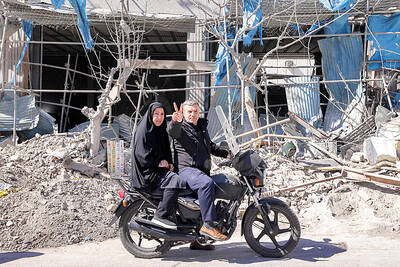
STRAIT OF HORMUZ: In the case of a prolonged blockade by Iran, Taiwan would look to sources of LNG outside the Middle East, including Australia and the US Taiwan would not have to ration power due to a shortage of natural gas, Minister of Economic Affairs Kung Ming-hsin (龔明鑫) said yesterday, after reports that the Strait of Hormuz was closed amid the conflict in the Middle East. The government has secured liquefied natural gas (LNG) supplies for this month and contingency measures are in place if the conflict extends into next month, Kung told lawmakers. Saying that 25 percent of Taiwan’s natural gas supplies are from Qatar, Chinese Nationalist Party (KMT) caucus secretary-general Lin Pei-hsiang (林沛祥) asked about the situation in light of the conflict. There would be “no problems” with


 RSS
RSS