


A four-day drill conducted last month by the National Security Council (NSC) to test the government’s ability to respond to national security emergencies exposed various problems, and President Tsai Ing-wen (蔡英文) has called for improvements, a senior government official said yesterday.
The drill, which took place from Sept. 8 to 11, caught many government agencies off guard, as they had “no idea what resources were available and where to find them,” said the official, who spoke on condition of anonymity.
Tsai has asked for more training and improved coordination between government agencies and military units, the official added.
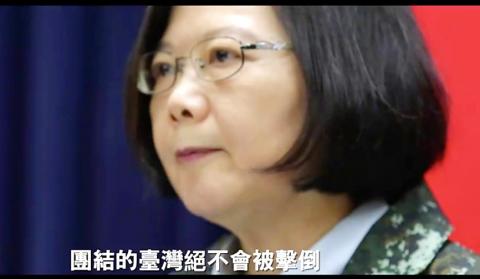
Photo courtesy of Military News Agency
More than 20 government agencies took part in the drill, they said.
The exercise, aimed at enhancing cross-departmental and inter-ministerial cooperation on emergency responses, requires government agencies to respond to nearly 100 national security threats to test if they can handle emergencies.
It is carried out by three groups: the drill group, consisting of all ministries under the Executive Yuan; the attack group, which simulates the threats; and the observer group, which evaluates the performance of the other groups, the official said.
The attack and observer groups each have about a dozen members and are respectively headed by former NSC secretary-general Chiou I-jen (邱義仁) and former NSC secretary-general Chen Chung-hsin (陳忠信), the official said, adding that about 500 people took part in the drill, including former military leaders and academics.
This drill found recurring problems at government agencies, as most seemed completely unprepared for emergencies, the official said.
“The Ministry of National Defense received the highest score for its emergency responses, as it is the most experienced among all ministries in the field,” the official said, citing the observer group’s evaluation.
“On the other hand, a ministry which considers itself to be elite was criticized for rarely consulting with other ministries,” the official added.
The drill differs from the annual Han Kuang military exercise, as it focuses on political agencies’ responses to emergencies, while Han Kuang focuses on military responses, the official said.
Drills in the past two years have shown that cross-departmental and inter-ministerial cooperation clearly need improvement, especially in coordinating the military, the coast guard, police and firefighters, the official said, adding that the agencies lack training in collaboration as well as clear guidelines for emergencies.
To improve the agencies’ performance, the government could increase the drill’s frequency next year, the official said.
This year’s drill was the 11th since it was launched in 2005 under then-president Chen Shui-bian (陳水扁).
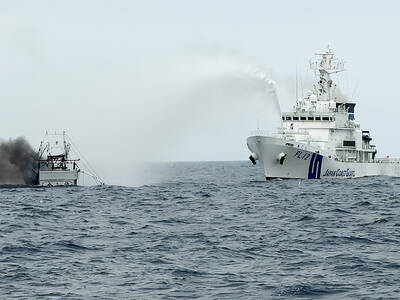
CREDIT-GRABBER: China said its coast guard rescued the crew of a fishing vessel that caught fire, who were actually rescued by a nearby Taiwanese boat and the CGA Maritime search and rescue operations do not have borders, and China should not use a shipwreck to infringe upon Taiwanese sovereignty, the Coast Guard Administration (CGA) said yesterday. The coast guard made the statement in response to the China Coast Guard (CCG) saying it saved a Taiwanese fishing boat. The Chuan Yu No. 6 (全漁6號), a fishing vessel registered in Keelung, on Thursday caught fire and sank in waters northeast of Diaoyutai Islands (釣魚台). The vessel left Keelung’s Badouzih Fishing Harbor (八斗子漁港) at 3:35pm on Sunday last week, with seven people on board — a 62-year-old Taiwanese captain surnamed Chang (張) and six
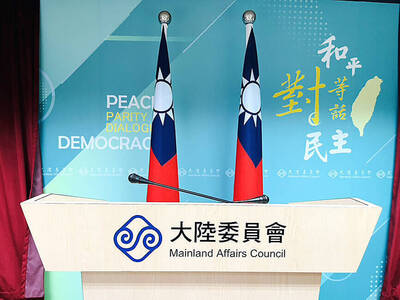
RISKY BUSINESS: The ‘incentives’ include initiatives that get suspended for no reason, creating uncertainty and resulting in considerable losses for Taiwanese, the MAC said China’s “incentives” failed to sway sentiment in Taiwan, as willingness to work in China hit a record low of 1.6 percent, a Ministry of Labor survey showed. The Directorate-General of Budget, Accounting and Statistics (DGBAS) also reported that the number of Taiwanese workers in China has nearly halved from a peak of 430,000 in 2012 to an estimated 231,000 in 2024. That marked a new low in the proportion of Taiwanese going abroad to work. The ministry’s annual survey on “Labor Life and Employment Status” includes questions respondents’ willingness to seek employment overseas. Willingness to work in China has steadily declined from
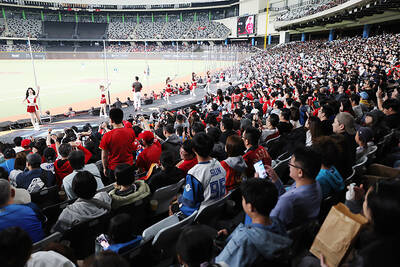
The Legislative Yuan’s Finance Committee yesterday approved proposed amendments to the Amusement Tax Act (娛樂稅法) that would abolish taxes on films, cultural activities and competitive sporting events, retaining the fee only for dance halls and golf courses. The proposed changes would set the maximum tax rate for dance halls and golf courses at 50 and 20 percent respectively, with local governments authorized to suspend the levies. Article 2 of the act says that “amusement tax shall be levied on tickets sold or fees charged by amusement places, facilities or activities” in six categories: “Cinema; professional singing, story-telling, dancing, circus, magic show, acrobatics
INFLATION UP? The IMF said CPI would increase to 1.5 percent this year, while the DGBAS projected it would rise to 1.68 percent, with GDP per capita of US$44,181 The IMF projected Taiwan’s real GDP would grow 5.2 percent this year, up from its 2.1 percent outlook in January, despite fears of global economic disruptions sparked by the US-Iran conflict. Taiwan’s consumer price index (CPI) is projected to increase to 1.5 percent, while unemployment would be 3.4 percent, roughly in line with estimates for Asia as a whole, the international body wrote in its Global Economic Outlook Report published in the US on Monday. The figures are comparatively better than the IMF outlook for the rest of the world, which pegged real GDP growth at 3.1 percent, down from 3.3 percent


 RSS
RSS