


A combination of low-density lipoprotein (LDL) cholesterol build-up and long-term exposure to artificial blue light could lead to LDL cholesterol oxidation and retinal cell damage, a study conducted by National Taiwan University Hospital (NTUH) and Taipei Veterans General Hospital showed.
Long-term exposure to artificial blue light emitted by electronic devices is believed to increase the risk of retinopathy.
However, the way that light exposure leads to retinal cell damage and the factors that trigger the condition have remained largely unknown.
The study showed that it is extremely likely that LDL cholesterol accumulation is the main factor behind retinopathy.
The research team discovered that adding LDL cholesterol to lab-grown retinal cells and exposing them to artificial blue light for a long period caused the cells to accumulate an excessive amount of free radicals, damaged their mitochondrial functionality and caused the retinal cell structure to disintegrate, NTUH ophthalmologist Yang Chang-hao (楊長豪) said.
Long-term accumulation of LDL cholesterol could cause the oxidative stress in the retina to increase, Taipei Veterans General Hospital ophthalmologist Chiou Shih-hwa (邱士華) said.
“Add blue light exposure on top of that and retinopathy could easily occur,” he said.
The mitochondria is the powerhouse of the cell, and if it is damaged, the functions of retinal cells would also be destroyed, Chiou said.
Cardiovascular disease is known to be associated with eye diseases, and LDL cholesterol is one of the main causes of cardiovascular disease, he added.
The research showed that there is a strong correlation between LDL cholesterol and retinopathy, he said, urging people to give up junk food.
Chiou suggested reducing LDL cholesterol consumption, increasing the intake of antioxidant-rich foods — such as cauliflower, blueberries, curcumin and lutein — and limiting the use of electronic devices to reduce the risk of retinopathy.
People should rest their eyes 10 minutes for every 30 minutes of use, he said.
As blue light is intense, international studies have suggested following the 20-20-20 rule — taking a 20-second break every 20 minutes to look at an object 20 feet (6m) away — when using electronics, Chiou said.
The best foods for protecting the eyes are fresh fruits and vegetables, which contain different types of antioxidants and contribute to eye health, the Health Promotion Administration has said.

PROVOCATIVE: Chinese Deputy Ambassador to the UN Sun Lei accused Japan of sending military vessels to deliberately provoke tensions in the Taiwan Strait China denounced remarks by Japan and the EU about the South China Sea at a UN Security Council meeting on Monday, and accused Tokyo of provocative behavior in the Taiwan Strait and planning military expansion. Ayano Kunimitsu, a Japanese vice foreign minister, told the Council meeting on maritime security that Tokyo was seriously concerned about the situation in the East China and South China seas, and reiterated Japan’s opposition to any attempt to change the “status quo” by force, and obstruction of freedom of navigation and overflight. Stavros Lambrinidis, head of the EU delegation to the UN, also highlighted South China Sea

SILENCING CRITICS: In addition to blocking Taiwan, China aimed to prevent rights activists from speaking out against authoritarian states, a Cabinet department said The Ministry of Foreign Affairs (MOFA) yesterday condemned transnational repression by Beijing after RightsCon, a major digital human rights conference scheduled to be held in Zambia this week, was abruptly canceled due to Chinese pressure over Taiwanese participation. This year’s RightsCon, the world’s largest conference discussing issues “at the intersection of human rights and technology,” was scheduled to take place from tomorrow to Friday in Lusaka, and expected to draw 2,600 in-person attendees from 150 countries, along with 1,100 online participants. However, organizers were forced to cancel the event due to behind-the-scenes pressure from China, the ministry said, expressing its “strongest condemnation”
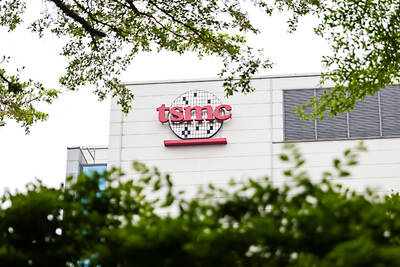
Taiwan Semiconductor Manufacturing Co (TSMC, 台積電), the world’s largest contract chipmaker, said it expects its 2-nanometer (2nm) chip capacity to grow at a compound annual rate of 70 percent from this year to 2028. The projection comes as five fabs begin volume production of 2-nanometer chips this year — two in Hsinchu and three in Kaohsiung — TSMC senior vice president and deputy cochief operating officer Cliff Hou (侯永清) said at the company’s annual technology symposium in Silicon Valley, California, last week. Output in the first year of 2-nanometer production, which began in the fourth quarter of last year, is expected to
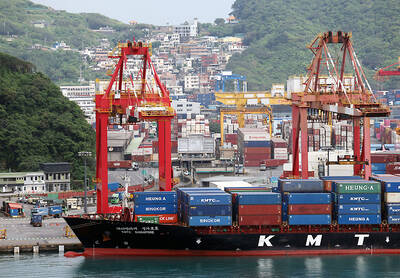
Taiwan’s economy grew far faster than expected in the first quarter, as booming demand for artificial intelligence (AI) applications drove a surge in exports, spilling over into investment and consumption, the Directorate-General of Budget, Accounting and Statistics (DGBAS) said yesterday. GDP growth was 13.69 percent year-on-year during the January-to-March period, beating the DGBAS’ February forecast by 2.23 percentage points and marking the most robust growth in nearly four decades, DGBAS senior official Chiang Hsin-yi (江心怡) told a news conference in Taipei. The result was powered by exports, which remain the backbone of Taiwan’s economy, Chiang said. Outbound shipments jumped 51.12 percent year-on-year to


 RSS
RSS