


Chinese Nationalist Party (KMT) Legislator Ma Wen-chun (馬文君) yesterday accused the Presidential Office of pressuring the Ministry of National Defense to pay Ching Fu Shipbuilding Co (慶富造船) NT$2.4 billion (US$79.52 million at the current exchange rate) months before the budget was set to be allocated so the company could carry out phase three of its plan to build minesweepers for the navy.
At a news conference at the Legislative Yuan in Taipei, Ma played an audio recording showing Ching Fu vice president Chen Chih-wei (陳志偉) apparently telling Kaohsiung Marine Bureau Director-General Wang Tuan-jen (王端仁) and Fisheries Agency officials during a meeting on Oct. 7 last year that the ministry had initially turned down his request for payment and told him to wait until March, when the budget was to be approved.
Chen said in the audio recording that he took the matter to the Presidential Office, as the ministry should have made the payment in September last year.

Photo: CNA
“Two days later, the Ministry of National Defense called me and said that they had received the money, which shows that the Presidential Office fully supports the project. Otherwise, it would turn out to be very ugly,” Chen said in the recording.
The audio recording also showed Chen telling the officials that the project could affect subcontractors Lockheed Martin and the “largest companies in Italy and the US” if Ching Fu’s main competitor, CSBC Corp, Taiwan (台船), tried to seize the bid by renting Kaohsiung’s Singda Harbor for an extended period of time.
It also showed Chen requesting assistance from Wang to help Ching Fu secure space in the harbor so it could construct a shipyard to build minesweepers.
Ma said she obtained the recording from an informant, adding that the “conclave” was held at Ching Fu’s headquarters in Kaohsiung.
She accused the ministry of having committed a serious violation of the Budget Act (預算法) by paying Ching Fu from funds it had earmarked for other items.
The office had likely engaged in influence-peddling, considering the unusually short time it took the ministry to come up with the money, Ma said.
Meanwhile, Wang told reporters at the Kaohsiung City Council that he had helped Ching Fu secure space at Singda Harbor to help the government’s project to locally build warships and revitalize the harbor.
Kaohsiung Deputy Mayor Hsu Ming-chun (許銘春) denied that Wang had done anything illegal, saying that although his tone during the meeting could have sounded “too worldly” and therefore controversial, the bidding process for the construction site for the shipyard had been carried out according to the law.
The office denied the allegation that it had pressured the navy to pay Ching Fu.
The office said it did not and will not intervene in the minesweeper program, which is overseen by the defense ministry.
The Chinese-language China Times ran a report of Chen’s claim without first verifying its validity, which has damaged media integrity and misguided public opinion, the office said, demanding an immediate correction and apology from the newspaper.
The navy also said that the NT$2.4 billion was a contractual payment that had to be made when Ching Fu completed the hull construction of the first minesweeper.
The company completed the hull ahead of schedule on Sept. 27 last year, and submitted two payment requests on Nov. 28 and Dec. 6, the navy said.
The timeline contradicts Chen’s claim made during the meeting with Wang on Oct. 7 last year, which was before the company submitted any payment request, the navy said.
“The Democratic Progressive Party [DPP] plans to conduct a thorough investigation of the case and bring all officials suspected of illegal activities to justice,” DPP Legislator Liu Chao-hao (劉櫂豪) said.
“However, we have to condemn media outlets that make up sensationalized coverage to misdirect the public,” he added.
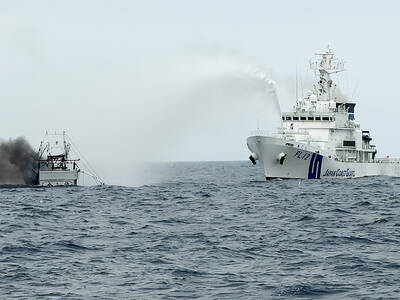
CREDIT-GRABBER: China said its coast guard rescued the crew of a fishing vessel that caught fire, who were actually rescued by a nearby Taiwanese boat and the CGA Maritime search and rescue operations do not have borders, and China should not use a shipwreck to infringe upon Taiwanese sovereignty, the Coast Guard Administration (CGA) said yesterday. The coast guard made the statement in response to the China Coast Guard (CCG) saying it saved a Taiwanese fishing boat. The Chuan Yu No. 6 (全漁6號), a fishing vessel registered in Keelung, on Thursday caught fire and sank in waters northeast of Diaoyutai Islands (釣魚台). The vessel left Keelung’s Badouzih Fishing Harbor (八斗子漁港) at 3:35pm on Sunday last week, with seven people on board — a 62-year-old Taiwanese captain surnamed Chang (張) and six
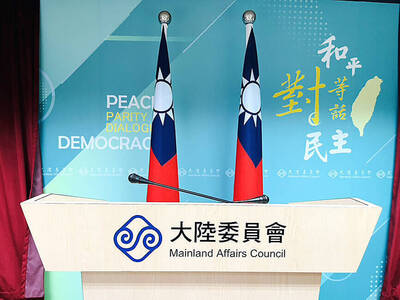
RISKY BUSINESS: The ‘incentives’ include initiatives that get suspended for no reason, creating uncertainty and resulting in considerable losses for Taiwanese, the MAC said China’s “incentives” failed to sway sentiment in Taiwan, as willingness to work in China hit a record low of 1.6 percent, a Ministry of Labor survey showed. The Directorate-General of Budget, Accounting and Statistics (DGBAS) also reported that the number of Taiwanese workers in China has nearly halved from a peak of 430,000 in 2012 to an estimated 231,000 in 2024. That marked a new low in the proportion of Taiwanese going abroad to work. The ministry’s annual survey on “Labor Life and Employment Status” includes questions respondents’ willingness to seek employment overseas. Willingness to work in China has steadily declined from

LEVERAGE: China did not ‘need to fire a shot’ to deny Taiwan airspace over Africa when it owns ‘half the continent’s debt,’ a US official said, calling it economic warfare The EU has raised concerns about overflight rights following the delay of President William Lai’s (賴清德) planned state visit to the Kingdom of Eswatini after three African nations denied overflight clearance for his charter at the last minute. Taiwanese allies Paraguay and Saint Kitts and Nevis, as well as several US lawmakers and the Inter-Parliamentary Alliance on China (IPAC) condemned China for allegedly pressuring the countries. Lai was scheduled to fly directly to Taiwan’s only African ally from yesterday to Sunday to celebrate the 40th anniversary of King Mswati III’s accession and his 58th birthday, but Seychelles, Mauritius and Madagascar suddenly revoked
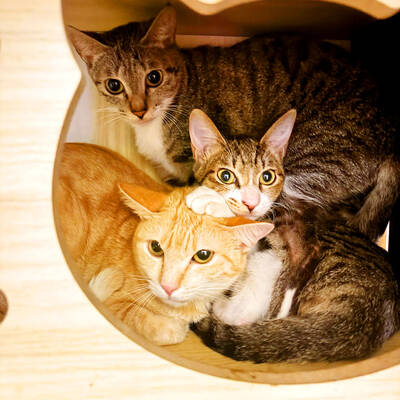
The number of pet cats in Taiwan surpassed that of pet dogs for the first time last year, reaching 1,742,033, a 32.8 percent increase from 2023, the Ministry of Agriculture said yesterday, citing a survey. By contrast, the number of pet dogs declined slightly by 1.2 percent over the same period to 1,462,528, the ministry said. Despite the shift, households with dogs still slightly outnumber those with cats by 1.2 percent. However, while the number of households with multiple dogs has remained relatively stable, households keeping more than two cats have increased, contributing to the overall rise in the feline population. The trend


 RSS
RSS