


Public-sector employees and those working in state-run businesses are to receive a pay raise next year after a freeze of more than six years, the Cabinet has announced .
The Cabinet on Tuesday finalized a plan to grant a 3 percent pay raise for government employees, public-school teachers and military personnel next year in a bid to help stimulate a similar move by employers in the private sector to boost the economy.
The Cabinet yesterday said that the pay raise would be extended to state-run businesses.
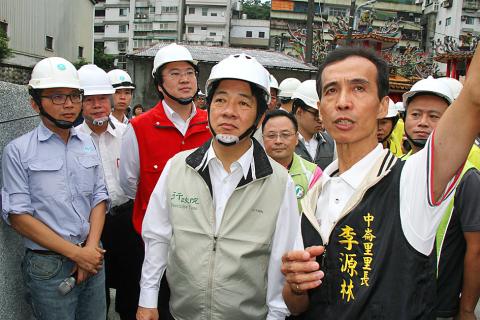
Photo: Lin Hsin-han, Taipei Times
The measure is to benefit about 580,000 civil servants and teachers, as well as an undisclosed number of military personnel, Executive Yuan spokesman Hsu Kuo-yung (徐國勇) said.
State-run financial institutions plan to pay employees between 3 percent and 6 percent more next year after a salary increase of between 1 percent and 3.7 percent this year, the Ministry of Finance said.
The ministry controls a significant stake in Mega Financial Holding Co (兆豐金控), Taiwan Cooperative Financial Co (合庫金控), First Financial Holding Co (第一金控), Hua Nan Financial Holding Co (華南金控), Chang Hwa Commercial Bank (彰化銀行) and Taiwan Business Bank (中小企銀).
Taiwan Power Co (Taipower, 台電) spokesman Lin Te-fu (林德福) said the company is to begin administrative procedures for pay increases once it receives an official notification from the Ministry of Economic Affairs.
“Taipower’s human resources department will propose a range of pay raises and the board will make the final decision. The 3 percent pay raise for civil servants, public-school teachers and military personnel will be used as a reference,” Lin said by telephone.
Chunghwa Telecom Co (中華電信), in which the government holds a 35 percent stake, said that company chairman David Cheng (鄭優) had asked chief financial officer Harrison Kuo (郭水義) to evaluate the feasibility of carrying out another pay raise program.
The telecom in 2015 said it increased wages by NT$1,500 (US$49.91) per month and last year by NT$500 per month, with an additional NT$15,000 special bonus.
The proposed salary hike is a shelved proposal that has been reintroduced because the economy has turned a corner and started to grow, Premier William Lai (賴清德) said.
The TAIEX has stayed above the 10,000-point mark for more than 60 days — the longest period in history — showing that the economy has improved, while tax revenue is also expected to increase, Lai said.
“We believe that increasing salaries for public-sector employees could boost morale, and is a response to calls from businesses and industries for a general wage hike to stimulate the macroeconomy, which is the most important factor [of the wage hike],” Lai said.
Lai said he made the decision after former premier Lin Chuan (林全) determined in July that a wage hike was improbable, as it would overburden government finances.
Lai said he discussed the wage hike with President Tsai Ing-wen (蔡英文) days after taking office, as it was one of the major policies to be discussed ahead of the new legislative session set to being on Friday next week.
The pay hike is expected to cost the central government NT$18 billion, but it will not need to borrow the funds, Hsu said.
Security transaction tax revenue is expected to increase by NT$7 billion due to a boom in the stock market, while the government could save about NT$11 billion through budget cuts, Hsu said.
Hsu said the increment was put forward after careful analysis of government finance.
The previous public-sector employee pay raise was in July 2011.
Chinese National Association of Industry and Commerce chairman Lin Por-fong (林伯豐) said the 3 percent hike was insufficient.
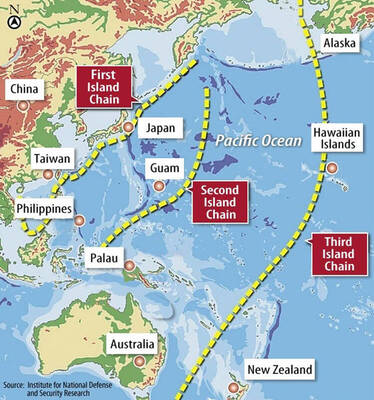
The US government has signed defense cooperation agreements with Japan and the Philippines to boost the deterrence capabilities of countries in the first island chain, a report by the National Security Bureau (NSB) showed. The main countries on the first island chain include the two nations and Taiwan. The bureau is to present the report at a meeting of the legislature’s Foreign Affairs and National Defense Committee tomorrow. The US military has deployed Typhon missile systems to Japan’s Yamaguchi Prefecture and Zambales province in the Philippines during their joint military exercises. It has also installed NMESIS anti-ship systems in Japan’s Okinawa

‘WIN-WIN’: The Philippines, and central and eastern European countries are important potential drone cooperation partners, Minister of Foreign Affairs Lin Chia-lung said Minister of Foreign Affairs Lin Chia-lung (林佳龍) in an interview published yesterday confirmed that there are joint ventures between Taiwan and Poland in the drone industry. Lin made the remark in an exclusive interview with the Chinese-language Liberty Times (the Taipei Times’ sister paper). The government-backed Taiwan Excellence Drone International Business Opportunities Alliance and the Polish Chamber of Unmanned Systems on Wednesday last week signed a memorandum of understanding in Poland to develop a “non-China” supply chain for drones and work together on key technologies. Asked if Taiwan prioritized Poland among central and eastern European countries in drone collaboration, Lin

TRAGEDY STRIKES TAIPEI: The suspect died after falling off a building after he threw smoke grenades into Taipei Main Station and went on a killing spree in Zhongshan A 27-year-old suspect allegedly threw smoke grenades in Taipei Main Station and then proceeded to Zhongshan MRT Station in a random killing spree that resulted in the death of the suspect and two other civilians, and seven injured, including one in critical condition, as of press time last night. The suspect, identified as a man surnamed Chang Wen (張文), allegedly began the attack at Taipei Main Station, the Taipei Fire Department said, adding that it received a report at 5:24pm that smoke grenades had been thrown in the station. One man in his 50s was rushed to hospital after a cardiac arrest
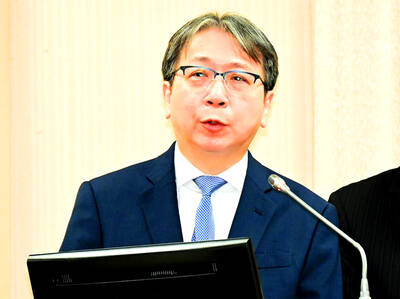
ON ALERT: Taiwan’s partners would issue warnings if China attempted to use Interpol to target Taiwanese, and the global body has mechanisms to prevent it, an official said China has stationed two to four people specializing in Taiwan affairs at its embassies in several democratic countries to monitor and harass Taiwanese, actions that the host nations would not tolerate, National Security Bureau (NSB) Director-General Tsai Ming-yen (蔡明彥) said yesterday. Tsai made the comments at a meeting of the legislature’s Foreign Affairs and National Defense Committee, which asked him and Minister of National Defense Wellington Koo (顧立雄) to report on potential conflicts in the Taiwan Strait and military preparedness. Democratic Progressive Party (DPP) Legislator Michelle Lin (林楚茵) expressed concern that Beijing has posted personnel from China’s Taiwan Affairs Office to its


 RSS
RSS