


The Cabinet yesterday denied accusations that an environmental measure to reduce the burning of incense and joss paper was an attempt to eliminate religious rites, saying that the measures are aimed at reducing air pollution, not interfering with religious freedom.
An Environment Protection Administration (EPA) initiative to reduce the use of incense and “ghost money” to minimize airborne pollutants has given rise to Internet rumors that the government plans to draft a religious associations act and phase out the practice of burning incense.
Dozens of local temples and religious organizations are to protest in front of the Presidential Office Building in Taipei on Sunday to demand the protection of religious traditions.
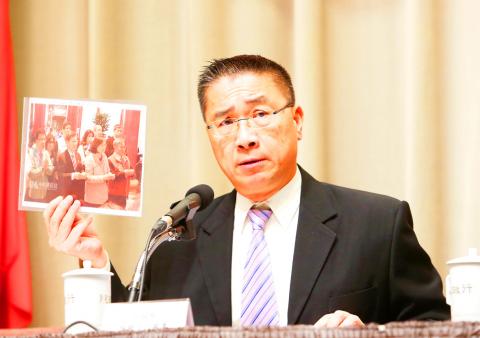
Photo: CNA
The Cabinet said that the EPA never intended to eliminate incense or joss paper, but only to encourage their reduced use for environmental reasons.
“It is a misunderstanding. The EPA has never banned incense or ghost money. Never. We only want to reduce the use of firecrackers, ghost money and incense due to environmental reasons,” Executive Yuan spokesman Hsu Kuo-yung (徐國勇) said.
Showing photographs of President Tsai Ing-wen (蔡英文) and Premier Lin Chuan (林全) holding incense sticks during the Lunar New Year holiday, Hsu said the government respects and would never attempt to stop religious practice.
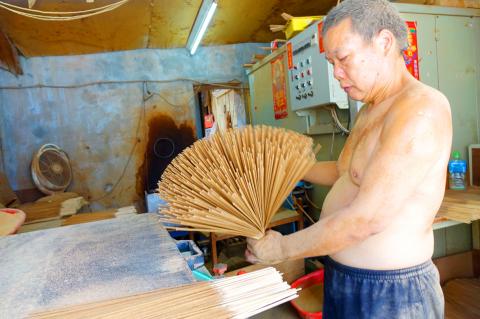
Photo: Liu Hsiao-hsin, Taipei Times
The Constitution protects religious freedom and any law limiting this freedom is prohibited, because it would be unconstitutional, Hsu said.
“To live up to their social responsibility, many temples have voluntarily reduced the use of incense, ghost money and firecrackers” without any government orders, Hsu said.
The EPA said the burning of incense and firecrackers produces fine particulate matter containing heavy metals and carcinogenic chemicals, and people exposed to such pollutants often complain of coughing and tearing eyes.
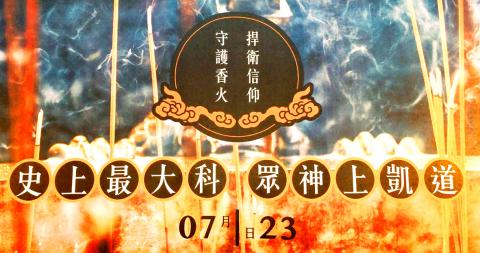
Photo: CNA
Air quality tests show that the concentration of air pollutants at one temple decreased by two-thirds after it voluntarily reduced the number of incense burners, suggesting that air pollution could be mitigated with reduced use of incense, the EPA said.
At a Democratic Progressive Party (DPP) meeting on Wednesday, Tsai said the Cabinet was slow to respond to the rumors.
DPP sources quoted Tsai as saying that the Executive Yuan was passive in explaining the environmental policy, while Minister of the Interior Yeh Jiunn-rong (葉俊榮) failed to promptly quell the rumor that a ban was to be imposed on religious practices.
The president asked the Cabinet to communicate with temples and religious organizations to reduce incense burning without causing misunderstanding.
The quality control of imported incense and ghost paper has to be improved to reduce airborne pollutants, Tsai said.

PREPAREDNESS: Given the difficulty of importing ammunition during wartime, the Ministry of National Defense said it would prioritize ‘coproduction’ partnerships A newly formed unit of the Marine Corps tasked with land-based security operations has recently replaced its aging, domestically produced rifles with more advanced, US-made M4A1 rifles, a source said yesterday. The unnamed source familiar with the matter said the First Security Battalion of the Marine Corps’ Air Defense and Base Guard Group has replaced its older T65K2 rifles, which have been in service since the late 1980s, with the newly received M4A1s. The source did not say exactly when the upgrade took place or how many M4A1s were issued to the battalion. The confirmation came after Chinese-language media reported
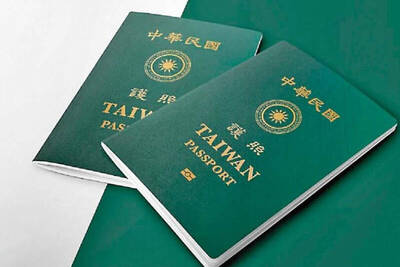
The Taiwanese passport ranked 33rd in a global listing of passports by convenience this month, rising three places from last month’s ranking, but matching its position in January last year. The Henley Passport Index, an international ranking of passports by the number of designations its holder can travel to without a visa, showed that the Taiwan passport enables holders to travel to 139 countries and territories without a visa. Singapore’s passport was ranked the most powerful with visa-free access to 192 destinations out of 227, according to the index published on Tuesday by UK-based migration investment consultancy firm Henley and Partners. Japan’s and
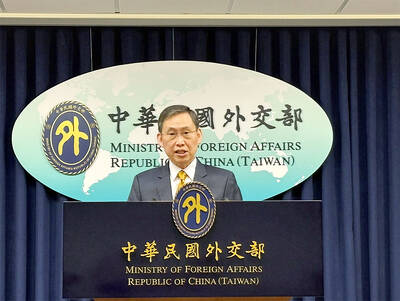
A Ministry of Foreign Affairs official yesterday said that a delegation that visited China for an APEC meeting did not receive any kind of treatment that downgraded Taiwan’s sovereignty. Department of International Organizations Director-General Jonathan Sun (孫儉元) said that he and a group of ministry officials visited Shenzhen, China, to attend the APEC Informal Senior Officials’ Meeting last month. The trip went “smoothly and safely” for all Taiwanese delegates, as the Chinese side arranged the trip in accordance with long-standing practices, Sun said at the ministry’s weekly briefing. The Taiwanese group did not encounter any political suppression, he said. Sun made the remarks when
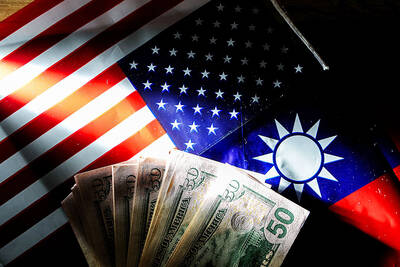
BROAD AGREEMENT: The two are nearing a trade deal to reduce Taiwan’s tariff to 15% and a commitment for TSMC to build five more fabs, a ‘New York Times’ report said Taiwan and the US have reached a broad consensus on a trade deal, the Executive Yuan’s Office of Trade Negotiations said yesterday, after a report said that Washington is set to reduce Taiwan’s tariff rate to 15 percent. The New York Times on Monday reported that the two nations are nearing a trade deal to reduce Taiwan’s tariff rate to 15 percent and commit Taiwan Semiconductor Manufacturing Co (TSMC, 台積電) to building at least five more facilities in the US. “The agreement, which has been under negotiation for months, is being legally scrubbed and could be announced this month,” the paper said,


 RSS
RSS