


Taiwan and the US have reached a broad consensus on a trade deal, the Executive Yuan’s Office of Trade Negotiations said yesterday, after a report said that Washington is set to reduce Taiwan’s tariff rate to 15 percent.
The New York Times on Monday reported that the two nations are nearing a trade deal to reduce Taiwan’s tariff rate to 15 percent and commit Taiwan Semiconductor Manufacturing Co (TSMC, 台積電) to building at least five more facilities in the US.
“The agreement, which has been under negotiation for months, is being legally scrubbed and could be announced this month,” the paper said, citing three people familiar with the matter.

Photo: CNA
The reduced tariff rate is in line with those applied to Japan and South Korea, which struck trade deals last year, it said.
The timeline for TSMC’s further investment in the US remains unclear, it added.
TSMC did not comment on the report, but would likely address the issue at its investors’ conference tomorrow.
The objective of trade negotiations with the US has always been to reduce reciprocal tariffs without stacking them and secure preferential treatment for semiconductors under a legal provision known as Section 232, the office said in a statement.
After the fifth round of in-person Taiwan-US talks, Taipei continued to discuss supply chain cooperation with the US Department of Commerce through video meetings and written exchanges, it said.
Taiwan asked the US to create a more favorable investment environment for Taiwanese companies by offering support such as access to land, water, electricity and visas, as well as simpler administrative procedures, it said.
Taiwan also continued to exchange documents with the Office of the US Trade Representative to confirm the details of a bilateral trade agreement, and the two sides have reached a certain degree of consensus, it added.
Taiwan and the US are scheduling a final wrap-up meeting, after which they would publicly announce the details of the deal, the office said.
The government would brief the Legislative Yuan and the public on the agreement and submit it in full, along with an impact assessment, to the legislature for review, it said.
In the first phase of Taiwan-US trade talks from April to the end of July last year, both sides negotiated tariffs, trade barriers, economic security, procurement and supply chain issues, the office said in previous statements.
Talks then shifted to a second phase focused on supply chain cooperation under the “Taiwan model,” while Taipei continued to seek reduced, non-stacked reciprocal tariffs and preferential treatment under Section 232 for semiconductors and related products, it said.
Taiwan earlier concluded trade discussions with the Office of the US Trade Representative, then continued to discuss Section 232 tariffs and TSMC’s investment plans with the US Department of Commerce, the New York Times said.
Officials in US President Donald Trump’s administration have said companies that invest in the US would not be subject to Section 232 tariffs, but it is unclear exactly how the arrangement would work, it said.
TSMC has three fabs at various stages of development in Arizona under a previous US$65 billion investment commitment.
The first began volume production in the final quarter of 2024.
The structure for the second fab was completed last year, with mass production targeted for 2028.
The company broke ground on a third fab in April last year, with commercial production targeted by the end of the decade, TSMC Arizona said.
Early last year, TSMC pledged an additional US$100 billion in investment that would include another three fabs, but according to the New York Times, the company has pledged as part of the trade talks to build at least five more fabs, instead of the four currently pledged, including the fab on which it broke ground last year.
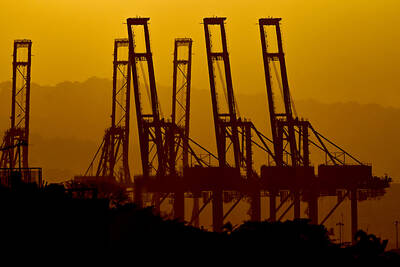
A subsidiary of a Hong Kong-based company that has lost control of two critical ports on the Panama Canal said it is seeking US$2 billion of compensation in damages from Panama over its “illegal” takeover of the ports. Panama Ports Co, a unit of Hong Kong’s CK Hutchison Holdings (長江和記實業), on Friday said in a statement that it is demanding the sum under international arbitration proceedings that it had already started. The Panamanian government last week seized control of the Balboa and Cristobal ports on each end of the Panama Canal, after the country’s Supreme Court declared earlier that a concession allowing
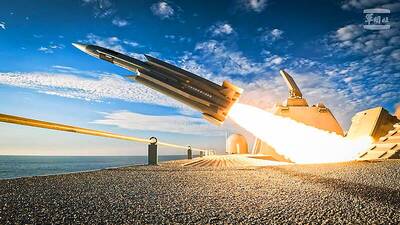
DETERRENCE: With 1,000 indigenous Hsiung Feng II and III missiles and 400 Harpoon missiles, the nation would boast the highest anti-ship missile density in the world With Taiwan wrapping up mass production of Hsiung Feng II and III missiles by December and an influx of Harpoon missiles from the US, Taiwan would have the highest density of anti-ship missiles in the world, a source said yesterday. Taiwan is to wrap up mass production of the indigenous anti-ship missiles by the end of year, as the Chungshan Institute of Science and Technology has been meeting production targets ahead of schedule, a defense official with knowledge of the matter said. Combined with the 400 Harpoon anti-ship missiles Taiwan expects to receive from the US by 2028, the nation would have

POSSIBILITIES EMERGE: With Taiwan’s victory and Japan’s narrow win over Australia, Taiwan now have a chance to advance if South Korea also beat the Aussies Taiwan has high hopes that the national baseball team would advance to the World Baseball Classic (WBC) quarter-finals after clinching a crucial 5-4 victory over South Korea in a nail-biting extra-inning game at the Tokyo Dome yesterday. Boosted by three home runs — two solo shots by Yu Chang (張育成) and Cheng Tsung-che (鄭宗哲) and a two-run homer by Stuart Fairchild — the triumph gave Taiwan a much-needed second victory in the five-team Pool C, where only the top two finishers would advance to the knockout stage in Miami, Florida. Entering extra innings with the game tied at four apiece, Taiwan scored
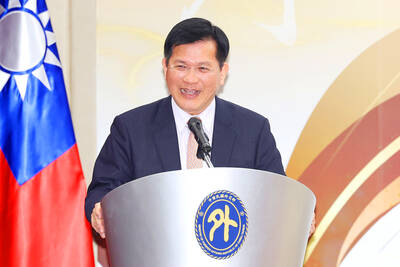
MISSION OF PEACE: The foreign minister urged Beijing to respect Taiwan’s existence as an independent nation, and work together to ensure peace and stability in the region Minister of Foreign Affairs Lin Chia-lung (林佳龍) yesterday rejected Chinese Minister of Foreign Affairs Wang Yi’s (王毅) comments about Taiwan, criticizing China as a “troublemaker” in the international community and a disruptor of cross-strait peace. Speaking at a news conference on the sidelines of the Chinese National People’s Congress, Wang said that Taiwan has always been a territory of China and that it would be impossible for it to become its own country. The “return” of Taiwan to China was the natural outcome of the Chinese people’s resistance against Japan in World War II, and that any pursuit of independence was “doomed


 RSS
RSS