


People offering to rent apartments to tourists and advertising them on Airbnb and other Web sites are to be fined between NT$30,000 and NT$300,000, the Tourism Bureau said, adding that the stricter penalty took effect yesterday.
The tougher punishment was stipulated following an amendment to Article 55 of the Act for the Development of Tourism (發展觀光條例) in January, the bureau said.
The fine for people advertising their apartment online aims to address the rise in violations and disputes by users of the illegal services, the bureau said.

Photo: Ting Wei-chieh, Taipei Times
Prior to the amendment, the bureau said it had been difficult to collect evidence to prove that illegal operators were renting out their spare rooms or apartments to travelers and charging them daily rent.
The new regulation states that people who do not hold a license to offer hotel rooms or other types of accommodation, and who disseminate, broadcast and publish the information about their illegal service in advertisements and publications, or on radio, television, the Internet or other media would face a penalty of between NT$30,000 and NT$300,000.
They also face an additional NT$100,000 to NT$500,000 fine if they are found to be running an illegal business.
The new regulations also apply to hotels, hostels and bed-and-breakfast establishments, the bureau said.
The fine for those operating hotel services without a license has been increased from between NT$90,000 and NT$450,000 to between NT$100,000 and NT$500,000, it said.
The bureau can order operators of illegal hotel services to cease their businesses immediately, it said.
Fines for travel agencies operating without a valid license have also been increased from between NT$90,000 and NT$300,000 to between NT$100,000 and NT$500,000.
Fines for hotels and hostels that increase their number of rooms without permission is between NT$50,000 and NT$250,000.
Bed-and-breakfast providers, on the other hand, would be fined between NT$30,000 and NT$150,000 for the same violation.
In addition, bed-and-breakfast providers who fail to register with the administrative authority before opening for business face a fine of between NT$60,000 and NT$300,000.
Following a fatal bus crash in Taipei on Feb. 13 which killed 33 and injured 11, the new regulations also impose a higher fine of NT$50,000 for tour bus companies that fail to use legal vehicles and licensed drivers.
A tour bus company must also hire a representative who personally informs passengers about the facilities and evacuation routes when there is an emergency, the bureau said.
Tour bus operators failing to abide by the requirement would be fined NT$50,000, it said.

Conflict with Taiwan could leave China with “massive economic disruption, catastrophic military losses, significant social unrest, and devastating sanctions,” a US think tank said in a report released on Monday. The German Marshall Fund released a report titled If China Attacks Taiwan: The Consequences for China of “Minor Conflict” and “Major War” Scenarios. The report details the “massive” economic, military, social and international costs to China in the event of a minor conflict or major war with Taiwan, estimating that the Chinese People’s Liberation Army (PLA) could sustain losses of more than half of its active-duty ground forces, including 100,000 troops. Understanding Chinese

The Ministry of Foreign Affairs (MOFA) yesterday said it is closely monitoring developments in Venezuela, and would continue to cooperate with democratic allies and work together for regional and global security, stability, and prosperity. The remarks came after the US on Saturday launched a series of airstrikes in Venezuela and kidnapped Venezuelan President Nicolas Maduro, who was later flown to New York along with his wife. The pair face US charges related to drug trafficking and alleged cooperation with gangs designated as terrorist organizations. Maduro has denied the allegations. The ministry said that it is closely monitoring the political and economic situation

UNRELENTING: China attempted cyberattacks on Taiwan’s critical infrastructure 2.63 million times per day last year, up from 1.23 million in 2023, the NSB said China’s cyberarmy has long engaged in cyberattacks against Taiwan’s critical infrastructure, employing diverse and evolving tactics, the National Security Bureau (NSB) said yesterday, adding that cyberattacks on critical energy infrastructure last year increased 10-fold compared with the previous year. The NSB yesterday released a report titled Analysis on China’s Cyber Threats to Taiwan’s Critical Infrastructure in 2025, outlining the number of cyberattacks, major tactics and hacker groups. Taiwan’s national intelligence community identified a large number of cybersecurity incidents last year, the bureau said in a statement. China’s cyberarmy last year launched an average of 2.63 million intrusion attempts per day targeting Taiwan’s critical
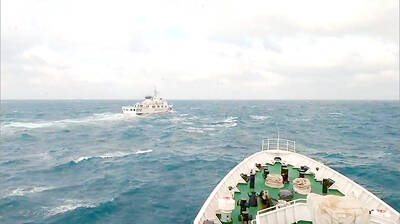
‘SLICING METHOD’: In the event of a blockade, the China Coast Guard would intercept Taiwanese ships while its navy would seek to deter foreign intervention China’s military drills around Taiwan this week signaled potential strategies to cut the nation off from energy supplies and foreign military assistance, a US think tank report said. The Chinese People’s Liberation Army (PLA) conducted what it called “Justice Mission 2025” exercises from Monday to Tuesday in five maritime zones and airspace around Taiwan, calling them a warning to “Taiwanese independence” forces. In a report released on Wednesday, the Institute for the Study of War said the exercises effectively simulated blocking shipping routes to major port cities, including Kaohsiung, Keelung and Hualien. Taiwan would be highly vulnerable under such a blockade, because it


 RSS
RSS