


As long as Taiwan refuses to accept the so-called “1992 consensus,” there can be no basis for its participation in this year’s World Health Assembly (WHA), a senior Chinese official said yesterday, as Taiwan continued its efforts to be allowed to participate as an observer.
If Taiwan wishes to join international organizations, it must adhere to the fundamental condition — recognition of the “one China” principle and the “1992 consensus,” China’s Taiwan Affairs Office Minister Zhang Zhijun (張志軍) told reporters during a visit to Suqian in China’s Jiangsu Province, adding that Taiwan’s participation in international activities must first be arranged via negotiations with China.
The “1992 consensus” — a term former Mainland Affairs Council chairman Su Chi (蘇起) admitted making up in 2000 — refers to a supposed understanding between the Chinese Nationalist Party (KMT) and the Chinese government that both sides acknowledge there is “one China,” with each side having its own interpretation of what “China” means.
Even before President Tsai Ing-wen (蔡英文) of the Democratic Progressive Party took office in May last year, she has refused to heed the call of China and former president Ma Ying-jeou (馬英九) for Taiwan to recognize the “1992 consensus” as the sole foundation for cross-strait exchanges.
As a result, China has suspended official dialogue with Taiwan and has redoubled its efforts to prevent Taiwan’s participation in international organizations.
In response to media queries on the issue, Zhang said that Taiwan attended the annual assembly as an observer for eight consecutive years from 2009.
During that time, Taiwan’s participation was “a special arrangement made through cross-strait negotiations” against the backdrop of mutual recognition of “one China” and a desire for peaceful development of cross-strait relations, Zhang said.
However, since Tsai’s administration took office, it has refused to acknowledge the “1992 consensus” or to recognize that the two sides of the Taiwan Strait are part of “one China,” he said.
“The precondition and basis for Taiwan’s presence at the WHA no longer exist,” Zhang said. “And everyone is quite clear as to which side should be responsible.”
Asked about Tsai’s calls for a new model in the development of cross-strait ties, Zhang declined to comment, saying only that since May 20 last year, cross-strait relations have been going “in a worrisome direction.”
Since 2009, Taiwan has attended the WHA as an observer under the name “Chinese Taipei” in accordance with an agreement between the governments on both sides of the Taiwan Strait and the WHO.
Last year, after Tsai took office, Taiwan received a last-minute invitation to the WHA that for the first time included a reminder that the “one China” principle was the basis of UN Resolution 2758 and WHA Resolution 25.1, under which Taiwan was allowed to attend.
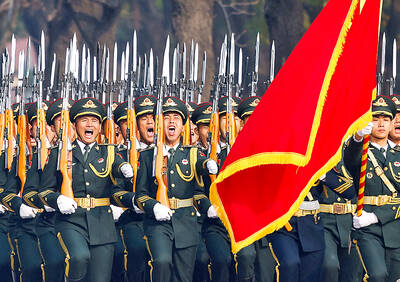
Conflict with Taiwan could leave China with “massive economic disruption, catastrophic military losses, significant social unrest, and devastating sanctions,” a US think tank said in a report released on Monday. The German Marshall Fund released a report titled If China Attacks Taiwan: The Consequences for China of “Minor Conflict” and “Major War” Scenarios. The report details the “massive” economic, military, social and international costs to China in the event of a minor conflict or major war with Taiwan, estimating that the Chinese People’s Liberation Army (PLA) could sustain losses of more than half of its active-duty ground forces, including 100,000 troops. Understanding Chinese
The Ministry of Foreign Affairs (MOFA) yesterday said it is closely monitoring developments in Venezuela, and would continue to cooperate with democratic allies and work together for regional and global security, stability, and prosperity. The remarks came after the US on Saturday launched a series of airstrikes in Venezuela and kidnapped Venezuelan President Nicolas Maduro, who was later flown to New York along with his wife. The pair face US charges related to drug trafficking and alleged cooperation with gangs designated as terrorist organizations. Maduro has denied the allegations. The ministry said that it is closely monitoring the political and economic situation

UNRELENTING: China attempted cyberattacks on Taiwan’s critical infrastructure 2.63 million times per day last year, up from 1.23 million in 2023, the NSB said China’s cyberarmy has long engaged in cyberattacks against Taiwan’s critical infrastructure, employing diverse and evolving tactics, the National Security Bureau (NSB) said yesterday, adding that cyberattacks on critical energy infrastructure last year increased 10-fold compared with the previous year. The NSB yesterday released a report titled Analysis on China’s Cyber Threats to Taiwan’s Critical Infrastructure in 2025, outlining the number of cyberattacks, major tactics and hacker groups. Taiwan’s national intelligence community identified a large number of cybersecurity incidents last year, the bureau said in a statement. China’s cyberarmy last year launched an average of 2.63 million intrusion attempts per day targeting Taiwan’s critical
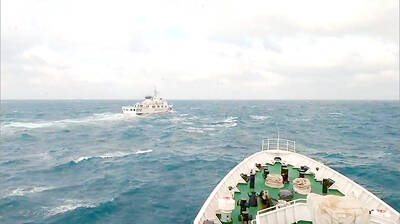
‘SLICING METHOD’: In the event of a blockade, the China Coast Guard would intercept Taiwanese ships while its navy would seek to deter foreign intervention China’s military drills around Taiwan this week signaled potential strategies to cut the nation off from energy supplies and foreign military assistance, a US think tank report said. The Chinese People’s Liberation Army (PLA) conducted what it called “Justice Mission 2025” exercises from Monday to Tuesday in five maritime zones and airspace around Taiwan, calling them a warning to “Taiwanese independence” forces. In a report released on Wednesday, the Institute for the Study of War said the exercises effectively simulated blocking shipping routes to major port cities, including Kaohsiung, Keelung and Hualien. Taiwan would be highly vulnerable under such a blockade, because it


 RSS
RSS