


State-run Mega Financial Holding Co (兆豐金控) chairman Shiu Kuang-si (徐光曦) yesterday tendered his resignation amid mounting criticism over alleged conflicts of interests in the aftermath of a compliance failure that occurred while he was president of Mega International Commercial Bank (兆豐銀行).
Mega Financial is to call a board meeting today to elect an acting chairperson until the Ministry of Finance, the largest stakeholder in all state-run financial institutions, names a successor after approving Shiu’s departure.
Shiu, who assumed the Mega Financial chairmanship on Aug. 16, resigned one day after Premier Lin Chuan (林全) set up a supervisory panel to probe the breach of US money laundering rules by Mega Bank’s New York branch.
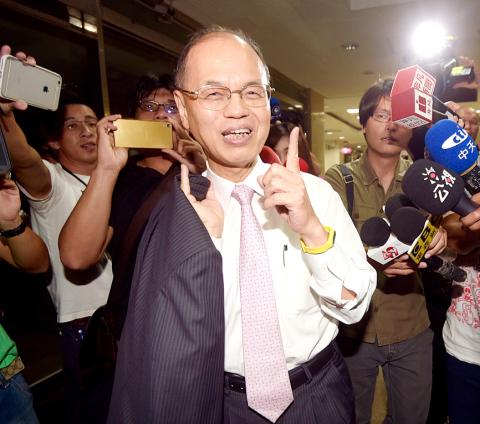
Photo: Huang Yao-cheng, Taipei Times
Mega Bank is the main subsidiary of Mega Financial.
“As the compliance failure took place during my term as Mega Bank president, my role to help is discredited with my supervisors also questioned,” Shiu said in his resignation letter.
Shiu said he would quit all positions at the state-run conglomerate and cancel trips to San Francisco to face a probe in Taiwan to protect his reputation.
The 64-year-old banker is currently on a visit to the US to inspect Mega Bank’s branches.
The resignation made Shiu the first official to take blame for the incident since the New York State Department of Financial Services on Aug. 19 fined Mega Bank’s local branch US$180 million.
Shiu voiced regret about the controversy, but dismissed charges that he is cleaning up a mess he helped create in 2012.
One day earlier, union workers at Mega Financial issued a letter asking Shiu to step down from his post while a probe is underway. However, union workers at Mega Bank disagreed, saying that Shiu should not be faulted because he left Mega Financial before US banking rules were changed last year.
Both unions called for changes to Mega Financial’s board of directors and those of its subsidiaries and affiliates, saying the boards tend to be packed with retired vice presidents or managers, weakening their oversight.
Deputy Minister of Finance Su Jain-rong (蘇建榮) said the ministry was surprised by Shiu’s resignation, but would respect and accept his wishes.
“Shiu tendered his resignation by fax [yesterday] morning before disclosing it in a stock exchange filing at 10am,” said Su, who earlier said he was not aware of the matter.
The ministry would not rule out shuffling all government-appointed directors in Mega Financial to strengthen their oversight and avoid compliance failures, Su said, adding that the ministry controls 10 board seats.
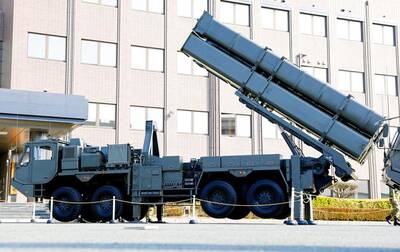
Japan has deployed long-range missiles in a southwestern region near China, the Japanese defense minister said yesterday, at a time when ties with Beijing are at their lowest in recent years. The missiles were installed in Kumamoto in the southern region of Kyushu, as Japan is attempting to shore up its military capacity as China steps up naval activity in the East China Sea. “Standoff defense capabilities enable us to counter the threat of enemy forces attempting to invade our country ... while ensuring the safety of our personnel,” Japanese Minister of Defense Shinjiro Koizumi said. “This is an extremely important initiative for

MORE POPULAR: Taiwan Pass sales increased by 59 percent during the first quarter compared with the same period last year, the Tourism Administration said The Tourism Administration yesterday said that it has streamlined the Taiwan Pass, with two versions available for purchase beginning today. The tourism agency has made the pass available to international tourists since 2024, allowing them to access the high-speed rail, Taiwan Railway Corp services, four MRT systems and four Taiwan Tourist Shuttles. Previously, five types of Taiwan Pass were available, but some tourists have said that the offerings were too complicated. The agency said only two types of Taiwan Pass would be available, starting from a three-day pass with the high-speed rail and a three-day pass with Taiwan Railway Corp. The former costs NT$2,800
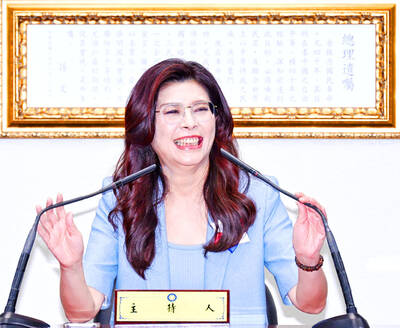
POLLS CONCERNS: There are concerns within the KMT that a Cheng Li-wun-Xi Jinping meeting could trigger a voter backlash in elections in November Chinese Nationalist Party (KMT) Chairwoman Cheng Li-wun (鄭麗文) accepted an invitation from Chinese President Xi Jinping (習近平) to visit next month, her party and Chinese state media reported yesterday. Cheng, who took up her role in November last year, “gladly accepted” the invitation to lead a delegation to China, the KMT said in a statement, confirming a Xinhua news agency report. Cheng “looks forward to joint efforts by both parties to advance the peaceful development of cross-strait relations, promote cross-strait exchanges and cooperation, and work for peace in the Taiwan Strait and greater well-being for people on both sides,” the statement said. Chinese
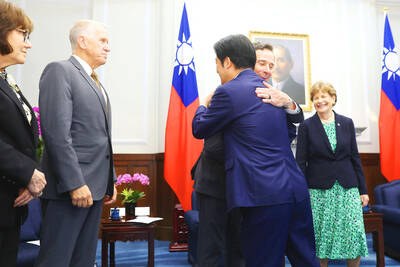
SIGNIFICANT TO THE WORLD: The delegation’s visit aims to send a clear message that bipartisan support for Taiwan is consistent, US Senator Jeanne Shaheen said The US Senate’s bipartisan support for Taiwan remains strong and Taiwan-US ties would continue for decades to come, a US Senate delegation said in Taipei yesterday, while calling on the legislature to swiftly pass a special defense budget bill. A US delegation led by Democratic US Senator Jeanne Shaheen and Republican US Senator John Curtis — both members of the US Senate Committee on Foreign Relations — arrived in Taiwan yesterday for a two-day visit. The other senators of the delegation included Senate Taiwan Caucus cochair Thom Tillis and Senate Committee on Armed Services senior member Jacky Rosen. Shaheen told a news


 RSS
RSS