


Special forces pilot Lao Nai-cheng (勞乃成) and television personality Janet Lee (李蒨蓉) may face charges over state security offenses after the Taiwan High Prosecutors’ Office yesterday overturned a decision by local prosecutors not to indict the two over the so-called “Apache helicopter tour” incident at a military base in Taoyuan.
The office issued a statement saying that the actions of the lieutenant colonel when he led a civilian tour of the base in March may have violated Articles 20 and 21 of the Criminal Code of the Armed Forces (陸海空軍刑法) on leaking military secrets and confidential information.
The two articles also deal with “offenses against internal and external security of the state,” and questions remain about possible violations by the tour group of 14 civilians, which included Lao’s and Lee’s families and friends, it said.

Screen grab from Facebook
The office added that the initial investigation was not comprehensive enough, with some evidence needing further clarification, and instructed Taoyuan prosecutors to reopen the case for possible indictment.
Yesterday’s announcement was a rebuke of the Taoyuan District Prosecutors’ Office over its decision in August not to take the case to court, which was widely perceived as letting Lao and the group off the hook, and spurred another wave of protest in society.
At the time, Taoyuan prosecutors said that they based their decision on an official reply from the Ministry of National Defense, which said the 601st Air Cavalry Brigade base in Taoyuan, where the tour took place, was not a “vital military installation,” and therefore taking photographs at the base, entering the cockpit of an Apache helicopter and wearing its pilot’s helmet did not constitute violations of the provisions on leaking military secrets or confidential information.
In related developments, the Judicial Yuan’s Commission on the Disciplinary Sanctions of Functionaries said it had decided to suspend Lao for two years for his actions in the Apache scandal.
The commission also handed out six-month suspensions to Major General Chien Tsung-yuan (簡聰淵), commander of the 601st Air Cavalry Brigade, and Lieutenant Colonel Tao Kuo-chen (陶國禎), personnel section head of the brigade, for conducting civilian tours of the base and its aircraft.
The commission cited Lai’s numerous infractions, including unauthorized removal of an Apache pilot’s high-tech headgear from the base for personal use at a private party, flouting of military base entry access regulations to bring in family members and friends for a tour without proper registration and security checks, and permitting civilians to sit in the helicopter’s cockpit and take photographs that were posted on social media sites.
“Lao had contributed to the public’s negative perception of the military,” the commission said. “He used important weapons systems of the nation’s armed forces as tools for his personal social networking, which were reported in the media and sparked an uproar.

PROVOCATIVE: Chinese Deputy Ambassador to the UN Sun Lei accused Japan of sending military vessels to deliberately provoke tensions in the Taiwan Strait China denounced remarks by Japan and the EU about the South China Sea at a UN Security Council meeting on Monday, and accused Tokyo of provocative behavior in the Taiwan Strait and planning military expansion. Ayano Kunimitsu, a Japanese vice foreign minister, told the Council meeting on maritime security that Tokyo was seriously concerned about the situation in the East China and South China seas, and reiterated Japan’s opposition to any attempt to change the “status quo” by force, and obstruction of freedom of navigation and overflight. Stavros Lambrinidis, head of the EU delegation to the UN, also highlighted South China Sea

SILENCING CRITICS: In addition to blocking Taiwan, China aimed to prevent rights activists from speaking out against authoritarian states, a Cabinet department said The Ministry of Foreign Affairs (MOFA) yesterday condemned transnational repression by Beijing after RightsCon, a major digital human rights conference scheduled to be held in Zambia this week, was abruptly canceled due to Chinese pressure over Taiwanese participation. This year’s RightsCon, the world’s largest conference discussing issues “at the intersection of human rights and technology,” was scheduled to take place from tomorrow to Friday in Lusaka, and expected to draw 2,600 in-person attendees from 150 countries, along with 1,100 online participants. However, organizers were forced to cancel the event due to behind-the-scenes pressure from China, the ministry said, expressing its “strongest condemnation”
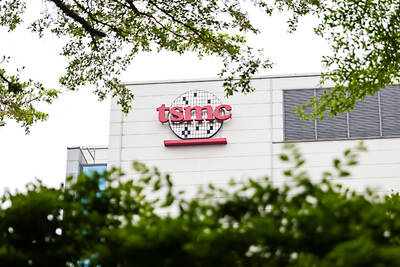
Taiwan Semiconductor Manufacturing Co (TSMC, 台積電), the world’s largest contract chipmaker, said it expects its 2-nanometer (2nm) chip capacity to grow at a compound annual rate of 70 percent from this year to 2028. The projection comes as five fabs begin volume production of 2-nanometer chips this year — two in Hsinchu and three in Kaohsiung — TSMC senior vice president and deputy cochief operating officer Cliff Hou (侯永清) said at the company’s annual technology symposium in Silicon Valley, California, last week. Output in the first year of 2-nanometer production, which began in the fourth quarter of last year, is expected to
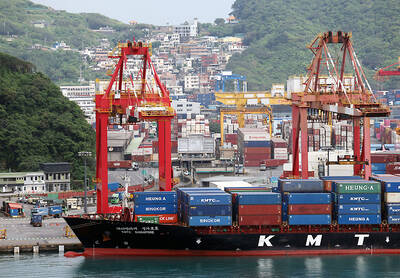
Taiwan’s economy grew far faster than expected in the first quarter, as booming demand for artificial intelligence (AI) applications drove a surge in exports, spilling over into investment and consumption, the Directorate-General of Budget, Accounting and Statistics (DGBAS) said yesterday. GDP growth was 13.69 percent year-on-year during the January-to-March period, beating the DGBAS’ February forecast by 2.23 percentage points and marking the most robust growth in nearly four decades, DGBAS senior official Chiang Hsin-yi (江心怡) told a news conference in Taipei. The result was powered by exports, which remain the backbone of Taiwan’s economy, Chiang said. Outbound shipments jumped 51.12 percent year-on-year to


 RSS
RSS