


President Ma Ying-jeou (馬英九) yesterday embarked on his 11th overseas visit since coming to office in 2008, a trip that is to take him to the Dominican Republic, Haiti and Nicaragua for talks with heads of state including Nicaraguan President Daniel Ortega.
On his way to the Caribbean, Ma plans to visit Harvard University, his alma mater, during a transit stop in Boston.
He is expected to give a speech at a university gathering, officials said.
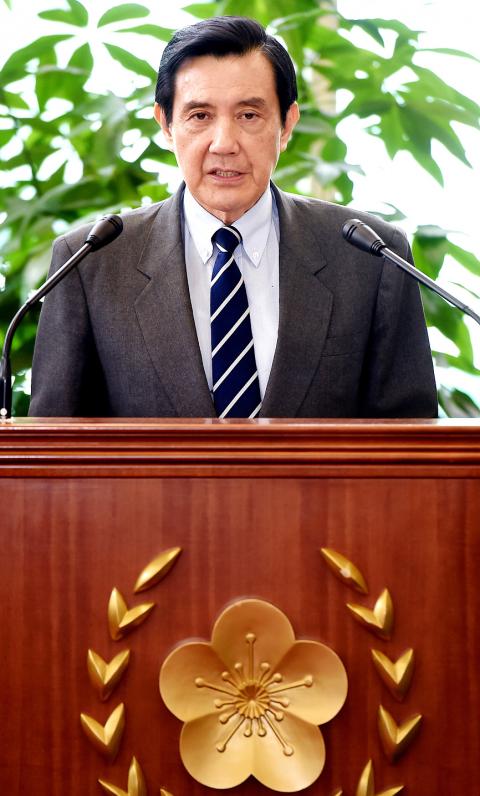
Photo: Chu Pei-hsiung, Taipei Times
Before boarding a China Airlines charter flight at Taiwan Taoyuan International Airport yesterday, Ma said he hopes to deepen bilateral cooperation with the nation’s allies during the trip.
While in the Dominican Republic, Ma is to deliver a speech to the nation’s Congress and hold talks with Dominican President Danilo Medina, officials said.
In Haiti, Ma and Haitian President Michel Martelly are to jointly inaugurate a new office building constructed for the nation’s Supreme Court.
The project, built with help from Taiwan, took two years to finish and is the first among similar construction projects to have been completed after Haiti was devastated by an earthquake in 2010.
In 2013, Ma became the first president from Taiwan to set foot in the Caribbean nation since the two countries established diplomatic ties in 1956.
While in Nicaragua, Ma is to meet with Ortega and visit Taiwanese businesses.
He is also expected to be presented with a key to the city during a visit to historical Granada.
Although the purpose of such visits is to bolster ties with Taiwan’s allies in the region, the president’s activities during transits in the US often attract as much — if not more — attention from Taiwanese media as his official itinerary.
In an interview last week, Ma spoke of the topics he might cover in his speech and a follow-up discussion at Harvard.
Cross-strait ties, domestic politics and issues concerning the South China Sea and the East Asian region are bound to come up during the discussion, since Taiwan is at the heart of these topics, said Ma, who received his degree from Harvard Law School in 1981.
The overnight transit is to be the first in Boston for a sitting president, although Ma visited Harvard nine years ago as mayor of Taipei and a presidential candidate.
Ma is due to return to Taiwan on Saturday after a stopover in Los Angeles.
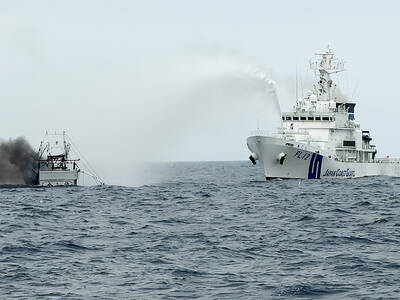
CREDIT-GRABBER: China said its coast guard rescued the crew of a fishing vessel that caught fire, who were actually rescued by a nearby Taiwanese boat and the CGA Maritime search and rescue operations do not have borders, and China should not use a shipwreck to infringe upon Taiwanese sovereignty, the Coast Guard Administration (CGA) said yesterday. The coast guard made the statement in response to the China Coast Guard (CCG) saying it saved a Taiwanese fishing boat. The Chuan Yu No. 6 (全漁6號), a fishing vessel registered in Keelung, on Thursday caught fire and sank in waters northeast of Diaoyutai Islands (釣魚台). The vessel left Keelung’s Badouzih Fishing Harbor (八斗子漁港) at 3:35pm on Sunday last week, with seven people on board — a 62-year-old Taiwanese captain surnamed Chang (張) and six
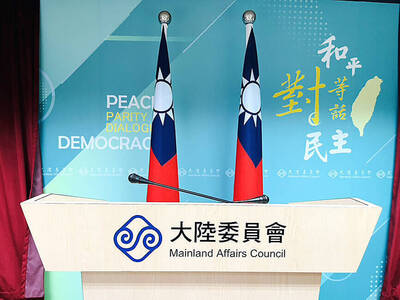
RISKY BUSINESS: The ‘incentives’ include initiatives that get suspended for no reason, creating uncertainty and resulting in considerable losses for Taiwanese, the MAC said China’s “incentives” failed to sway sentiment in Taiwan, as willingness to work in China hit a record low of 1.6 percent, a Ministry of Labor survey showed. The Directorate-General of Budget, Accounting and Statistics (DGBAS) also reported that the number of Taiwanese workers in China has nearly halved from a peak of 430,000 in 2012 to an estimated 231,000 in 2024. That marked a new low in the proportion of Taiwanese going abroad to work. The ministry’s annual survey on “Labor Life and Employment Status” includes questions respondents’ willingness to seek employment overseas. Willingness to work in China has steadily declined from
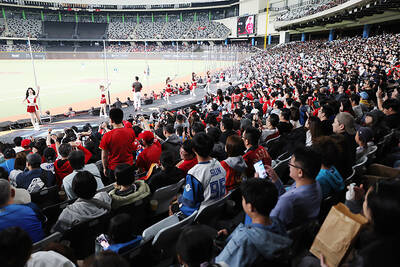
The Legislative Yuan’s Finance Committee yesterday approved proposed amendments to the Amusement Tax Act (娛樂稅法) that would abolish taxes on films, cultural activities and competitive sporting events, retaining the fee only for dance halls and golf courses. The proposed changes would set the maximum tax rate for dance halls and golf courses at 50 and 20 percent respectively, with local governments authorized to suspend the levies. Article 2 of the act says that “amusement tax shall be levied on tickets sold or fees charged by amusement places, facilities or activities” in six categories: “Cinema; professional singing, story-telling, dancing, circus, magic show, acrobatics
INFLATION UP? The IMF said CPI would increase to 1.5 percent this year, while the DGBAS projected it would rise to 1.68 percent, with GDP per capita of US$44,181 The IMF projected Taiwan’s real GDP would grow 5.2 percent this year, up from its 2.1 percent outlook in January, despite fears of global economic disruptions sparked by the US-Iran conflict. Taiwan’s consumer price index (CPI) is projected to increase to 1.5 percent, while unemployment would be 3.4 percent, roughly in line with estimates for Asia as a whole, the international body wrote in its Global Economic Outlook Report published in the US on Monday. The figures are comparatively better than the IMF outlook for the rest of the world, which pegged real GDP growth at 3.1 percent, down from 3.3 percent


 RSS
RSS