


China and South Korea yesterday reacted strongly to visits by two Japanese Cabinet ministers to a Tokyo shrine that honors war dead, including several Taiwanese, although Japan’s prime minister stayed away.
Japanese National Public Safety Commission Chairman Keiji Furuya, one of the two ministers who visited the Yasukuni Shrine, said it was “only natural as a Japanese” to honor those who had given up their lives for their country.
Japanese Internal Affairs and Communications Minister Yoshitaka Shindo told reporters his visit was a vow to never wage war again, and shrugged off concerns it may set off a diplomatic row.
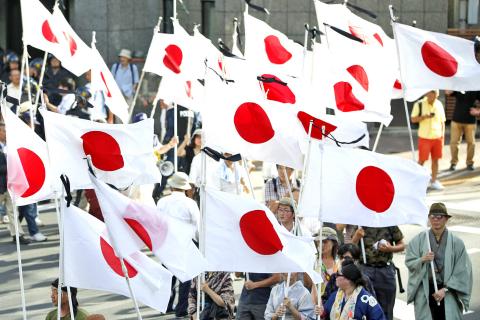
Photo: Bloomberg
“If it does, the government should give a clear and good explanation,” he told reporters after praying at the shrine.
China lambasted the visits as proof of Tokyo’s incorrect understanding of history, calling Yasukuni “a spiritual tool and symbol for the Japanese militarists.”
“Sino-Japanese relations can develop in a healthy and stable way only if Japan can face up to and reflect on the history of invasion and make a clear break with militarism,” Chinese Ministry of Foreign Affairs spokeswoman Hua Chunying (華春瑩) said in an online statement.
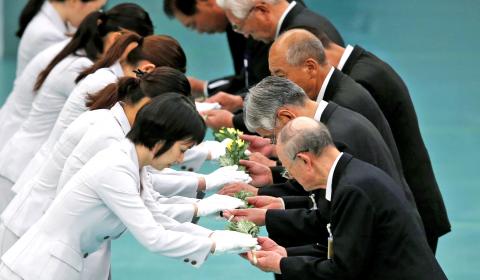
Photo: Reuters
In Seoul, South Korean President Park Geun-hye said some Japanese politicians were acting in a way that hurts both South Koreans and Japanese, and further pushes the countries’ people apart.
In a speech marking South Korea’s independence from Japanese colonialism, Park also asked Japanese leaders to act wisely and expressed hopes that next year the countries would move together toward friendlier ties.
Japanese Prime Minister Shinzo Abe did not go to the shrine, but sent a gift through an envoy. His visit to Yasukuni in December last year drew widespread criticism, including from the US, Japan’s most important ally.
Abe signed the gift as head of the ruling Liberal Democratic Party, and not as prime minister, a party official said.
The enshrinement of Class-A war criminals, such as wartime Japanese prime minister Hideki Tojo, among the 2.5 million dead at the Yasukuni Shrine makes the visits a target of condemnation from China and South Korea, which suffered from Japan’s aggression and see the shrine as a symbol of brutality.
Japanese Chief Cabinet Secretary Yoshihide Suga defended the visits as religious freedom, saying that praying for the war dead is natural for any country and that the ministers acted in a private capacity.
Additional reporting by staff writer

NATIONAL SECURITY THREAT: An official said that Guan Guan’s comments had gone beyond the threshold of free speech, as she advocated for the destruction of the ROC China-born media influencer Guan Guan’s (關關) residency permit has been revoked for repeatedly posting pro-China content that threatens national security, the National Immigration Agency said yesterday. Guan Guan has said many controversial things in her videos posted to Douyin (抖音), including “the red flag will soon be painted all over Taiwan” and “Taiwan is an inseparable part of China,” while expressing hope for expedited “reunification.” The agency received multiple reports alleging that Guan Guan had advocated for armed reunification last year. After investigating, the agency last month issued a notice requiring her to appear and account for her actions. Guan Guan appeared as required,
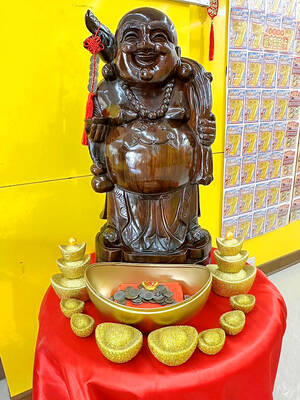
A Vietnamese migrant worker yesterday won NT$12 million (US$379,627) on a Lunar New Year scratch card in Kaohsiung as part of Taiwan Lottery Co’s (台灣彩券) “NT$12 Million Grand Fortune” (1200萬大吉利) game. The man was the first top-prize winner of the new game launched on Jan. 6 to mark the Lunar New Year. Three Vietnamese migrant workers visited a Taiwan Lottery shop on Xinyue Street in Kaohsiung’s Gangshan District (崗山), a store representative said. The player bought multiple tickets and, after winning nothing, held the final lottery ticket in one hand and rubbed the store’s statue of the Maitreya Buddha’s belly with the other,
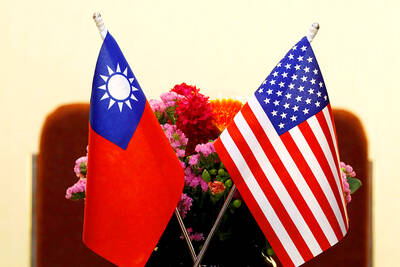
‘NATO-PLUS’: ‘Our strategic partners in the Indo-Pacific are facing increasing aggression by the Chinese Communist Party,’ US Representative Rob Wittman said The US House of Representatives on Monday released its version of the Consolidated Appropriations Act, which includes US$1.15 billion to support security cooperation with Taiwan. The omnibus act, covering US$1.2 trillion of spending, allocates US$1 billion for the Taiwan Security Cooperation Initiative, as well as US$150 million for the replacement of defense articles and reimbursement of defense services provided to Taiwan. The fund allocations were based on the US National Defense Authorization Act for fiscal 2026 that was passed by the US Congress last month and authorized up to US$1 billion to the US Defense Security Cooperation Agency in support of the
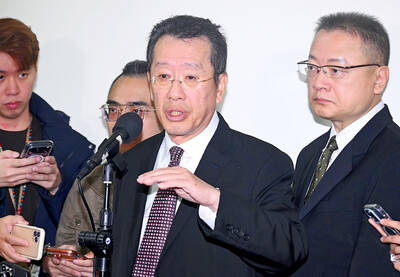
CLASSIFIED BRIEFING: The ministry said the special budget focuses on building a comprehensive defense system and strengthening the domestic defense industry The Ministry of National Defense yesterday released information on seven categories of weapons systems to be procured under a stalled NT$1.25 trillion (US$39.57 billion) special defense budget, including precision artillery, long-range missiles, air defense anti-tank missiles and more than 200,000 uncrewed aerial vehicles (UAVs). The Executive Yuan approved a draft version of the budget on Nov. 27 last year and submitted it to the legislature for review. The legislature’s Foreign Affairs and National Defense Committee yesterday invited Minister of National Defense Wellington Koo (顧立雄) to deliver a classified briefing and answer questions at a closed-door session. Koo said he hoped to provide lawmakers


 RSS
RSS