


Legislative Speaker Wang Jin-pyng (王金平) promised yesterday to enact a law monitoring Taiwan’s pacts with China before the legislature reviews the controversial cross-strait service trade agreement.
The move was welcomed by the student activists, but they have yet to decide whether to withdraw from the legislative compound.
Wang made the announcement during a high-profile visit to the student protesters on the occupied legislative chamber, but prior to entering the room, he held a press conference saying that he has never shunned the responsibility for mediating the conflicts between the Chinese Nationalist Party (KMT) and Democratic Progressive Party (DPP) over the pact’s handling.

Photo: Pichi Chuang, Reuters
He expressed regret and concern that the attempts to solve the dispute by having the KMT secretary-general and DPP convener communicate face-to-face and by holding six cross-party negotiations have all failed to reach consensus.
“The legislature is the sanctuary of democracy, not because of its grandiose architecture, but because it can reflect the people’s voice. The appropriateness of the means the students have employed to reach their ends is open to discussion, but what they are doing is making people reflect upon democracy,” he said.
“I’m hesitant to criticize the students’ aspirations to widen civic participation, but I also hope to caution them that long-term occupation of the legislature has halted the review of bills that could have an impact on people’s livelihood,” he said.
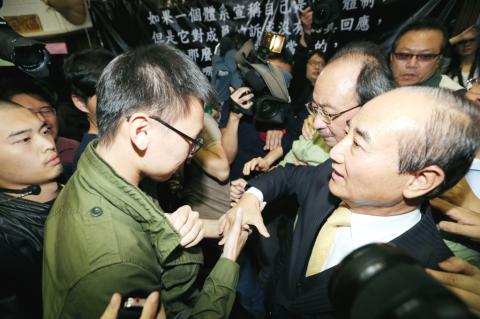
Photo: Lo Pei-der, Taipei Times
“I call on the students to go back to where you belong and enrich yourself and continue to display conviction, tenderness, rationality and peace to make the world respect our democracy,” Wang added.
Wang said he “would not convene [another] inter-party negotiation about the cross-strait service trade agreement until the draft of cross-strait agreements oversight mechanism has been legislated.”
He said “the country’s development and stability turns on the ruling party’s tolerance and forbearance, the opposition party’s wisdom and the people’s support” and that “we will learn lessons and better observe public opinion in future national policy promotion and implementation.”

Photo: Chen Chih-chu, Taipei Times
Wang concluded his talk by saying that he hopes the dispute can end peacefully and calling out “Taiwan, jia you [加油, an expression of encouragement]!” several times.
Wang then walked into the chamber and shook hands with several students while student leader Lin Fei-fan (林飛帆) said Wang’s comment showed that the protest has achieved preliminary results.
Wang left the legislature without making a public speech.
DPP caucus whip Ker Chien-ming (柯建銘), who accompanied Wang during his press conference and visit, said that Wang would not initiate the review of the service trade pact until the legislation of a cross-strait agreement oversight mechanism has been accomplished.
The students welcomed the comments, but said any withdrawal from the compound would require further discussion with Sunflower movement participants.
“We welcome the response that Wang has made to our demands during a brief stay at the Legislative Yuan at 11am this morning,” student leader Chen Wei-ting (陳為廷) told a crowd yesterday afternoon rallying outside the legislature. “The most important part of his remarks is that he promised that he would not call a cross-party negotiation on [reviewing] the cross-strait service trade agreement before passing a legislation to monitor cross-strait agreements.”
Chen said that as the KMT could not reach an agreement with opposition parities on reviewing the cross-strait trade pact, “when Wang said that he would not call a cross-party negotiation before adopting the monitoring bill means that, in fact, he is positively responding to our demand to pass the legislation before reviewing the trade pact.”
Chen then urged all lawmakers regardless of their party affiliation to work with Wang to independently advance the monitoring mechanism.
“This breakthrough is all because of the efforts that Taiwan’s civil society has made in the past three weeks. We would like to pay our highest respect to all those who have either actively participated, or expressed your support in different ways,” Chen said, bowing to the crowd with several student leaders, including Lin.
“We have gone through many things that made us feel powerless, we have been saddened by tears and bloodshed,” Lin said. “But today, we can proudly say that we are finally seeing the break of dawn in this nation.”

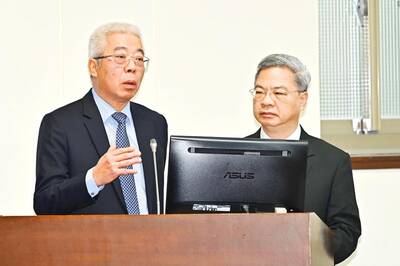
Taiwan has arranged for about 8 million barrels of crude oil, or about one-third of its monthly needs, to be shipped from the Red Sea this month to bypass the Strait of Hormuz and ease domestic supply pressures, CPC Corp, Taiwan (CPC, 台灣中油) said yesterday. The state-run oil company has worked with Middle Eastern suppliers to secure routes other than the Strait of Hormuz, through which about 20 percent of the world’s oil and liquefied natural gas typically passes, CPC chairman Fang Jeng-zen (方振仁) said at a meeting of the legislature’s Economics Committee in Taipei. Suppliers in Saudi Arabia have indicated they
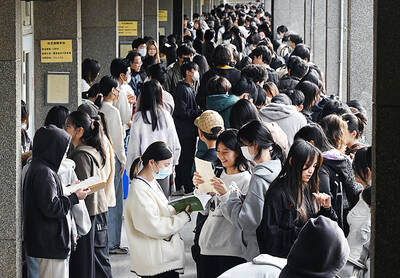
A global survey showed that 60 percent of Taiwanese had attained higher education, second only to Canada, the Ministry of the Interior said. Taiwan easily surpassed the global average of 43 percent and ranked ahead of major economies, including Japan, South Korea and the US, data from the Organisation for Economic Co-operation and Development (OECD) for 2024 showed. Taiwan has a high literacy rate, data released by the ministry showed. As of the end of last year, Taiwan had 20.617 million people aged 15 or older, accounting for 88.5 percent of the total population, with a literacy rate of 99.4 percent, the data

CCP ‘PAWN’? Beijing could use the KMT chairwoman’s visit to signal to the world that many people in Taiwan support the ‘one China’ principle, an academic said Chinese Nationalist Party (KMT) Chairwoman Cheng Li-wun (鄭麗文) yesterday arrived in China for a “peace” mission and potential meeting with Chinese President Xi Jinping (習近平), while a Taiwanese minister detailed the number of Chinese warships currently deployed around the nation. Cheng is visiting at a time of increased Chinese military pressure on Taiwan, as the opposition-dominated Legislative Yuan stalls a government plan for US$40 billion in extra defense spending. Speaking to reporters before going to the airport, Cheng said she was going on a “historic journey for peace,” but added that some people felt uneasy about her trip. “If you truly love Taiwan,

NEW LOW: The council in 2024 based predictions on a pessimistic estimate for the nation’s total fertility rate of 0.84, but last year that rate was 0.69, 17 percent lower An expected National Development Council (NDC) report expects the nation’s population to drop below 12 million by 2065, with the old-age dependency ratio to top 100 percent sooner than 2070, sources said yesterday. The council is slated to release its latest population projections in August, using an ultra-low fertility model, the sources said. The previous report projected that Taiwan’s population would fall to 14.37 million by 2070, but based on a new estimate of the total fertility rate (TFR) — the average number of children born to a woman over her lifetime — the population is expected to reach 12 million by


 RSS
RSS