


Hand soaps provided in restrooms in public venues have been found to contain exceedingly high numbers of viable bacteria, including Escheridic coli and Pseudomonas aeruginosa, that may cause potentially life-threatening infections, a test commissioned by a newspaper showed.
The Chinese-language Apple Daily reported yesterday that half of the hand soap samples it took from 20 public restrooms in airports, high-speed railway (HSR) stations, MRT stations, train stations, department stores and fast-food chains in four cities around the country were found to harbor viable bacteria.
The test was conducted by Super Laboratory, a nationally recognized testing laboratory, the paper said.
Under the lab’s advice and after consulting with experts on infectious diseases, the paper tested the samples for viable bacteria including Staphylococcus aureus, Pseudomonas aeruginosa and E coli.
Out of the 10 places that were found to have viable bacteria in their restrooms’ hand soaps, seven had counts exceeding the 1,000-colony-forming-unit-per-gram (cfulg) limit set by the Ministry of Health and Welfare for unopened, packaged cosmetic products by between 1.2-fold and 32,999-fold, the paper said.
The seven public venues were: the Taiwan Railways Administration’s Taichung and Kaohsiung stations, MRT Taipei Main Station, HSR Taipei Station, Taipei International Airport (Songshan), Kaohsiung Hanshin Department Store and MOS Burger’s Taipei Xinsheng S Road branch.
The soap in the female restrooms at the Greater Taichung Station was found to have more than 33 million bacteria per gram.
Songshan airport’s hand soap tested positive for Pseudomonas aeruginosa, and the MOS Burger branch for E coli.
Environmental Protection Administration officials suspected that the contamination was caused by people having physical contact with the container and leaving bacteria on it when reaching for the hand soap in the dispenser, the Apple Daily said.
The agency said that many restroom attendants refill soap dispensers before they are empty, which could cause bacteria growth.
According to the Central News Agency, the Greater Taichung Government’s health bureau dispatched inspectors to the station and had samples taken immediately after the report was published.
The results will be released in a week, the bureau said.
In response to the report, the Food and Drug Administration said that the maximum allowable level of viable microorganisms in cosmetic products has been set at 1,000 CFU per gram or milliliter, and E coli, P aeruginosa and S aureus should not to be detected at all.
The agency added that in its annual inspection of cosmetic products a total of 103 products were checked for infectious microorganisms last year, and five were found to have exceeded the limit, but none tested positive for the three types of bacteria stated above.

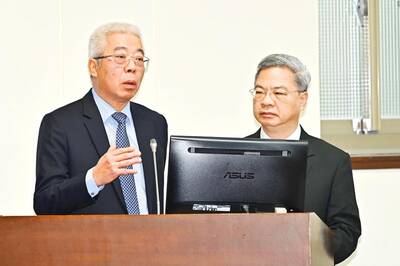
Taiwan has arranged for about 8 million barrels of crude oil, or about one-third of its monthly needs, to be shipped from the Red Sea this month to bypass the Strait of Hormuz and ease domestic supply pressures, CPC Corp, Taiwan (CPC, 台灣中油) said yesterday. The state-run oil company has worked with Middle Eastern suppliers to secure routes other than the Strait of Hormuz, through which about 20 percent of the world’s oil and liquefied natural gas typically passes, CPC chairman Fang Jeng-zen (方振仁) said at a meeting of the legislature’s Economics Committee in Taipei. Suppliers in Saudi Arabia have indicated they
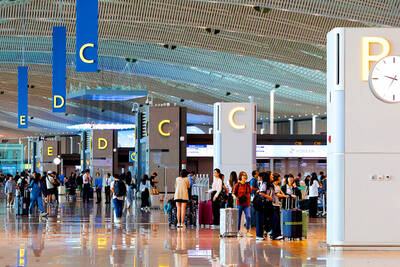
South Korea has adjusted its electronic arrival card system to no longer list Taiwan as a part of China, a move that the Ministry of Foreign Affairs said would help facilitate exchanges between the two sides. South Korea previously listed “Taiwan” as “Taiwan (China)” in the drop-down menus of its online arrival card system, where people had to fill out where they came from and their next destination. The ministry had requested South Korea make a revision and said it would change South Korea’s name on Taiwan’s online immigration system from “Republic of Korea” to “Korea (South),” should the issue not be

Tainan, Taipei and New Taipei City recorded the highest fines nationwide for illegal accommodations in the first quarter of this year, with fines issued in the three cities each exceeding NT$7 million (US$220,639), Tourism Administration data showed. Among them, Taipei had the highest number of illegal short-term rental units, with 410. There were 3,280 legally registered hotels nationwide in the first quarter, down by 14 properties, or 0.43 percent, from a year earlier, likely indicating operators exiting the market, the agency said. However, the number of unregistered properties rose to 1,174, including 314 illegal hotels and 860 illegal short-term rental
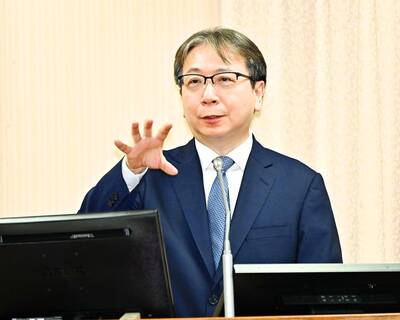
AIR ALERT: China’s reservation of airspace over the Yellow Sea and East China Sea could be an attempt to test the US’ response ahead of a Trump-Xi meeting, the NSB head said China’s attempts to infiltrate Taiwan are systematic, planned and targeted, with activity shifting from recruiting mid-level military officers to rank-and-file enlisted personnel, National Security Bureau (NSB) Director-General Tsai Ming-yen (蔡明彥) said yesterday. The Chinese Communist Party’s (CCP) integrates national security, intelligence operations and “united front” efforts into a dense network to conduct intelligence gathering and espionage in Taiwan, Tsai said at a meeting of the legislature’s Foreign Affairs and National Defense Committee. It uses specific networks to screen targets through exchange activities and recruiting local collaborators to establish intelligence-gathering organizations, he said. China is also shifting who it targets to lower-ranking military personnel,


 RSS
RSS