


Cardinals from around the world gathered yesterday inside the Vatican for their first round of meetings before the conclave to elect the next pope, amid scandals inside and out of the Vatican, and the continued reverberations of Benedict XVI’s decision to retire.
Cardinals were treated like rock stars as they entered the Vatican yesterday morning, with television crews swarming around the red-capped churchmen and their handlers pushing their way through the crowds.
“A Latin American Pope is possible, everything is possible,” Portuguese Cardinal Jose Saraiva Martins said as he entered.
The core agenda item is to set the date for the conclave and set in place procedures to prepare for it, including closing the Sistine Chapel to visitors and getting the Vatican hotel cleared out and debugged, lest anyone try to listen in on the secret conversations of the cardinals.
However, a date may not have been agreed upon yesterday because the dean of the College of Cardinals, Cardinal Angelo Sodano, has said the date would not be finalized until all cardinals have arrived in Rome.
The first day of discussion was again rocked by revelations of scandal, with Scottish Cardinal Keith O’Brien admitting that he had engaged in sexual misconduct not befitting a priest, archbishop or cardinal. O’Brien last week resigned as archbishop of St Andrews and Edinburgh and said he would not participate in the conclave after four men came forward with allegations that he had acted inappropriately with them — the first time a cardinal has stayed away from a conclave because of a personal scandal.
Separately, the Vatican is still reeling from the fallout of the scandal over leaked papal documents and the investigation by three cardinals into who was behind it.
Italian news reports have been rife with unsourced reports about the contents of the cardinals’ dossier. Even if the reports are false, as the Vatican maintains, the leaks themselves confirmed a fairly high level of dysfunction within the Vatican bureaucracy, with intrigues, turf battles and allegations of corruption, nepotism and cronyism at the highest levels of the church hierarchy.
In one of his last audiences before resigning, Benedict met with the three cardinals who prepared the report and decided that their dossier would remain secret.
However, he gave them the go-ahead to answer cardinals’ questions about its contents.
Another topic facing the cardinals is the reason they are in Rome the first place: Benedict’s resignation and its implications.
His decision to end 600 years of tradition and retire rather than stay on the job until death has completely altered the concept of the papacy, and cardinals have not shied from weighing in about the implications for the next pope.
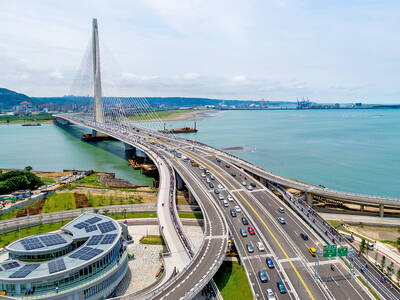
The Ministry of Transportation and Communications yesterday inaugurated the Danjiang Bridge across the Tamsui River in New Taipei City, saying that the structure would be an architectural icon and traffic artery for Taiwan. Feted as a major engineering achievement, the Danjiang Bridge is 920m long, 211m tall at the top of its pylon, and is the longest single-pylon asymmetric cable-stayed bridge in the world, the government’s Web site for the structure said. It was designed by late Iraqi-British architect Zaha Hadid. The structure, with a maximum deck of 70m, accommodates road and light rail traffic, and affords a 200m navigation channel for boats,
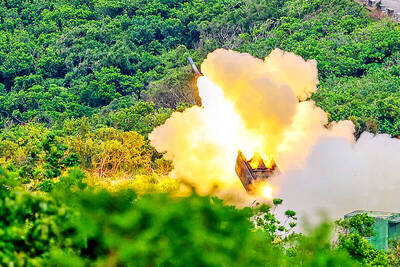
PRECISION STRIKES: The most significant reason to deploy HIMARS to outlying islands is to establish a ‘dead zone’ that the PLA would not dare enter, a source said A High Mobility Artillery Rocket System (HIMARS) would be deployed to Penghu County and Dongyin Island (東引) in Lienchiang County (Matsu) to force the Chinese military to retreat at least 100km from the coastline, a military source said yesterday. Taiwan has been procuring HIMARS and Army Tactical Missile Systems (ATACMS) from the US in batches. Once all batches have been delivered, Taiwan would possess 111 HIMARS units and 504 ATACMS, which have a range of 300km. Considering that “offense is the best defense,” the military plans to forward-deploy the systems to outlying islands such as Penghu and Dongyin so that
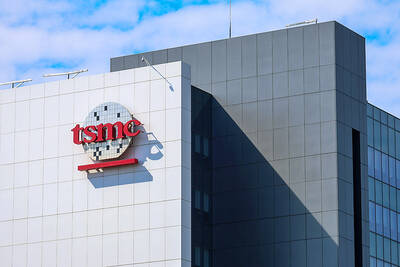
Taiwan Semiconductor Manufacturing Co (TSMC, 台積電), the world’s largest foundry service provider, yesterday said that global semiconductor revenue is projected to hit US$1.5 trillion in 2030, after the figure exceeds US$1 trillion this year, as artificial intelligence (AI) demand boosts consumption of token and compute power. “We are still at the beginning of the AI revolution, but we already see a significant impact across the whole semiconductor ecosystem,” TSMC deputy cochief operating officer Kevin Zhang (張曉強) said at the company’s annual technology symposium in Hsinchu City. “It is fair to say that in the past decade, smartphones and other mobile devices were
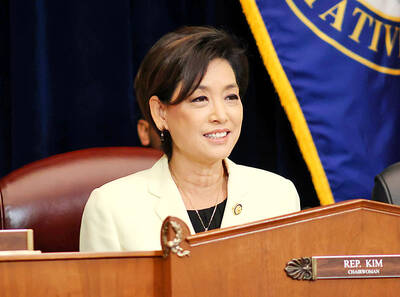
‘CLEAR MESSAGE’: The bill would set up an interagency ‘tiger team’ to review sanctions tools and other economic options to help deter any Chinese aggression toward Taiwan US Representative Young Kim has introduced a bill to deter Chinese aggression against Taiwan, calling for an interagency “tiger team” to preplan coordinated sanctions and economic measures in response to possible Chinese military or political action against Taiwan. “[Chinese President] Xi Jinping [習近平] has directed the People’s Liberation Army to be ready to invade Taiwan by 2027. China has a plan. America should have one too,” Kim said in a news release on Thursday last week. She introduced the “Deter PRC [People’s Republic of China] aggression against Taiwan act” to “ensure the US has a coordinated sanctions strategy ready should


 RSS
RSS