


Sri Lanka’s first Chinese-built port, a strong symbol of Beijing’s investment in South Asia, opened for international shipping yesterday with the handling of 1,000 cars from India.
The US$1.5 billion deep-sea port in southern Hambantota, the home constituency of Sri Lankan President Mahinda Rajapakse, straddles a major east-west shipping lane used by 200 to 300 international vessels daily.
The idea of the project, which was delayed by just over a year, is to create a new logistics hub to handle trans-shipments from the Asian region and provide a boost to Sri Lanka’s economy as it recovers from decades of civil war.
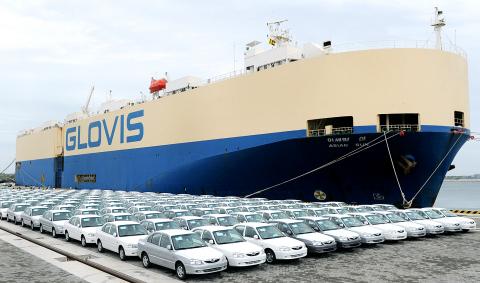
Photo: AFP
Regional power India turned down the offer to construct the deep-sea port, saying it was not commercially viable, but China’s presence created unease in New Delhi, which views Sri Lanka as being firmly in its sphere of influence.
China has since agreed to build a second port in Colombo and Chinese firms have pledged investments amounting to US$50 billion spread over the next 10 to 15 years, according to Sri Lanka’s trade ministry.
Elsewhere in South Asia, China has funded port facilities in Pakistan, a long-standing ally, and has plans for rail projects in Nepal, a traditionally India-aligned country where Beijing is increasingly influential.
Bangladesh has asked for Chinese help to build a port and Beijing recently opened an embassy for the first time in the Maldives.
According to Charu Lata Hogg, an analyst at Chatham House, a London-based think tank, India has come to terms with China in its backyard.
“There seems to be a tacit understanding that their commercial interests can be complementary,” Hogg said. “Indian cars going through a Chinese-built port in Sri Lanka reveals a lot about this relationship.”
The first shipment of cars yesterday in Hambantota, 240km south of Colombo, came from the south Indian port of Chennai and is destined for Algeria.
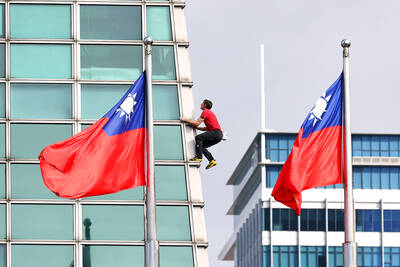
DAREDEVIL: Honnold said it had always been a dream of his to climb Taipei 101, while a Netflix producer said the skyscraper was ‘a real icon of this country’ US climber Alex Honnold yesterday took on Taiwan’s tallest building, becoming the first person to scale Taipei 101 without a rope, harness or safety net. Hundreds of spectators gathered at the base of the 101-story skyscraper to watch Honnold, 40, embark on his daredevil feat, which was also broadcast live on Netflix. Dressed in a red T-shirt and yellow custom-made climbing shoes, Honnold swiftly moved up the southeast face of the glass and steel building. At one point, he stepped onto a platform midway up to wave down at fans and onlookers who were taking photos. People watching from inside
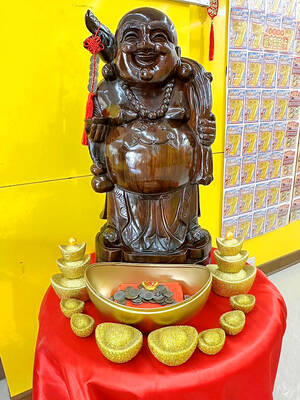
A Vietnamese migrant worker yesterday won NT$12 million (US$379,627) on a Lunar New Year scratch card in Kaohsiung as part of Taiwan Lottery Co’s (台灣彩券) “NT$12 Million Grand Fortune” (1200萬大吉利) game. The man was the first top-prize winner of the new game launched on Jan. 6 to mark the Lunar New Year. Three Vietnamese migrant workers visited a Taiwan Lottery shop on Xinyue Street in Kaohsiung’s Gangshan District (崗山), a store representative said. The player bought multiple tickets and, after winning nothing, held the final lottery ticket in one hand and rubbed the store’s statue of the Maitreya Buddha’s belly with the other,
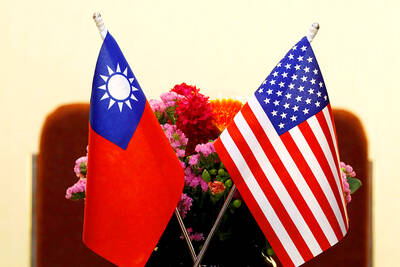
‘NATO-PLUS’: ‘Our strategic partners in the Indo-Pacific are facing increasing aggression by the Chinese Communist Party,’ US Representative Rob Wittman said The US House of Representatives on Monday released its version of the Consolidated Appropriations Act, which includes US$1.15 billion to support security cooperation with Taiwan. The omnibus act, covering US$1.2 trillion of spending, allocates US$1 billion for the Taiwan Security Cooperation Initiative, as well as US$150 million for the replacement of defense articles and reimbursement of defense services provided to Taiwan. The fund allocations were based on the US National Defense Authorization Act for fiscal 2026 that was passed by the US Congress last month and authorized up to US$1 billion to the US Defense Security Cooperation Agency in support of the

‘COMMITTED TO DETERRENCE’: Washington would stand by its allies, but it can only help as much as countries help themselves, Raymond Greene said The US is committed to deterrence in the first island chain, but it should not bear the burden alone, as “freedom is not free,” American Institute in Taiwan Director Raymond Greene said in a speech at the Institute for National Defense and Security Research’s “Strengthening Resilience: Defense as the Engine of Development” seminar in Taipei yesterday. In the speech, titled “Investing Together and a Secure and Prosperous Future,” Greene highlighted the contributions of US President Donald Trump’s administration to Taiwan’s defense efforts, including the establishment of supply chains for drones and autonomous systems, offers of security assistance and the expansion of


 RSS
RSS