


President Ma Ying-jeou (馬英九) issued a statement yesterday to mark the 23rd anniversary of China’s 1989 Tiananmen Square Massacre in which he expressed hope that China would improve its human rights record and initiate democratic development.
For more than two decades, China’s economy has grown rapidly and people’s lives have greatly improved as the country has become increasingly competitive, Ma said.
However, the emotional scars left by the massacre that took place in Beijing on June 4, 1989, have yet to heal and the incident has given the international community an impression of China’s human rights development that has stayed virtually unchanged since then, he said.
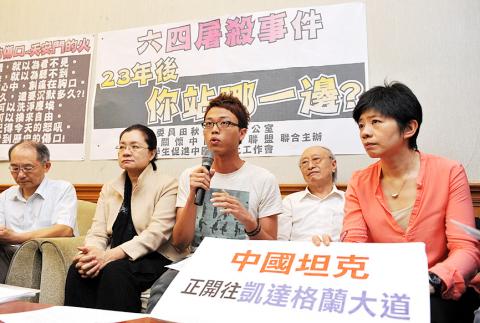
Photo: Chien Jung-fong, Taipei Times
“Most ethnic Chinese societies believe that China today is more mature and in a better position to transform into a more diverse and open democratic society. Dealing with the trauma of the June 4 Incident could be the first step toward political reform,” he said.
Ma said Taiwanese and Chinese are all of Chinese origin and share the same cultural heritage, including the concepts of freedom, democracy and human rights.
“We once again reiterate that we cherish the peace created by the two sides over the past four years and hope that the positive interaction will continue,” Ma added.
However, Taiwan and China still differ in human rights development, and these differences will need to be overcome before the two sides can enter a deeper phase of interaction, Ma said.
Taiwan’s experience in becoming a democratic society has proven that democracy can take root and grow in a Chinese culture, he said, adding that he has great hopes for improvements in human rights and democracy in China and that the two sides of the Taiwan Strait can begin dialogue in the fields of democratic rule and human rights protection, with the shared culture between Taiwan and China as a foundation.
Ma also said he would continue to express concern over democratic development in China, which he described as the best way to help reduce the psychological distance between the people of the two sides of the Strait.
The Mainland Affairs Council had issued a statement on Sunday, calling on Beijing to adopt the idea of “people first” as the core principle of its administration, and to promote political reforms based on self-reflection on the 1989 “incident” and its reform experiences over the past years.
Democratic Progressive Party (DPP) Legislator Tuan Yi-kang (段宜康) yesterday called both Ma’s and the council’s statements ineffectual and superficial.
Pointing to the US Department of State’s statement on Sunday urging China “to release all those still serving sentences for their participation in the demonstrations; to provide a full public accounting of those killed, detained or missing; and to end the continued harassment of demonstration participants and their families,” Tuan asked why the council did not dare make any concrete demands of China.
In comparison with the US Department of State’s statement, Ma’s and the council’s statements are “shameful,” Tuan said.
Separately yesterday, former DPP chairperson Tsai Ing-wen (蔡英文) urged her party and the Chinese people to keep fighting for democracy in China in a message to commemorate the anniversary.
“June 4, 1989, marks an historic point in time of a bloody crackdown, as well as an attempt at seeking democratic reform by the previous generation of Chinese. What it means to the Chinese people will be determined by how the current generation of Chinese do on the road to democratization,” Tsai wrote on her Facebook page.
Since the Chinese Nationalist Party (KMT) has neither shouldered the responsibility to promote democratization in a rapidly changing China, nor shown any intention to do so, the DPP will have to embrace the challenge and responsibility, she said, adding that the Chinese government has not changed after 23 years, as Beijing still refuses to listen to the public’s voice and engage in introspection on its use of state violence.
Translated by Jake Chung, staff writer
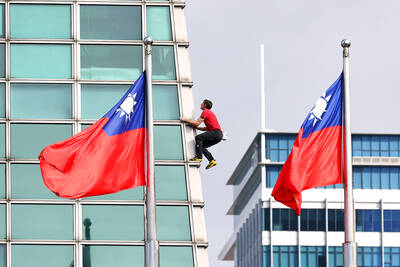
DAREDEVIL: Honnold said it had always been a dream of his to climb Taipei 101, while a Netflix producer said the skyscraper was ‘a real icon of this country’ US climber Alex Honnold yesterday took on Taiwan’s tallest building, becoming the first person to scale Taipei 101 without a rope, harness or safety net. Hundreds of spectators gathered at the base of the 101-story skyscraper to watch Honnold, 40, embark on his daredevil feat, which was also broadcast live on Netflix. Dressed in a red T-shirt and yellow custom-made climbing shoes, Honnold swiftly moved up the southeast face of the glass and steel building. At one point, he stepped onto a platform midway up to wave down at fans and onlookers who were taking photos. People watching from inside
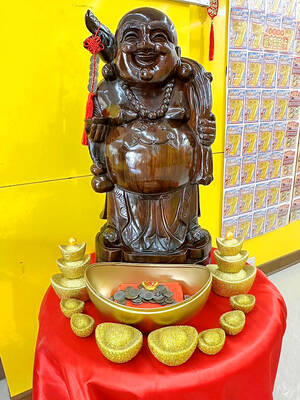
A Vietnamese migrant worker yesterday won NT$12 million (US$379,627) on a Lunar New Year scratch card in Kaohsiung as part of Taiwan Lottery Co’s (台灣彩券) “NT$12 Million Grand Fortune” (1200萬大吉利) game. The man was the first top-prize winner of the new game launched on Jan. 6 to mark the Lunar New Year. Three Vietnamese migrant workers visited a Taiwan Lottery shop on Xinyue Street in Kaohsiung’s Gangshan District (崗山), a store representative said. The player bought multiple tickets and, after winning nothing, held the final lottery ticket in one hand and rubbed the store’s statue of the Maitreya Buddha’s belly with the other,
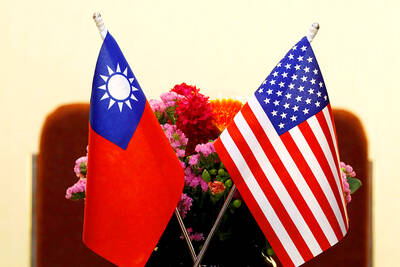
‘NATO-PLUS’: ‘Our strategic partners in the Indo-Pacific are facing increasing aggression by the Chinese Communist Party,’ US Representative Rob Wittman said The US House of Representatives on Monday released its version of the Consolidated Appropriations Act, which includes US$1.15 billion to support security cooperation with Taiwan. The omnibus act, covering US$1.2 trillion of spending, allocates US$1 billion for the Taiwan Security Cooperation Initiative, as well as US$150 million for the replacement of defense articles and reimbursement of defense services provided to Taiwan. The fund allocations were based on the US National Defense Authorization Act for fiscal 2026 that was passed by the US Congress last month and authorized up to US$1 billion to the US Defense Security Cooperation Agency in support of the

‘COMMITTED TO DETERRENCE’: Washington would stand by its allies, but it can only help as much as countries help themselves, Raymond Greene said The US is committed to deterrence in the first island chain, but it should not bear the burden alone, as “freedom is not free,” American Institute in Taiwan Director Raymond Greene said in a speech at the Institute for National Defense and Security Research’s “Strengthening Resilience: Defense as the Engine of Development” seminar in Taipei yesterday. In the speech, titled “Investing Together and a Secure and Prosperous Future,” Greene highlighted the contributions of US President Donald Trump’s administration to Taiwan’s defense efforts, including the establishment of supply chains for drones and autonomous systems, offers of security assistance and the expansion of


 RSS
RSS