


A notice issued by the Ministry of Education asking the country’s largest college bulletin board system (BBS) — Professional Technology Temple (PTT) — to tone down its political rhetoric has attracted outrage after being posted online.
The one-page notice was sent last month to National Taiwan University, which oversees the PTT site frequented by hundreds of thousands of users daily.
Citing complaints received by Premier Wu Den-yih’s (吳敦義) office, the notice said political articles dominate the PTT’s Gossip Board and that it wished to see political staffers who try to “manipulate” Netizens’ opinions on the board removed from “an educational network” to give users a cleaner environment.
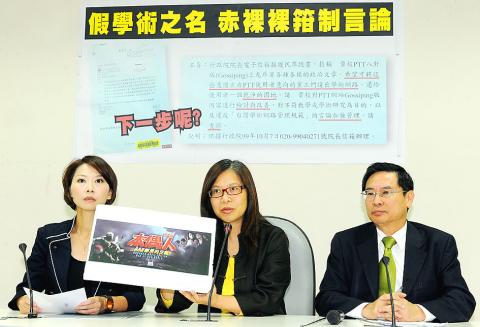
PHOTO: CHU PEI-HSIUNG, TAIPEI TIMES
Gossip Board administrators should step up their management of Internet use and comments that “are not used for educational or research purposes,” the notice said.
The notice was posted on the Internet by one of the administrators of the forum, who claimed it was forwarded to her through school officials. Within hours hundreds of angry messages had been posted online on Internet forums and social networking Web sites.
Most of the comments voiced concerns about what they said was an attempt to assume control of, and regulate parts of the PTT, which include more than 1.5 million registered members and tens of thousands of discussion boards.
“The Ministry of Education’s concerns on PTT: Does this represent a new Internet ‘White Terror’?” one commentator wrote.
Another wrote: “The ministry now wants PTT to tone it down after we made fun of [former president] Chen Shui-bian (陳水扁) for eight years.”
Some others joked that the government might now see posts on the discussion board as a threat to national security.
A Facebook event calling on Internet users to demand the resignation of both Minister of Education Wu Ching-ji (吳清基) and the premier over the letter had attracted 2,350 responses as of yesterday.
A commentator on the page wrote that after two years, “the Chinese Nationalist Party [KMT] has begun to instill its martial law on the Internet.”
“At least under the eight-year Democratic Progressive Party [DPP] administration, we wouldn’t be arrested or tried for saying the [wrong] things,” the user added.
DPP lawmakers argued in the legislature yesterday that as an institution of higher learning, the university should be able to make its own decisions.
“A university should be training their students to think independently, to be able to take a stance on society,” DPP Legislator Kuan Bi-ling (管碧玲) said. “The comments and actions of students are self-regulatory and the school’s best course of action is to give them this freedom.”
When asked for comment, Wu Ching-ji defended his ministry’s move, saying the notice was simply a “friendly reminder.”
Wu Ching-ji denied the ministry was trying to interfere with freedom of speech on the Internet, adding that university students should be responsible for their behavior.
The ministry’s Computer Center director Ho Jung-kuei (何榮桂) said political discussion of an academic nature is allowed on the nation’s academic BBS, but political attacks or campaigning should be banned.
Unconvinced, Kuan of the legislative Education and Culture Committee said the minister should step down over the controversy.
Meanwhile, NTU secretary-general Sebastian Liao (廖咸浩) was quoted by the Chinese-language Liberty Times (the Taipei Times’ sister newspaper) as saying that as the PTT is an independent student-run organization, school administrators would not step in.
The PTT was originally founded by information engineering students at the school in 1995. It is currently run by the student-managed Electronic BBS Research Society.
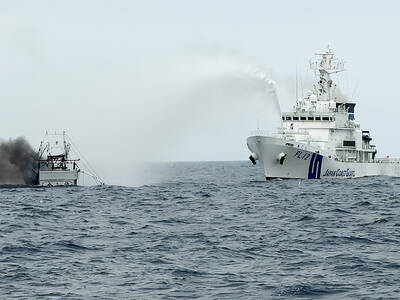
CREDIT-GRABBER: China said its coast guard rescued the crew of a fishing vessel that caught fire, who were actually rescued by a nearby Taiwanese boat and the CGA Maritime search and rescue operations do not have borders, and China should not use a shipwreck to infringe upon Taiwanese sovereignty, the Coast Guard Administration (CGA) said yesterday. The coast guard made the statement in response to the China Coast Guard (CCG) saying it saved a Taiwanese fishing boat. The Chuan Yu No. 6 (全漁6號), a fishing vessel registered in Keelung, on Thursday caught fire and sank in waters northeast of Diaoyutai Islands (釣魚台). The vessel left Keelung’s Badouzih Fishing Harbor (八斗子漁港) at 3:35pm on Sunday last week, with seven people on board — a 62-year-old Taiwanese captain surnamed Chang (張) and six
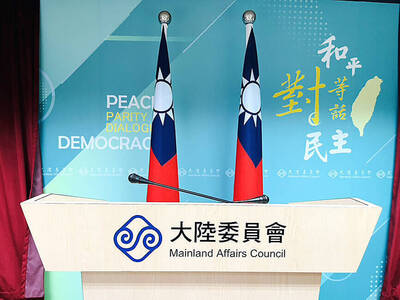
RISKY BUSINESS: The ‘incentives’ include initiatives that get suspended for no reason, creating uncertainty and resulting in considerable losses for Taiwanese, the MAC said China’s “incentives” failed to sway sentiment in Taiwan, as willingness to work in China hit a record low of 1.6 percent, a Ministry of Labor survey showed. The Directorate-General of Budget, Accounting and Statistics (DGBAS) also reported that the number of Taiwanese workers in China has nearly halved from a peak of 430,000 in 2012 to an estimated 231,000 in 2024. That marked a new low in the proportion of Taiwanese going abroad to work. The ministry’s annual survey on “Labor Life and Employment Status” includes questions respondents’ willingness to seek employment overseas. Willingness to work in China has steadily declined from

The Legislative Yuan’s Finance Committee yesterday approved proposed amendments to the Amusement Tax Act (娛樂稅法) that would abolish taxes on films, cultural activities and competitive sporting events, retaining the fee only for dance halls and golf courses. The proposed changes would set the maximum tax rate for dance halls and golf courses at 50 and 20 percent respectively, with local governments authorized to suspend the levies. Article 2 of the act says that “amusement tax shall be levied on tickets sold or fees charged by amusement places, facilities or activities” in six categories: “Cinema; professional singing, story-telling, dancing, circus, magic show, acrobatics
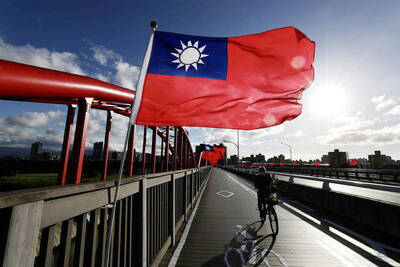
INFLATION UP? The IMF said CPI would increase to 1.5 percent this year, while the DGBAS projected it would rise to 1.68 percent, with GDP per capita of US$44,181 The IMF projected Taiwan’s real GDP would grow 5.2 percent this year, up from its 2.1 percent outlook in January, despite fears of global economic disruptions sparked by the US-Iran conflict. Taiwan’s consumer price index (CPI) is projected to increase to 1.5 percent, while unemployment would be 3.4 percent, roughly in line with estimates for Asia as a whole, the international body wrote in its Global Economic Outlook Report published in the US on Monday. The figures are comparatively better than the IMF outlook for the rest of the world, which pegged real GDP growth at 3.1 percent, down from 3.3 percent


 RSS
RSS